Loading...
Done
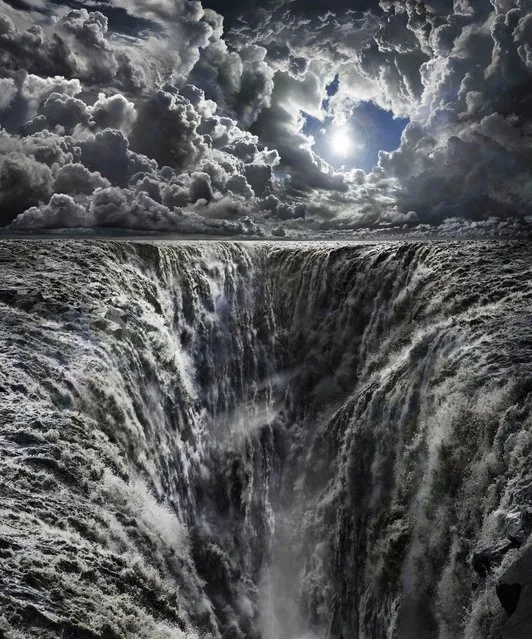
Clouded Skies By Seb Janiak

The French graphic designer and photographer uses a method he calls “digital matte painting”, layering several photos on top of each other to create an incandescent composition that seems eerily familiar yet ultimately impossible. Filled with tumbling clouds and glowing focal points, the images possess a depth that stretches the two-dimensional canvases backward as violent skies seem to undulate before the viewers' eyes.
Details
08 Jul 2014 11:45:00
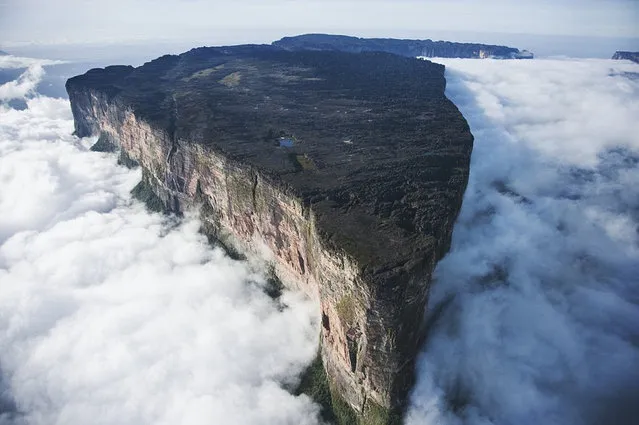
Mount Roraima

Mount Roraima (Spanish: Monte Roraima, also known as Tepuy Roraima and Cerro Roraima; Portuguese: Monte Roraima [ˈmõtʃi ʁoˈɾajmɐ]) is the highest of the Pakaraima chain of tepui plateau in South America. First described by the English explorer Sir Walter Raleigh in 1596, its 31 km2 summit area is defended by 400-metre-tall cliffs on all sides. The mountain includes the triple border point of Venezuela, Brazil and Guyana.
Details
11 Sep 2012 08:04:00
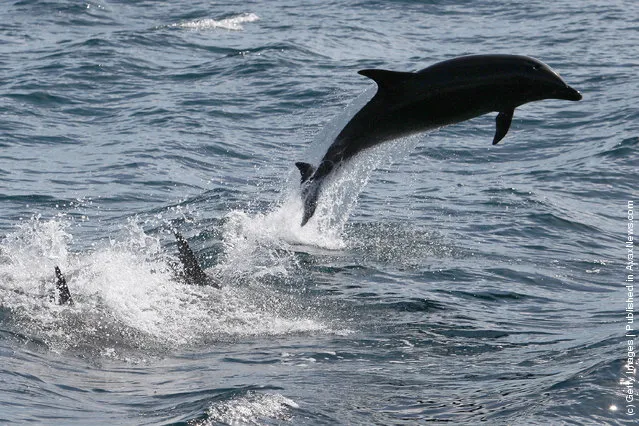
Bottlenose dolphins

Bottlenose dolphins leap off the Southern California coast on January 30, 2012 near Dana Point, California. A coalition that includes Native American tribes, Earthjustice and the Natural Resources Defense Council is on the National Marine Fisheries Service for more protection for dolphins, whales, and other migrating marine animals from the use of sonar in training by the US Navy on the West Coast. (Photo by David McNew/Getty Images)
Details
31 Jan 2012 10:23:00
Wedges of an orange generate enough current and electrical juice – 3.5 volts – to power an LED. The fruit’s citric acid helps electrons flow from galvanized nails to copper wire in this 14-hour exposure. This image was published in September’s Visions of Earth, a trio of photos that appear in each issue of National Geographic. (Photo by Caleb Charland/National Geographic)

Wedges of an orange generate enough current and electrical juice – 3.5 volts – to power an LED. The fruit’s citric acid helps electrons flow from galvanized nails to copper wire in this 14-hour exposure. This image was published in September’s Visions of Earth, a trio of photos that appear in each issue of National Geographic. (Photo by Caleb Charland/National Geographic)
Details
06 Jan 2014 12:09:00
A 14-month-old cub, cooling off in a pond, is riveted by a deer that appeared near the shore. Tigers are powerful swimmers; they can easily cross rivers four to five miles wide and have been known to swim distances of up to 18 miles. (Photo by Steve Winter/National Geographic)

National Geographic photographer Steve Winter has spent most of his adult life shooting wild cats. Photo: A 14-month-old cub, cooling off in a pond, is riveted by a deer that appeared near the shore. Tigers are powerful swimmers; they can easily cross rivers four to five miles wide and have been known to swim distances of up to 18 miles. (Photo by Steve Winter/National Geographic)
Details
08 Apr 2014 11:52:00
A couple takes a selfie as Hoa Binh hydroelectric power plant opens the flood gates after a heavy rainfall caused by Talas typhoon in Hoa Binh province, outside Hanoi, Vietnam July 20, 2017. (Photo by Reuters/Kham)

A couple takes a selfie as Hoa Binh hydroelectric power plant opens the flood gates after a heavy rainfall caused by Talas typhoon in Hoa Binh province, outside Hanoi, Vietnam July 20, 2017. (Photo by Reuters/Kham)
Details
21 Jul 2017 08:00:00
Women walk in heavy rain as Typhoon Haishen hits Kagoshima, Kagoshima prefecture on September 6, 2020. Typhoon Haishen began to lash southern Japan on September 6, with officials warning it could bring record rainfall and winds strong enough to snap power line poles and flip cars. (Photo by Charly Triballeau/AFP Photo)

Women walk in heavy rain as Typhoon Haishen hits Kagoshima, Kagoshima prefecture on September 6, 2020. Typhoon Haishen began to lash southern Japan on September 6, with officials warning it could bring record rainfall and winds strong enough to snap power line poles and flip cars. (Photo by Charly Triballeau/AFP Photo)
Details
08 Sep 2020 00:07:00
Shortlist, open competition, lifestyle. Healing Vibes – the hot springs of Bagno Vignoni in Italy flow out at a temperature of about 49°C. They were appreciated by the Romans for their healing powers, and have been used as therapeutic treatments since the 12th century, under Emperor Federico II. (Photo by Stefano Butturini/Sony World Photography Awards)

Shortlist, open competition, lifestyle. Healing Vibes – the hot springs of Bagno Vignoni in Italy flow out at a temperature of about 49°C. They were appreciated by the Romans for their healing powers, and have been used as therapeutic treatments since the 12th century, under Emperor Federico II. (Photo by Stefano Butturini/Sony World Photography Awards)
Details
20 Mar 2021 10:27:00