Loading...
Done
A pet owner holds his guinea pig named Riec as Father Francisco bestows a blessing on the pet rodent during a feast day Mass in honor of Saint Anthony, the patron saint of animals, at the Saint Fernando church, in Mexico City, Saturday, January 17, 2015. (Photo by Marco Ugarte/AP Photo)

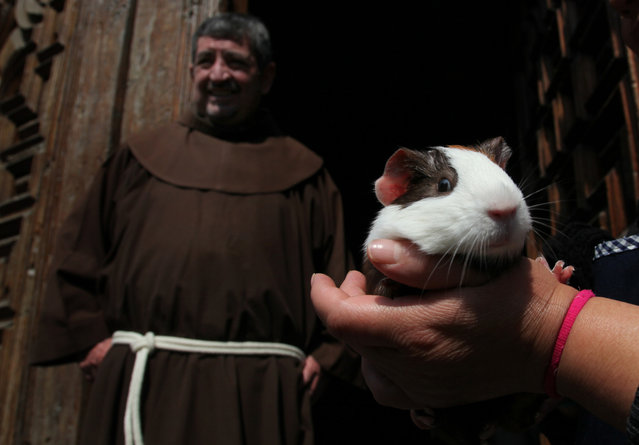
A pet owner holds his guinea pig named Riec as Father Francisco bestows a blessing on the pet rodent during a feast day Mass in honor of Saint Anthony, the patron saint of animals, at the Saint Fernando church, in Mexico City, Saturday, January 17, 2015. Many people in Mexico bring their pets to churches to be blessed by the priest on this day. (Photo by Marco Ugarte/AP Photo)
Details
18 Jan 2015 13:32:00
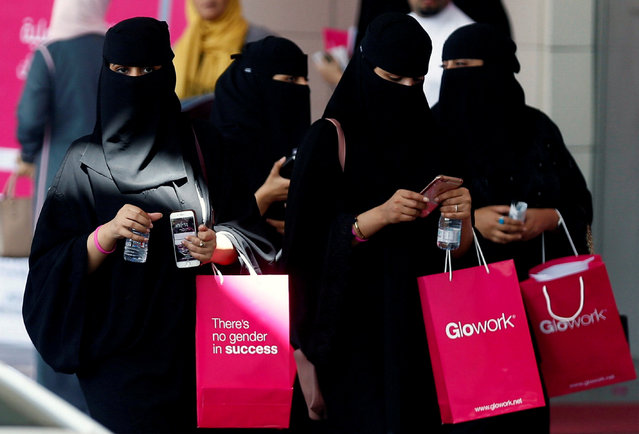
Women take part in Glowork exhibition in Riyadh, September 28, 2017. (Photo by Faisal Al Nasser/Reuters)

Women take part in Glowork exhibition in Riyadh, Saudi Arabia on September 28, 2017. (Photo by Faisal Al Nasser/Reuters)
Details
04 Oct 2017 07:08:00
A person dressed as a zombie walks during the annual Zombie Walk in Mexico City, Mexico on October 21, 2023. (Photo by Quetzalli Nicte-Ha/Reuters)

A person dressed as a zombie walks during the annual Zombie Walk in Mexico City, Mexico on October 21, 2023. (Photo by Quetzalli Nicte-Ha/Reuters)
Details
26 Oct 2023 04:59:00
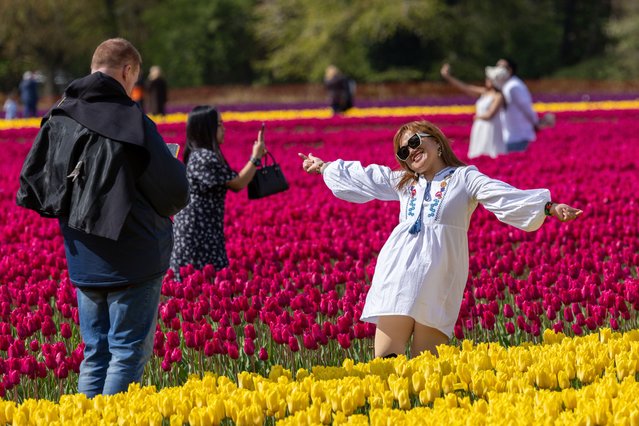
Colourful pictures all round as people pose on April 7, 2025 in the bright rows of tulips at the family-run Norfolk Tulips near King’s Lynn, UK made famous due to being used to recreate the Emerald City in the Wicked film. (Photo by Bav Media)

Colourful pictures all round as people pose on April 7, 2025 in the bright rows of tulips at the family-run Norfolk Tulips near King’s Lynn, UK made famous due to being used to recreate the Emerald City in the Wicked film. (Photo by Bav Media)
Details
18 Jul 2025 02:47:00
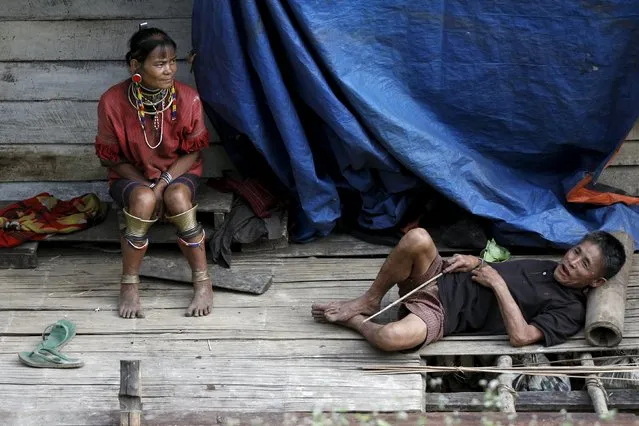
An ethnic Kayaw couple Mu Htoo and her husband Htaw Eili rest at their home at Htaykho village in the Kayah state, Myanmar September 12, 2015. (Photo by Soe Zeya Tun/Reuters)

An ethnic Kayaw couple Mu Htoo and her husband Htaw Eili rest at their home at Htaykho village in the Kayah state, Myanmar September 12, 2015. With about 30,000 members, the Kayaw are one of the smallest ethnic minorities among Myanmar's 135 groups. Their village has for decades been off-limits, as armed rebels fought the military before a recent ceasefire stopped the bloody conflict here. The rebels in the area have put down their guns and taken to the hills to grow rice and corn, but slash-and-burn cultivation methods mean they struggle to find new places to farm. (Photo by Soe Zeya Tun/Reuters)
Details
21 Oct 2015 08:03:00
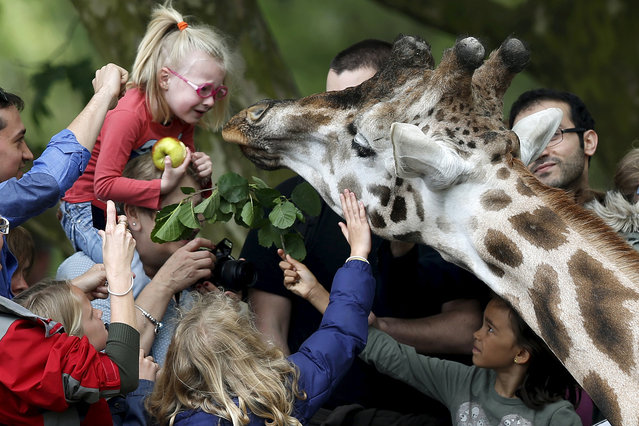
Children feed a giraffe at Pairi Daiza wildlife park, a zoo and botanical garden in Brugelette, Belgium, May 25, 2015. (Photo by Francois Lenoir/Reuters)

Children feed a giraffe at Pairi Daiza wildlife park, a zoo and botanical garden in Brugelette, Belgium, May 25, 2015. (Photo by Francois Lenoir/Reuters)
Details
26 May 2015 11:19:00
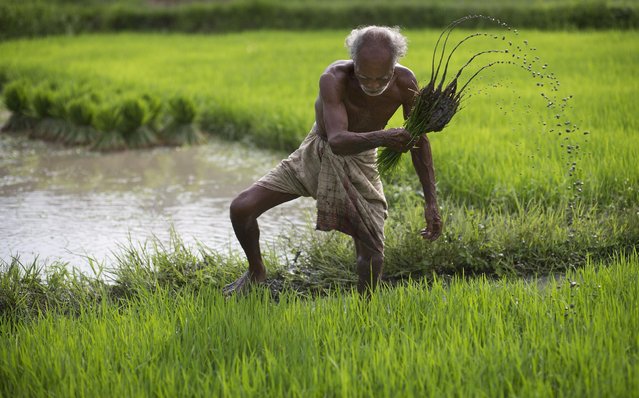
A farmer works in a paddy field at Reba Maheswar village, 56 kilometers (35 miles) east of Gauhati, India, Friday, July 3, 2015. (Photo by Anupam Nath/AP Photo)

A farmer works in a paddy field at Reba Maheswar village, 56 kilometers (35 miles) east of Gauhati, India, Friday, July 3, 2015. Rice is one of the most important food crops of India and about 4,000 different varieties are grown in different parts of the country. (Photo by Anupam Nath/AP Photo)
Details
04 Jul 2015 11:24:00
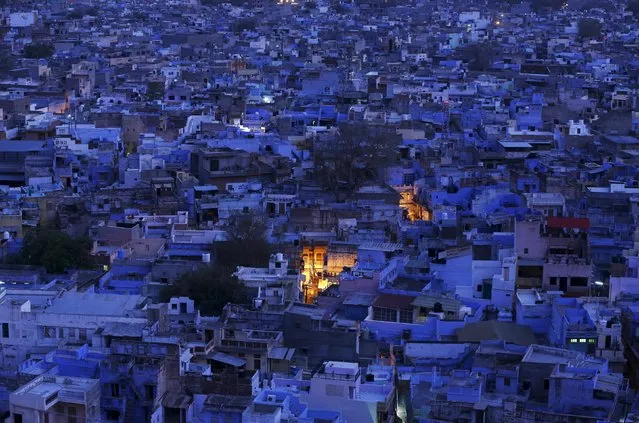
A general view of the residential area is pictured during dusk at Jodhpur in Rajasthan, April 5, 2015. Jodhpur, also known as the blue city in the desert Indian state of Rajasthan, which residents say originally, was used to show where the highest caste of priestly Hindus live, who wanted to set them apart from the rest of the population. Later the rest of the population followed suit. Another reason for the city to be blue is to keep the buildings cool during the summers, local residents said. (Photo by Adnan Abidi/Reuters)

A general view of the residential area is pictured during dusk at Jodhpur in Rajasthan, April 5, 2015. Jodhpur, also known as the blue city in the desert Indian state of Rajasthan, which residents say originally, was used to show where the highest caste of priestly Hindus live, who wanted to set them apart from the rest of the population. Later the rest of the population followed suit. Another reason for the city to be blue is to keep the buildings cool during the summers, local residents said. (Photo by Adnan Abidi/Reuters)
Details
12 Apr 2015 08:27:00