Loading...
Done
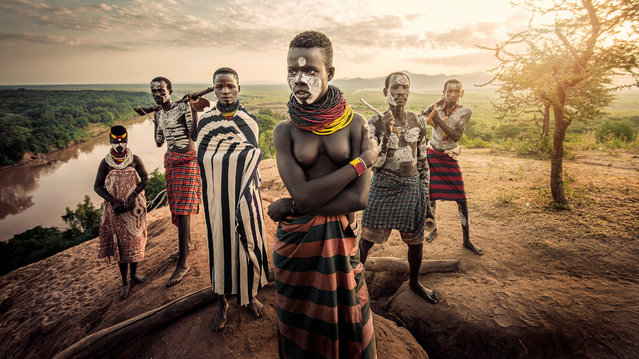
“People of the River”. This is a Karo tribe family; father, mother, two sisters and two brothers. The tribe, who live along the Omo River in east Africa, incorporate rich symbolism into their rituals by using ornate body art, headdresses and body scarification to express beauty and significance. (Photo by Jatenipat Ketpradit/International Portrait Photographer of the Year)

“People of the River”. This is a Karo tribe family; father, mother, two sisters and two brothers. The tribe, who live along the Omo River in east Africa, incorporate rich symbolism into their rituals by using ornate body art, headdresses and body scarification to express beauty and significance. (Photo by Jatenipat Ketpradit/International Portrait Photographer of the Year)
Details
04 Jul 2021 09:39:00
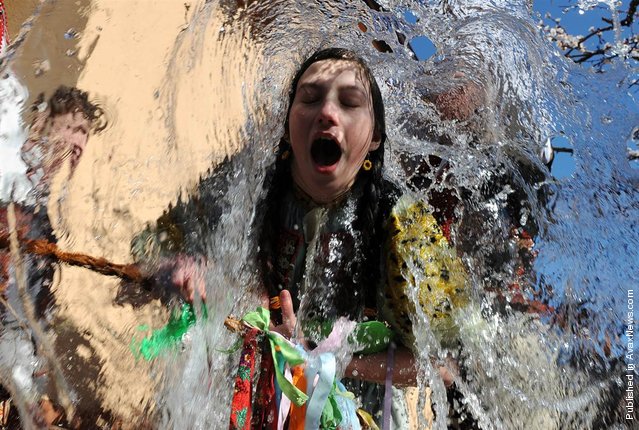
Young Slovaks dressed in traditional costumes throw a bucket of water at a girl as part of Easter celebrations in the village of Trencianska Tepla, Slovakia, April 9, 2012. Slovakia's men splash women with water to symbolize youth, strength and beauty for the upcoming spring season

Young Slovaks dressed in traditional costumes throw a bucket of water at a girl as part of Easter celebrations in the village of Trencianska Tepla, Slovakia, April 9, 2012. Slovakia's men splash women with water to symbolize youth, strength and beauty for the upcoming spring season. (Photo by Samuel Kubani/AFP)
Details
13 Apr 2012 10:38:00
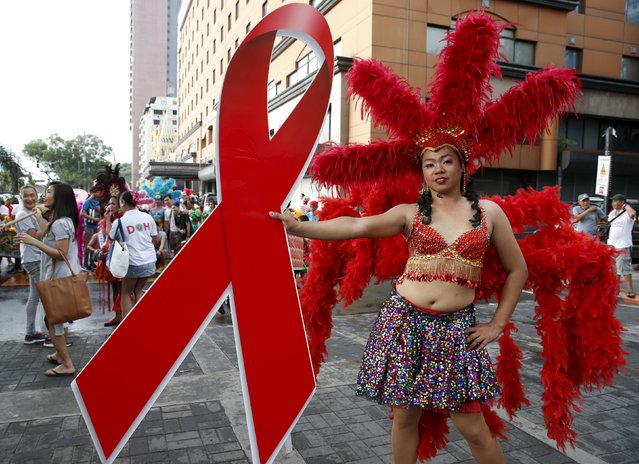
A Filipino transgender woman holds a huge red ribbon symbolizing fight against the HIV virus as she poses before photographers, during a World Aids Day celebration in Manila, Philippines, December 1, 2015. (Photo by Erik De Castro/Reuters)

A Filipino transgender woman holds a huge red ribbon symbolizing fight against the HIV virus as she poses before photographers, during a World Aids Day celebration in Manila, Philippines, December 1, 2015. (Photo by Erik De Castro/Reuters)
Details
03 Dec 2015 08:04:00
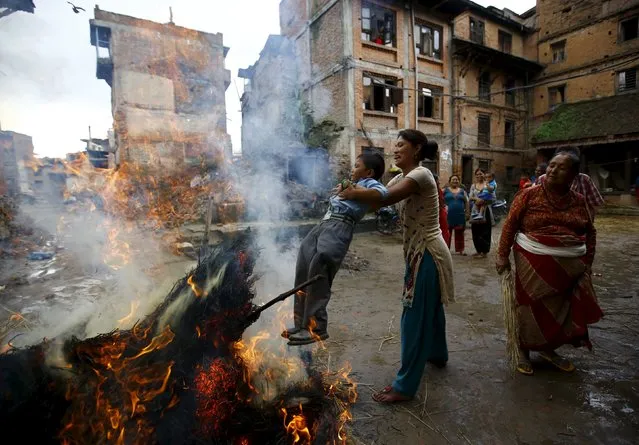
A woman swings a child around a fire, where an effigy of the demon Ghantakarna was burnt to symbolize the destruction of evil, during the Ghantakarna festival at the ancient city of Bhaktapur, Nepal August 12, 2015. (Photo by Navesh Chitrakar/Reuters)

A woman swings a child around a fire, where an effigy of the demon Ghantakarna was burnt to symbolize the destruction of evil, during the Ghantakarna festival at the ancient city of Bhaktapur, Nepal August 12, 2015. According to local folklore, the demon is believed to “steal” children and women from their homes and localities. (Photo by Navesh Chitrakar/Reuters)
Details
13 Aug 2015 11:48:00
Inflatable dolls in the shape of ducks are seen in front of the National Congress during a protest against tax increases in Brasilia, Brazil, March 29, 2016. The campaign “I will not pay the Duck” is organized by the Federation of Industries of Sao Paulo (FIESP) and uses the duck symbol in reference to industries that pay high taxes. (Photo by Gregg Newton/Reuters)

Inflatable dolls in the shape of ducks are seen in front of the National Congress during a protest against tax increases in Brasilia, Brazil, March 29, 2016. The campaign “I will not pay the Duck” is organized by the Federation of Industries of Sao Paulo (FIESP) and uses the duck symbol in reference to industries that pay high taxes. (Photo by Gregg Newton/Reuters)
Details
30 Mar 2016 11:27:00
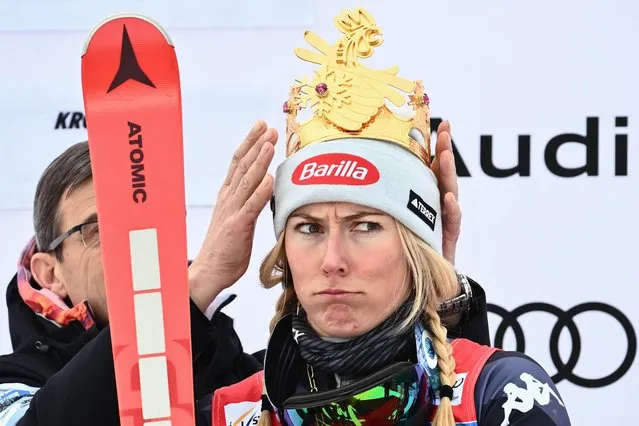
Race winner USA's Mikaela Shiffrin reacts as she is symbolically crowned on the podium after competing in the Women's Giant Slalom on January 24, 2023 in Plan de Corones (Kronplatz), Dolomites Mountains, as part of the FIS Alpine World Ski Championships. (Photo by Marco Bertorello/AFP Photo)

Race winner USA's Mikaela Shiffrin reacts as she is symbolically crowned on the podium after competing in the Women's Giant Slalom on January 24, 2023 in Plan de Corones (Kronplatz), Dolomites Mountains, as part of the FIS Alpine World Ski Championships. (Photo by Marco Bertorello/AFP Photo)
Details
01 Feb 2023 00:03:00
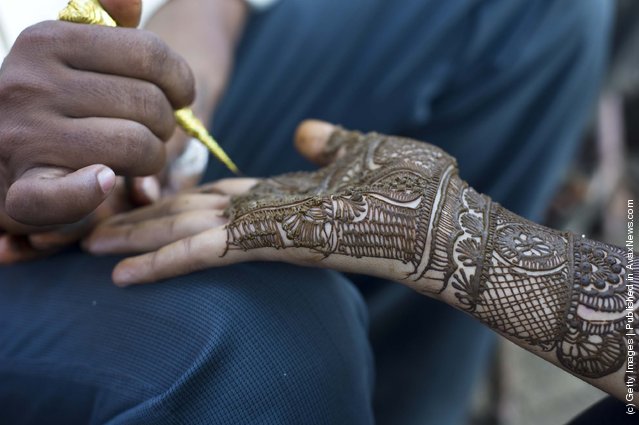
Application of henna or “Mehndi”  to a girls hand in a market in Jaipur, India

“Mehndi or menhdi is the application of henna as a temporary form of skin decoration in India, as well as by expatriate communities from the country. The word mehndi is derived from the Sanskrit word mendhikā. The use of mehndi and turmeric is described in the earliest Vedic ritual books. Haldi (Staining oneself with turmeric paste) as well as mehndi are important Vedic customs as a symbolic representation of the Outer and the Inner Sun. Vedic customs are meant to awaken the “inner light” and so the gold of the inner Sun has an important symbolic function”. – Wikipedia

Photo: Application of henna or “Mehndi” to a girls hand in a market on October 18, 2010 in Jaipur, India. (Photo by Simon de Trey-White/Getty Images)
Details
23 Nov 2011 13:33:00
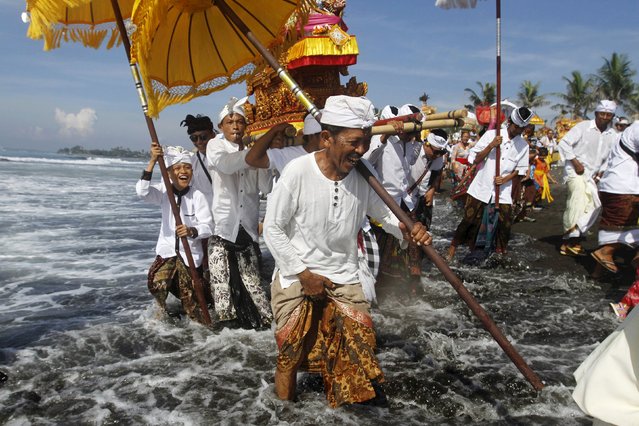
Balinese Hindus carry Pratimas, or symbols of God, on the beach during Melasti, a purification ceremony, ahead of the holy day of Nyepi, in Gianyar on the Indonesian resort island of Bali, March 6, 2016. Nyepi is a day of silence to celebrate the Balinese new year, reserved for self-reflection, where people are not allowed to use lights, light fires, work, travel or enjoy entertainment. (Photo by Roni Bintang/Reuters)

Balinese Hindus carry Pratimas, or symbols of God, on the beach during Melasti, a purification ceremony, ahead of the holy day of Nyepi, in Gianyar on the Indonesian resort island of Bali, March 6, 2016. Nyepi is a day of silence to celebrate the Balinese new year, reserved for self-reflection, where people are not allowed to use lights, light fires, work, travel or enjoy entertainment. (Photo by Roni Bintang/Reuters)
Details
07 Mar 2016 11:19:00