Loading...
Done
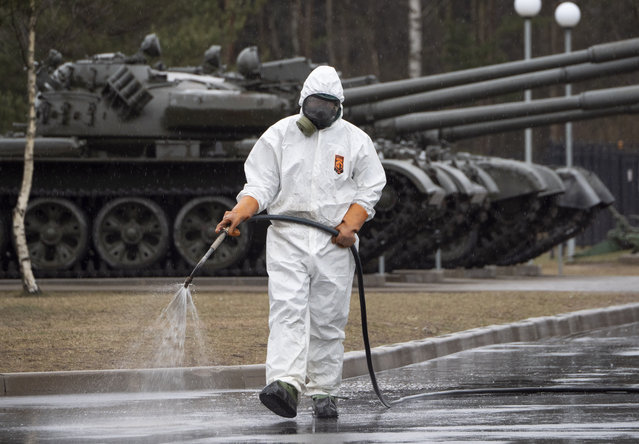
A specialist from a local veterinary service wears a protective suit as sprays disinfectant near Russian tanks displayed at area near Proryv (The Breakthrough) museum dedicated to the breakthrough of the Siege of Leningrad during World WarII near Kirovsk, about 30 kilometres (19 miles) east of St.Petersburg, Russia, Thursday, April 2, 2020. (Photo by Dmitri Lovetsky/AP Photo)

A specialist from a local veterinary service wears a protective suit as sprays disinfectant near Russian tanks displayed at area near Proryv (The Breakthrough) museum dedicated to the breakthrough of the Siege of Leningrad during World WarII near Kirovsk, about 30 kilometres (19 miles) east of St.Petersburg, Russia, Thursday, April 2, 2020. (Photo by Dmitri Lovetsky/AP Photo)
Details
13 Apr 2020 00:01:00
A Loris And A Dentist

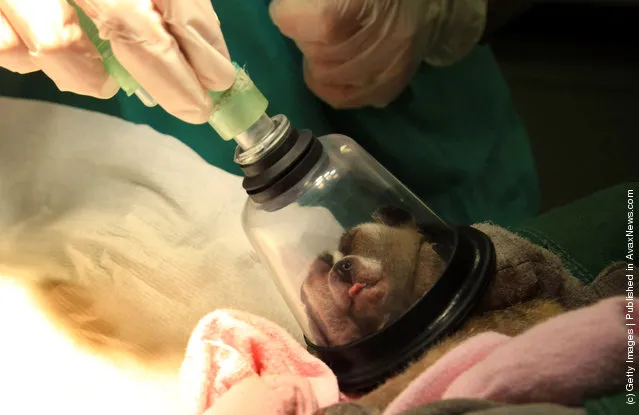
Mr. Ben, a pygmy slow loris, is administed anesthetic during one of Bristol Zoo's in-house veterinary clinic routine health check-up and teeth clean as part of the Zoo's standard animal husbandry and welfare procedure at Bristol Zoo on June 18, 2009 in Bristol, England. (Photo by Matt Cardy/Getty Images)
Details
22 Jan 2012 12:35:00
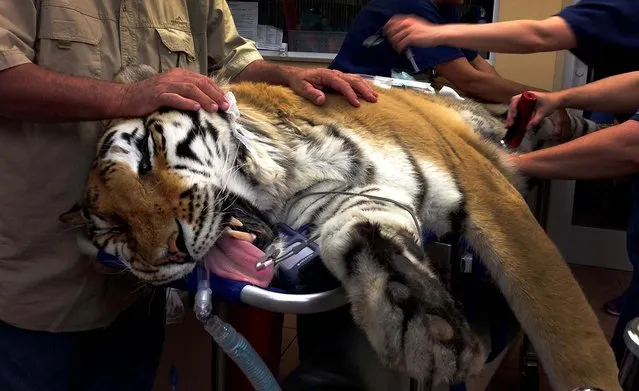
Vernon Yates, founder of Wildlife Rescue and Rehabilitation, lays his hands on Ty, a 400-pound tiger, as staff prepare to surgically extract a 4-pound hairball from the big cat, in Clearwater, Florida, on May 22, 2013. Ty is cared for by Wildlife Rescue and Rehabilitation in Seminole. The non-profit animal rescue group mainly serves by assisting Florida law enforcement with animals that have been seized. (Photo by James Judge/Courtesy BluePearl Veterinary Partners)

Vernon Yates, founder of Wildlife Rescue and Rehabilitation, lays his hands on Ty, a 400-pound tiger, as staff prepare to surgically extract a 4-pound hairball from the big cat, in Clearwater, Florida, on May 22, 2013. Ty is cared for by Wildlife Rescue and Rehabilitation in Seminole. The non-profit animal rescue group mainly serves by assisting Florida law enforcement with animals that have been seized. (Photo by James Judge/Courtesy BluePearl Veterinary Partners)
Details
26 May 2013 08:32:00
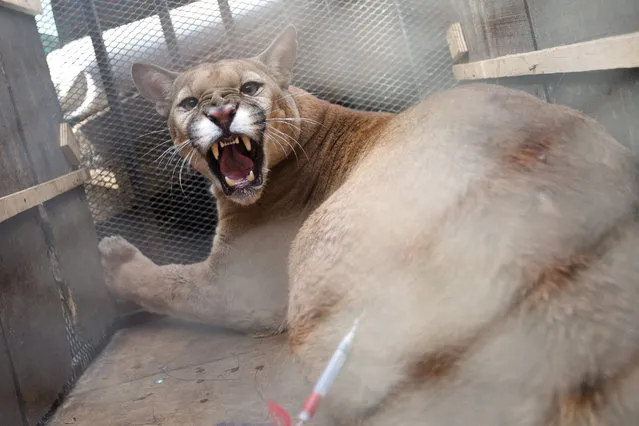
A male puma, named Bordo arrives for an examination and tests at a veterinary in Brasilia, Brazil, 31 October 2017 (issued 01 November 2017). Bordo, a young male puma, captured when he was a cub, will become the first animal of his species to be released in a sanctuary in the Brazilian savannah in Goias State close to Brasilia. The sanctuary, a preserve for wild cats,  is in the first phase and is located on private lands but state funded. (Photo by Joedson Alves/EPA/EFE)

A male puma, named Bordo arrives for an examination and tests at a veterinary in Brasilia, Brazil, 31 October 2017 (issued 01 November 2017). Bordo, a young male puma, captured when he was a cub, will become the first animal of his species to be released in a sanctuary in the Brazilian savannah in Goias State close to Brasilia. The sanctuary, a preserve for wild cats, is in the first phase and is located on private lands but state funded. (Photo by Joedson Alves/EPA/EFE)
Details
05 Nov 2017 08:13:00
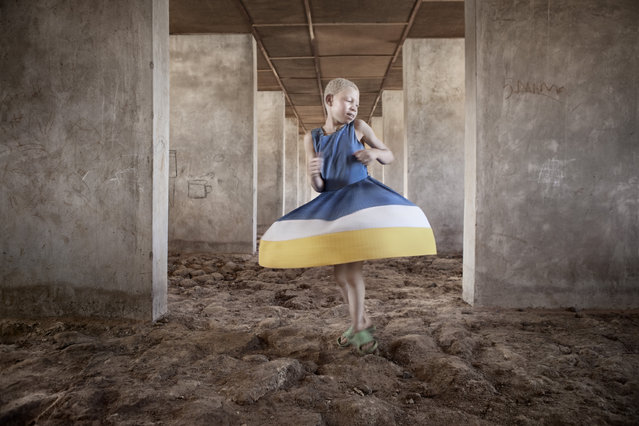
Eleven-year-old Kelen loves to dance in the half-built rooms of the centre in Kabanga Refuge Centre, Tanzania, 2012. (Photo by Ana Palacios/Barcroft Images)

Eleven-year-old Kelen loves to dance in the half-built rooms of the centre in Kabanga Refuge Centre, Tanzania, 2012. The rescue centres protect albino people from the vicious hunters who sell their body parts to witch doctors. Photojournalist Ana Palacios, 43, visited the centre in Tanzania three times between 2012 and 2016 to find out more about the plight of albino people. (Photo by Ana Palacios/Barcroft Images)
Details
01 Oct 2016 11:02:00
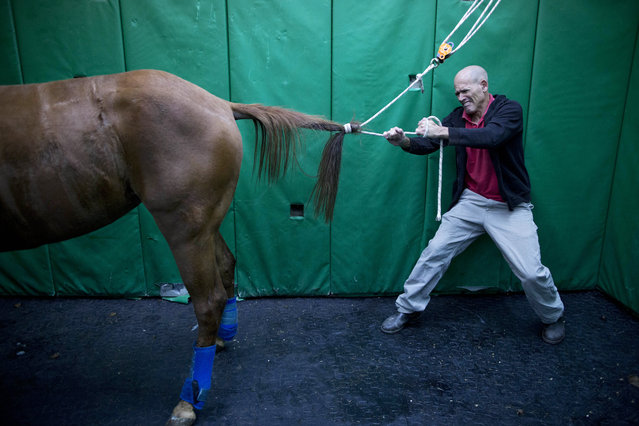
In this Wednesday, December 2, 2015 photo, Dr. Gal Kelmer, head of the department of large animals, unties a horse after its operation at the University's Koret School of Veterinary Medicine in Rishon Lezion, Israel. “Horses have an instinctive response of flight from danger”, Kelmer said. “The minute they wake up they start trying to stand and run, even if they don't have control of their limbs. So then they fall”. (Photo by Oded Balilty/AP Photo)

In this Wednesday, December 2, 2015 photo, Dr. Gal Kelmer, head of the department of large animals, unties a horse after its operation at the University's Koret School of Veterinary Medicine in Rishon Lezion, Israel. “Horses have an instinctive response of flight from danger”, Kelmer said. “The minute they wake up they start trying to stand and run, even if they don't have control of their limbs. So then they fall”. (Photo by Oded Balilty/AP Photo)
Details
15 Dec 2015 08:04:00
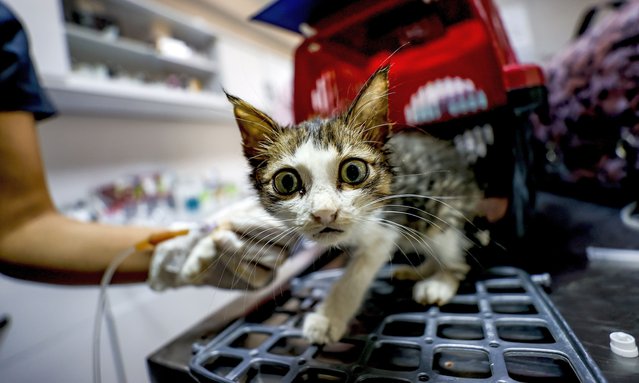
An injured cat receives treatment at a veterinary clinic by volunteer vets after a forest fire that broke out in Manavgat district of Turkeyâs Antalya on July 31, 2021. At least seven people have died in the wildfires raging in Turkey’s Mediterranean towns, the Turkish health ministry confirmed on 01 August 2021. (Photo by Mustafa Ciftci/Anadolu Agency via Getty Images)

An injured cat receives treatment at a veterinary clinic by volunteer vets after a forest fire that broke out in Manavgat district of Turkeyâs Antalya on July 31, 2021. At least seven people have died in the wildfires raging in Turkey’s Mediterranean towns, the Turkish health ministry confirmed on 01 August 2021. (Photo by Mustafa Ciftci/Anadolu Agency via Getty Images)
Details
02 Aug 2021 08:19:00
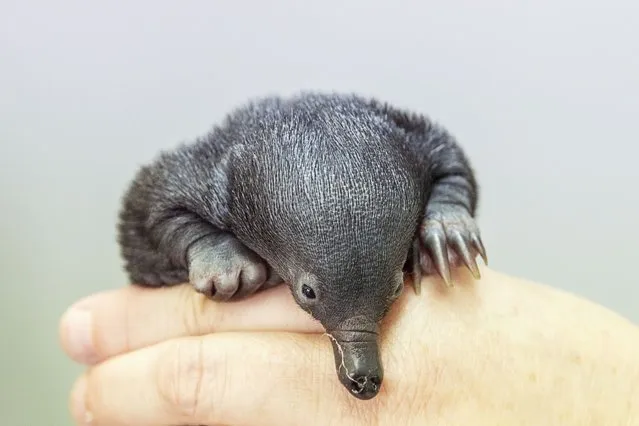
“Smudge” an orphaned echidna puggle is held by Veterinary nurse Sarah Male ahead of its feeding on November 07, 2022 in Sydney, Australia. Echidnas, sometimes known as spiny anteaters, are native to Australia. A baby echidna was found orphaned by the side of the road and is being cared for at Sydney's Taronga Zoo hospital. The care is intensive with several feedings per day, and the echidna is housed in temperature-controlled environment to aid its recovery and growth. (Photo by Jenny Evans/Getty Images)

“Smudge” an orphaned echidna puggle is held by Veterinary nurse Sarah Male ahead of its feeding on November 07, 2022 in Sydney, Australia. Echidnas, sometimes known as spiny anteaters, are native to Australia. A baby echidna was found orphaned by the side of the road and is being cared for at Sydney's Taronga Zoo hospital. The care is intensive with several feedings per day, and the echidna is housed in temperature-controlled environment to aid its recovery and growth. (Photo by Jenny Evans/Getty Images)
Details
04 Jan 2024 19:37:00