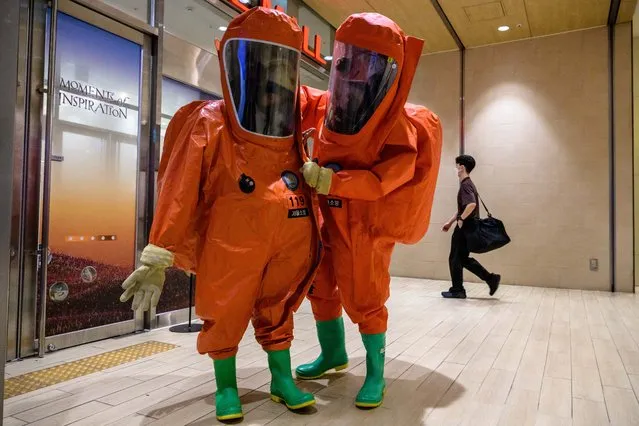
South Korean emergency services personnel wearing protective clothing participate in an anti-terror and anti-chemical terror drill on the sidelines of the joint South Korea-US Ulchi Freedom Shield (UFS) military exercise, at a shopping mall in Seoul on August 23, 2022. (Photo by Anthony Wallace/AFP Photo)
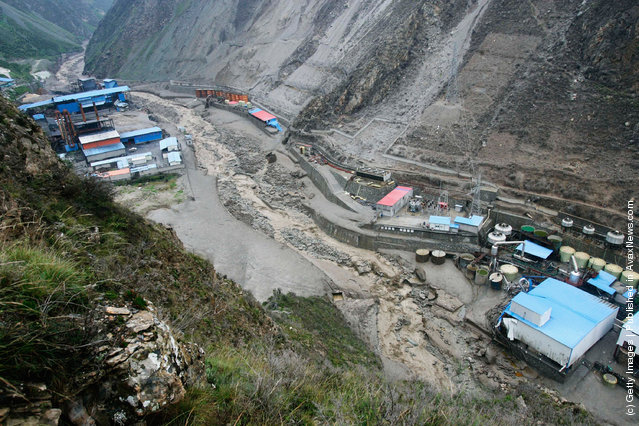
A general view of the landslide-hit Miancu Village on July 3, 2011 in Maixian County, Sichuan Province of China. Eight people are still missing after a dormitory building of a chemical plant was hit by a rain-triggered mudslide in Maoxian County on Sunday morning. Rescue efforts are underway. (Photo by ChinaFotoPress/Getty Images)
Only after World War II did the secret spill: Ōkunoshima, located in the Inland Sea of Japan between Hiroshima and Shikoku, was the top-secret site for manufacturing chemical warfare. When the factories were closed down, a number of exotic wild rabbits were seen freely roaming the island. They were assumed to have been the test subjects for the chemical weapons, which the military failed to eradicate when the factory was demolished.
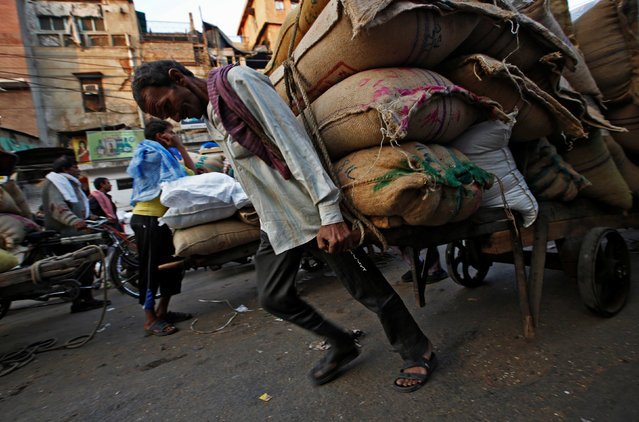
A labourer pulls a cart loaded with sacks of spices at a wholesale spice and chemical market in the old quarters of Delhi, India, December 19, 2016. Picture taken December 19, 2016. (Photo by Adnan Abidi/Reuters)
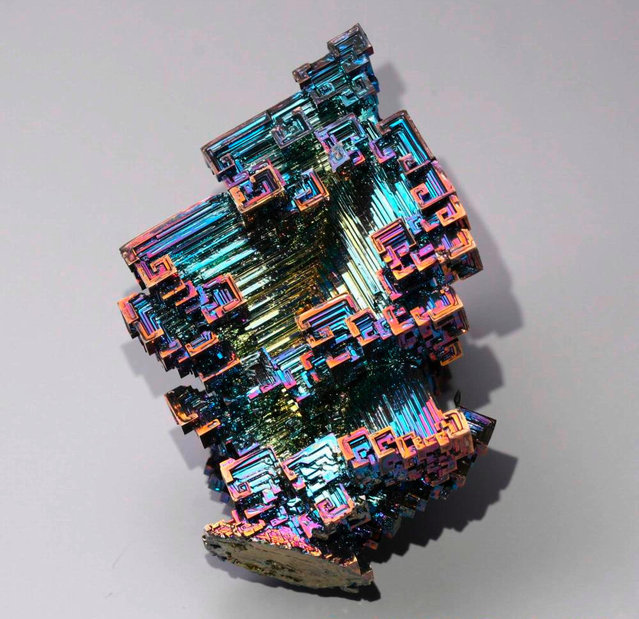
Bismuth is a chemical element with symbol Bi and atomic number 83. Bismuth, a pentavalent poor metal, chemically resembles arsenic and antimony. Elemental bismuth may occur naturally, although its sulfide and oxide form important commercial ores. The free element is 86% as dense as lead. It is a brittle metal with a silvery white color when freshly produced, but is often seen in air with a pink tinge owing to surface oxidation. Bismuth is the most naturally diamagnetic and has one of the lowest values of thermal conductivity among metals.
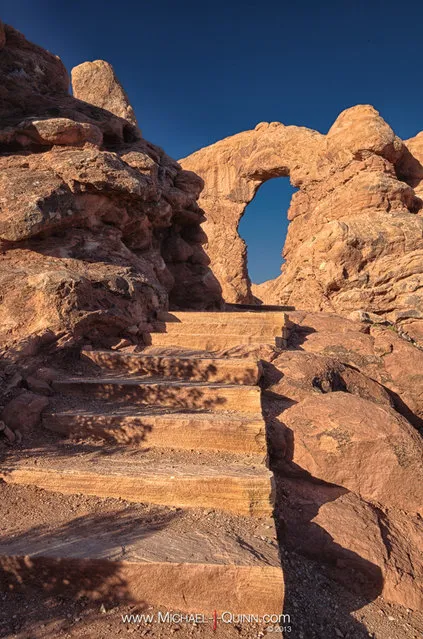
Images from my travels with John Paul Caponigro in the spring of 2011. During that week JP inspired me to create this body of work. This is my path, my pathways in arches.