Loading...
Done
A woman takes photos as Mount Agung volcano sends up another plume of smoke, seen from the Kubu subdistrict in Karangasem Regency on Indonesia's resort island of Bali on July 5, 2018. Mount Agung roared to life again on July 2, belching a plume of ash 2,000 metres (6,500 feet) high, as well as temporarily shuttering the airport and grounding hundreds of flights after erupting the week before. (Photo by Sonny Tumbelaka/AFP Photo)

A woman takes photos as Mount Agung volcano sends up another plume of smoke, seen from the Kubu subdistrict in Karangasem Regency on Indonesia's resort island of Bali on July 5, 2018. Mount Agung roared to life again on July 2, belching a plume of ash 2,000 metres (6,500 feet) high, as well as temporarily shuttering the airport and grounding hundreds of flights after erupting the week before. (Photo by Sonny Tumbelaka/AFP Photo)
Details
07 Jul 2018 00:01:00
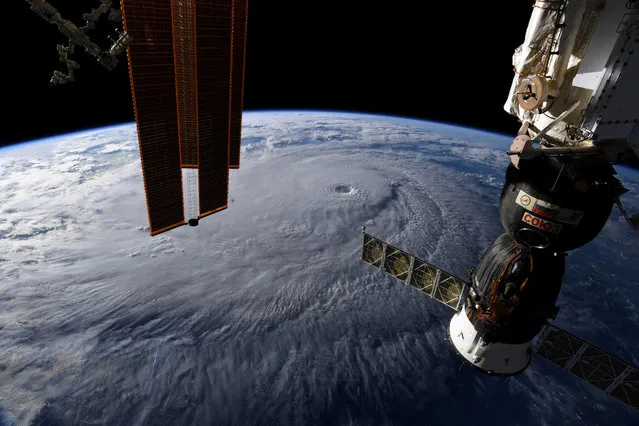
A photo taken from the International Space Station shows Hurricane Lane in the early morning hours near Hawaii, August 22, 2018. (Photo by Courtesy @astro_ricky/NASA/Handout via Reuters)

A photo taken from the International Space Station shows Hurricane Lane in the early morning hours near Hawaii, August 22, 2018. (Photo by Courtesy @astro_ricky/NASA/Handout via Reuters)
Details
01 Jan 2019 00:01:00
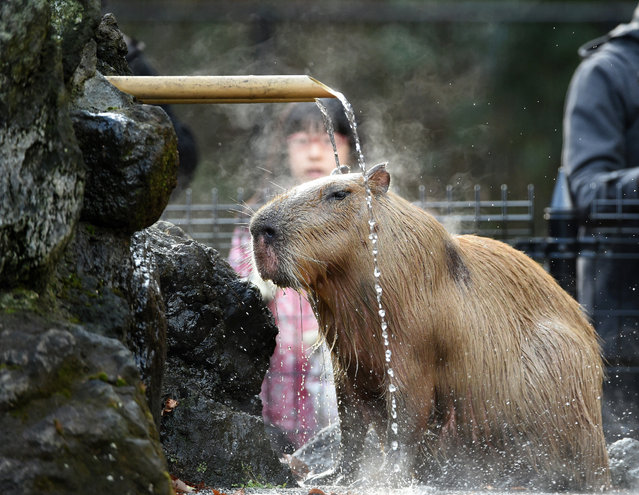
A Capybara bathes in the hot spring water at the Saitama Children's zoo in Higashi Matsuyama city, Saitama prefecture on December 21, 2014. Seven capybaras in the zoo, originally from South America, enjoyed the hot spring water on the chilly winter day in Japan. (Photo by Toshifumi Kitamura/AFP Photo)

A Capybara bathes in the hot spring water at the Saitama Children's zoo in Higashi Matsuyama city, Saitama prefecture on December 21, 2014. Seven capybaras in the zoo, originally from South America, enjoyed the hot spring water on the chilly winter day in Japan. (Photo by Toshifumi Kitamura/AFP Photo)
Details
27 Dec 2014 12:59:00
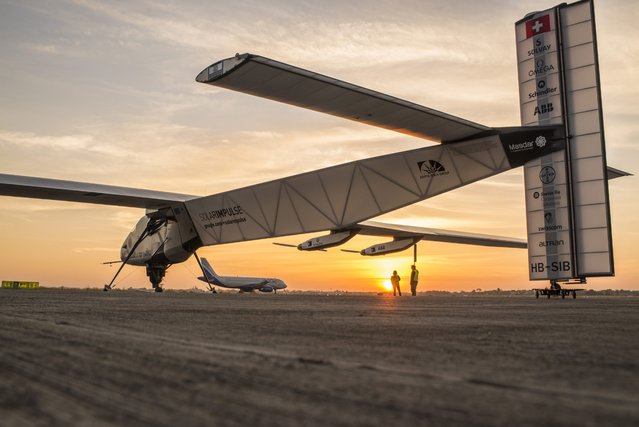
A handout picture provided by Solar Impulse on 18 March 2015 shows the Swiss solar-powered plane Solar Impulse 2, HB-SIB, taking off with Swiss explorer Andre Borshberg on board for the third leg Ahmedabad to Varanasi, of the Round-The-World, in Ahmedabad, India, 18 March 2015. Swiss explorers Bertrand Piccard and Andre Borschberg attempt to circumnavigate the world flying with an aircraft, with a 72 metres wingspan, powered only by solar energy without a drop of fuel. (Photo by EPA/Solar Impulse)

A handout picture provided by Solar Impulse on 18 March 2015 shows the Swiss solar-powered plane Solar Impulse 2, HB-SIB, taking off with Swiss explorer Andre Borshberg on board for the third leg Ahmedabad to Varanasi, of the Round-The-World, in Ahmedabad, India, 18 March 2015. Swiss explorers Bertrand Piccard and Andre Borschberg attempt to circumnavigate the world flying with an aircraft, with a 72 metres wingspan, powered only by solar energy without a drop of fuel. (Photo by EPA/Solar Impulse)
Details
21 Mar 2015 12:56:00
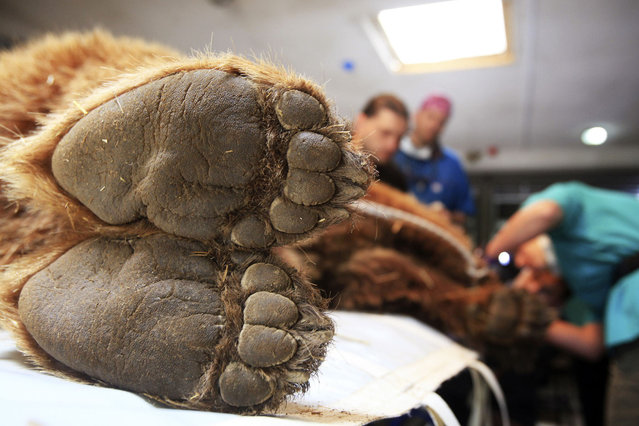
A brown bear is checked by foreign veterinaries and local staff members at the Four Paws Bear Sanctuary in Pristina, on May 9, 2014. (Photo by Hazir Reka/Reuters)

A brown bear is checked by foreign veterinaries and local staff members at the Four Paws Bear Sanctuary in Pristina, on May 9, 2014. (Photo by Hazir Reka/Reuters)
Details
10 May 2014 15:00:00
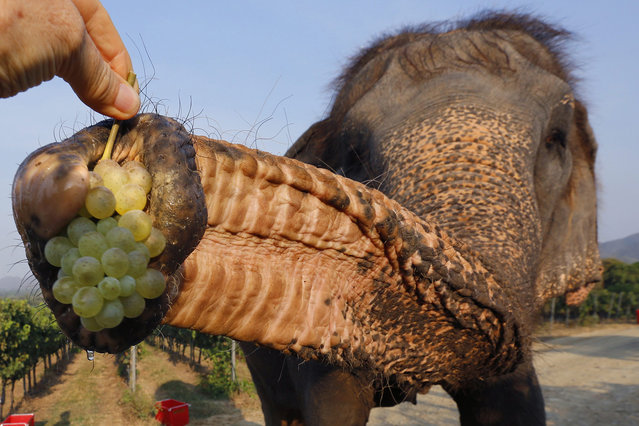
Tourists feed freshly picked grapes to 40-year-old elephant Boonruen, a long-term resident of the Hua Hin Hills vineyard, that used to be an elephant corral in Hua Hin, about 200km southwest of Bangkok, Thailand, 08 March 2016. The winery is among a handful of companies producing new latitude wines in non-traditional wine areas of the world near the equator. Harvest is only once a year in Thailand, this year in March. (Photo by Barbara Walton/EPA)

Tourists feed freshly picked grapes to 40-year-old elephant Boonruen, a long-term resident of the Hua Hin Hills vineyard, that used to be an elephant corral in Hua Hin, about 200km southwest of Bangkok, Thailand, 08 March 2016. The winery is among a handful of companies producing new latitude wines in non-traditional wine areas of the world near the equator. Harvest is only once a year in Thailand, this year in March. (Photo by Barbara Walton/EPA)
Details
20 Mar 2016 11:20:00
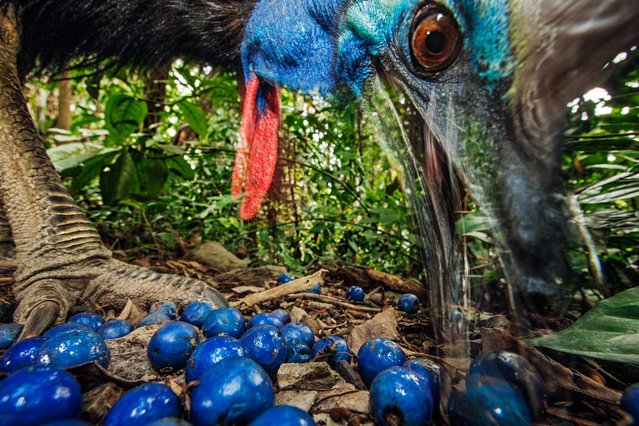
“Cassowaries are large, flightless birds related to emus and (more distantly) to ostriches, rheas, and kiwis”, writes Olivia Judson in the September issue of National Geographic magazine. (Photo by Christian Ziegler/National Geographic)

“Cassowaries are large, flightless birds related to emus and (more distantly) to ostriches, rheas, and kiwis”, writes Olivia Judson in the September issue of National Geographic magazine. How large? People-size: Adult males stand well over five foot five and top 110 pounds. Females are even taller, and can weigh more than 160 pounds. Dangerous when roused, they’re shy and peaceable when left alone. But even birds this big and tough are prey to habitat loss. The dense New Guinea and Australia rain forests where they live have dwindled. Today cassowaries might number 1,500 to 2,000. And because they help shape those same forests – by moving seeds from one place to another – “if they vanish”, Judson writes, “the structure of the forest would gradually change” too. (Photo by Christian Ziegler/National Geographic)

Details
06 Jan 2014 12:21:00
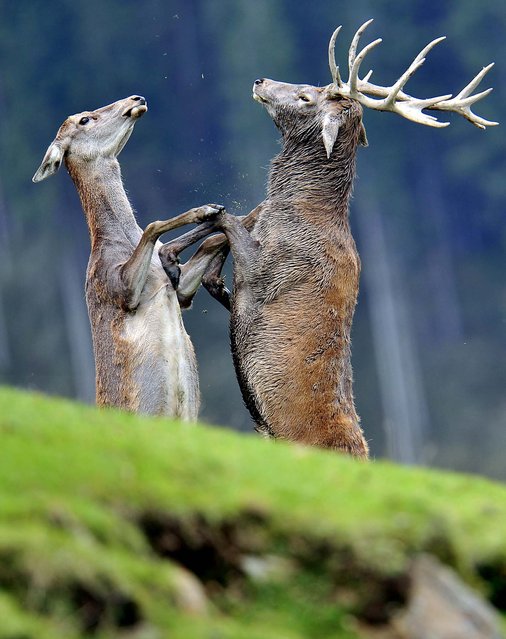
Two stags fight in a wildlife park in Aurach near Kitzbuehel, in the Austrian province of Tyrol. (Photo by Kerstin Joensson/Associated Press)

Two stags fight in a wildlife park in Aurach near Kitzbuehel, in the Austrian province of Tyrol. (Photo by Kerstin Joensson/Associated Press)
Details
30 Mar 2015 10:00:00