Loading...
Done
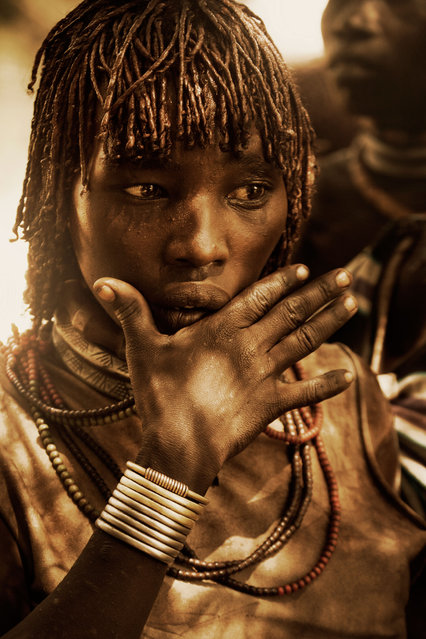
The Hamar people traditionally use red ocher clay to braid the hair of their women. (Photo by Diego Arroyo)

During his time in Ethiopia, New York-based art director and photographer Diego Arroyo spent time with the Hamar, Mursi, Dassanech, and Arbore Tribes. They, along with several others tribes, make up the 200,000 people situated in Africa’s Great Rift Valley. The people of the Omo Valley are still primarily herders and farmers, living an isolated and simple life. While they have yet to be truly touched by globalization, they could soon disappear. Their way of life is being threatened by a massive hydroelectric dam. (Photo by Diego Arroyo)
Details
13 Aug 2014 10:00:00


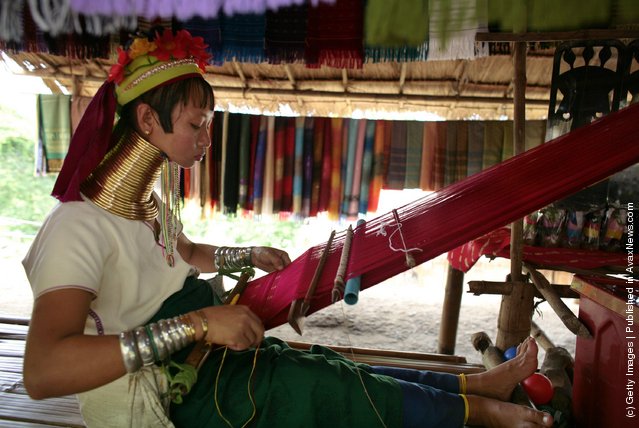
Mah Chan, a Long Neck Padaung hill tribe woman weaves a scraf for sale to tourists in a small village where 30 familes live July 13, 2006 in Chiang Dao, Thailand. All the Long Neck villages are set up for tourists and just over a year ago the hill tribe members were hand picked to move closer to Chiang Mai from more remote communities so that they could be more accessible. The Padaung women famously wear brass rings around their necks, beginning at five-years-old, to distort the growth of their collarbones and making them look like they have long necks. They are originally from eastern Burma near the Thailand border. (Photo by Paula Bronstein/Getty Images)
Details
19 Apr 2011 11:56:00
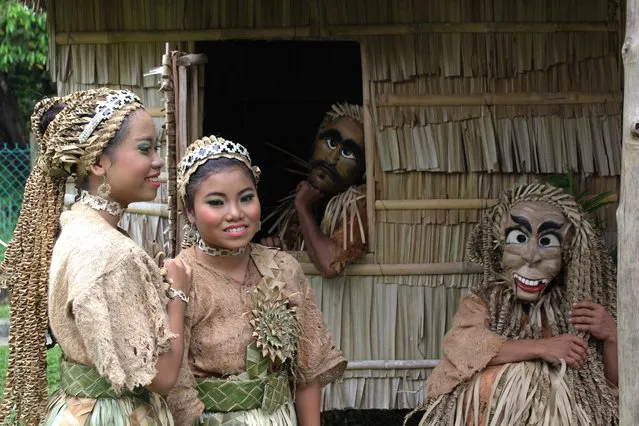
The People of Mah Meri tribe at home at Pulau Carey village on December 03, 2016 in Selangor, Malaysia. (Photo by Yuli Seperi/Sijori Images/Barcroft India)

The People of Mah Meri tribe at home at Pulau Carey village on December 03, 2016 in Selangor, Malaysia. The Mah Meri people are one 18 tribes of Orang Asal (indigenous people) living in west Malaysia. The Mah Meri are know for thei wood carvings and also for the richness of their songs and dances. (Photo by Yuli Seperi/Sijori Images/Barcroft India)
Details
06 Dec 2016 10:38:00
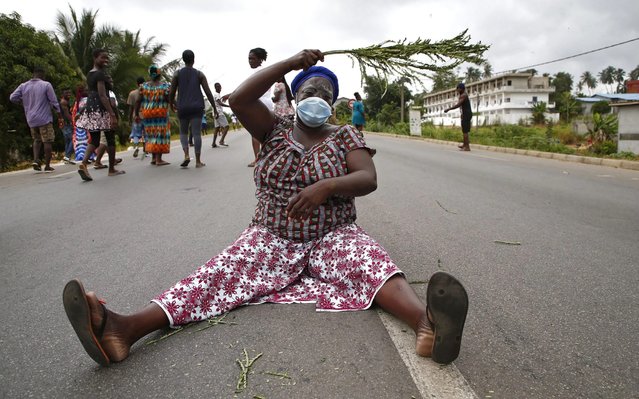
Opposition supporters march in the streets during a demonstration against the Ivorian President running for a third term in the next presidential elections, in Bonoua, Ivory Coast, 21 August 2020. The Ivorian opposition opposes a third term for incumbent president Ouattara who has been in power for ten years. The presidential elections will be held in October 2020. (Photo by Legnan Koula/EPA/EFE)

Opposition supporters march in the streets during a demonstration against the Ivorian President running for a third term in the next presidential elections, in Bonoua, Ivory Coast, 21 August 2020. The Ivorian opposition opposes a third term for incumbent president Ouattara who has been in power for ten years. The presidential elections will be held in October 2020. (Photo by Legnan Koula/EPA/EFE)
Details
05 Sep 2020 00:05:00
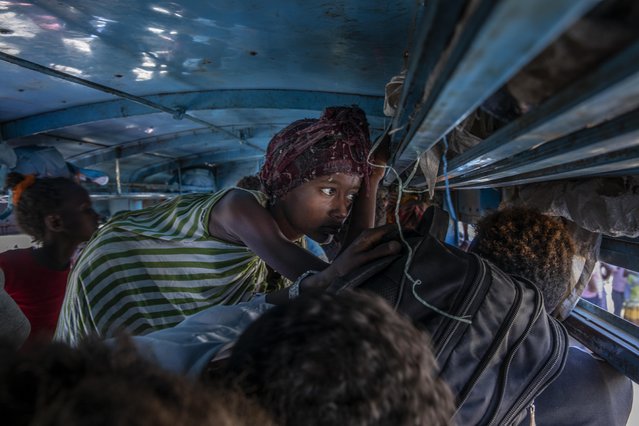
Tigray refugees who fled the conflict in the Ethiopia's Tigray ride a bus going to the Village 8 temporary shelter, near the Sudan-Ethiopia border, in Hamdayet, eastern Sudan, Tuesday, December 1, 2020. (Photo by Nariman El-Mofty/AP Photo)

Tigray refugees who fled the conflict in the Ethiopia's Tigray ride a bus going to the Village 8 temporary shelter, near the Sudan-Ethiopia border, in Hamdayet, eastern Sudan, Tuesday, December 1, 2020. (Photo by Nariman El-Mofty/AP Photo)
Details
11 Dec 2020 00:01:00
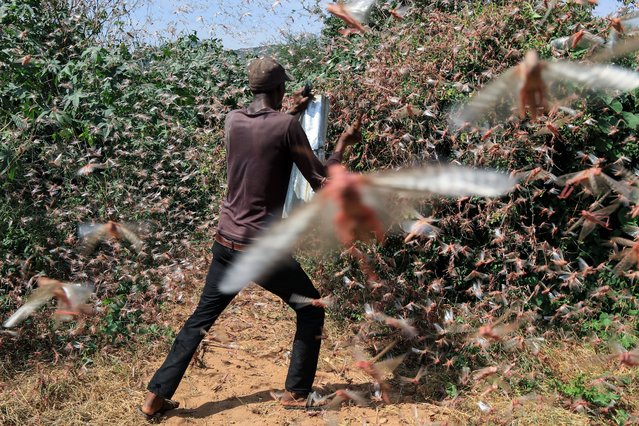
A man uses iron sheet to make noises, as a way of trying to disperse desert locusts that had invaded their farms during the second wave invasion in Kakongo village, in Nuu-Mwingi East, in Kitui, Kenya, 06 February 2021. The second wave invasion of the desert locusts in the country comes at a time where most famers are expecting to harvest their farm produce in the country. According to the United Nations Food and Agriculture Organization (FAO), on 04 February, warned numerous immature desert locust swarms persist in southern Ethiopia and Kenya. Some of the swarms are in community areas and therefore cannot be treated. In Kenya, immature swarms continue to spread westwards across northern and central counties where there are currently about 20 small swarms present, mostly about 50 hectares in size, it said. (Photo by Daniel Irungu/EPA/EFE)

A man uses iron sheet to make noises, as a way of trying to disperse desert locusts that had invaded their farms during the second wave invasion in Kakongo village, in Nuu-Mwingi East, in Kitui, Kenya, 06 February 2021. The second wave invasion of the desert locusts in the country comes at a time where most famers are expecting to harvest their farm produce in the country. (Photo by Daniel Irungu/EPA/EFE)
Details
25 Feb 2021 08:17:00
In this March 30, 2020, photo, Zandile Mlotshwa, 21, cashier at Spar supermarket in the Norwood suburb of Johannesburg, counts her cash at the end of her shift. From South Africa to Italy to the U.S., grocery workers – many in low-wage jobs – are manning the front lines amid worldwide lockdowns, their work deemed essential to keep food and critical goods flowing. (Photo by Jerome Delay/AP Photo)

In this March 30, 2020, photo, Zandile Mlotshwa, 21, cashier at Spar supermarket in the Norwood suburb of Johannesburg, counts her cash at the end of her shift. From South Africa to Italy to the U.S., grocery workers – many in low-wage jobs – are manning the front lines amid worldwide lockdowns, their work deemed essential to keep food and critical goods flowing. (Photo by Jerome Delay/AP Photo)
Details
25 Apr 2020 00:03:00
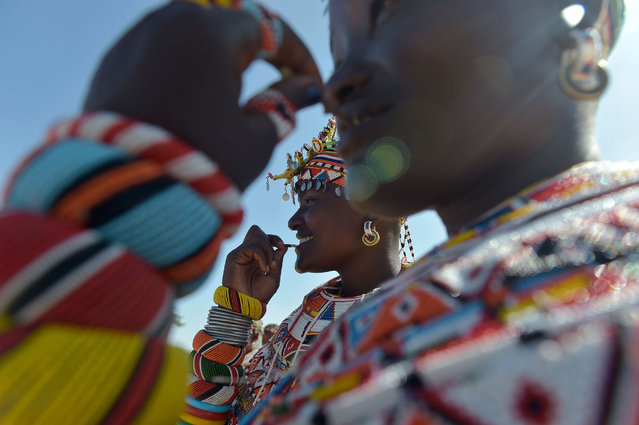
Samburu women of the Lorubai traditional dance group are seen wearing traditional beaded necklaces during a Peace Marathon for pastoralist communities at the Archers post in Isiolo, Kenya on April 26, 2018. The aim of the event is to bring the warring pastoralist communities of Samburu, Turkana, Borana and others together, and end the rivalry due to scarcity of pasture and water in the region. The peace marathon is organized by Kenya's Northern Rangeland Trust. (Photo by Simon Maina/AFP Photo)

Samburu women of the Lorubai traditional dance group are seen wearing traditional beaded necklaces during a Peace Marathon for pastoralist communities at the Archers post in Isiolo, Kenya on April 26, 2018. The aim of the event is to bring the warring pastoralist communities of Samburu, Turkana, Borana and others together, and end the rivalry due to scarcity of pasture and water in the region. The peace marathon is organized by Kenya's Northern Rangeland Trust. (Photo by Simon Maina/AFP Photo)
Details
21 Jun 2018 00:05:00