Loading...
Done
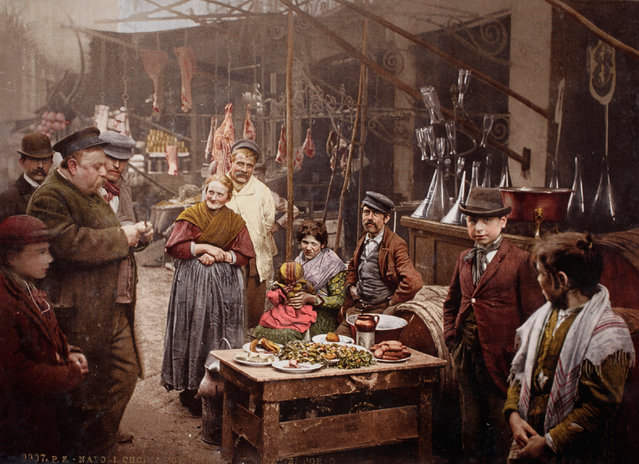
The finished photochromes were produced using at least six different tint stones, although many more were often used. Here: Street food in the Strada del Porto in Naples, Italy, 1899. (Photo by Swiss Camera Museum/The Guardian)

Photochromes are vibrant and nuanced prints hand-coloured from black-and-white negatives. Created using a process pioneered in the 1880s, these images offer a fascinating insight into the world when colour photography was still in its infancy. A Tour of the World in Photochromes is at the Swiss Camera Museum, Vevey, until 21 August. Here: Street food in the Strada del Porto in Naples, Italy, 1899. (Photo by Swiss Camera Museum/The Guardian)
Details
07 Jul 2016 10:56:00
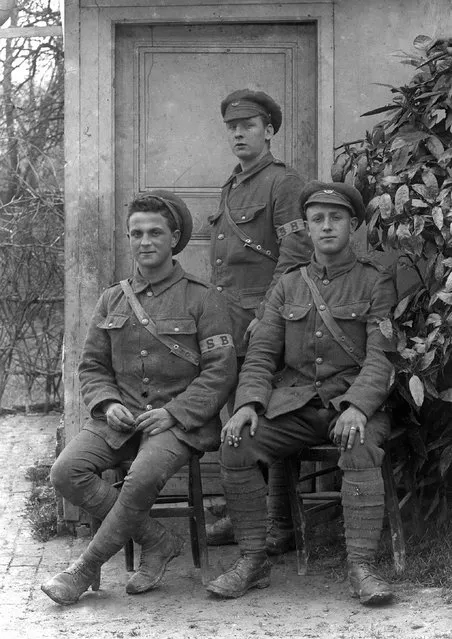
These images, scanned from old glass negatives which had surfaced in northern France, were believed to have been taken by a local amateur photographer in 1916. They showed British and a few Australian soldiers, in formal or informal poses, during or just before the most murderous battle in the history of the British Empire – Battle of the Somme. Who are these British and British Empire soldiers? The identity of the soldiers is, and may always remain, a mystery. (Property of Bernard Gardin/Dominique Zanardi/Joel Scribe/The Independent Magazine)

These images, scanned from old glass negatives which had surfaced in northern France, were believed to have been taken by a local amateur photographer in 1916. They showed British and a few Australian soldiers, in formal or informal poses, during or just before the most murderous battle in the history of the British Empire – Battle of the Somme. Who are these British and British Empire soldiers? The identity of the soldiers is, and may always remain, a mystery... (Property of Bernard Gardin/Dominique Zanardi/Joel Scribe/The Independent Magazine)
Details
04 Aug 2014 14:06:00
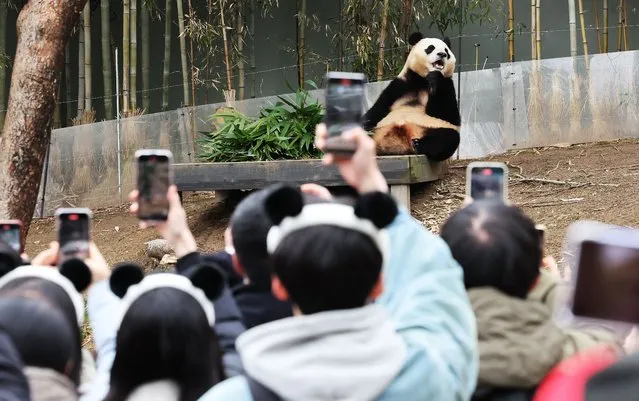
Visitors take photos of Fu Bao, a giant panda, at Everland amusement park in Yongin, south of Seoul, South Korea, 25 February 2024. The panda will be displayed to the public until 03 March, before returning to China in early April. The female panda, which was born to giant panda Ai Bao and her partner, Le Bao, at the Everland amusement park in Yongin, south of Seoul, in 2020, will be returned to China under an international agreement. (Photo by Yonhap/EPA)

Visitors take photos of Fu Bao, a giant panda, at Everland amusement park in Yongin, south of Seoul, South Korea, 25 February 2024. The panda will be displayed to the public until 03 March, before returning to China in early April. The female panda, which was born to giant panda Ai Bao and her partner, Le Bao, at the Everland amusement park in Yongin, south of Seoul, in 2020, will be returned to China under an international agreement. (Photo by Yonhap/EPA)
Details
16 Mar 2024 00:49:00
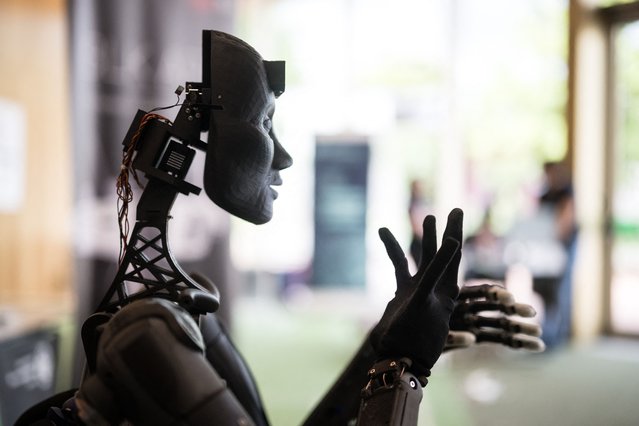
A robot using artificial intelligence is displayed at a stand during the International Telecommunication Union (ITU) AI for Good Global Summit in Geneva, on May 30, 2024. Humanity is in a race against time to harness the colossal emerging power of artificial intelligence for the good of all, while averting dire risks, a top UN official said. (Photo by Fabrice Coffrini/AFP Photo)

A robot using artificial intelligence is displayed at a stand during the International Telecommunication Union (ITU) AI for Good Global Summit in Geneva, on May 30, 2024. Humanity is in a race against time to harness the colossal emerging power of artificial intelligence for the good of all, while averting dire risks, a top UN official said. (Photo by Fabrice Coffrini/AFP Photo)
Details
19 Sep 2025 03:05:00
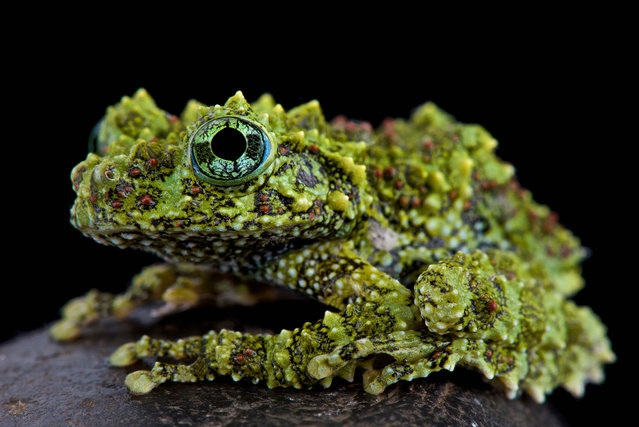
Mossy frog (Theloderma corticale). (Photo by Matthijs Kuijpers/The Guardian)

Renowned amphibian and reptile photographer Matthijs Kuijpers has released his first book, “Cold Instinct”. Kuijpers says the aim of the work is “for the viewer to abandon the fear and negative thoughts that often surround these animals”. What’s left is the bizarre beauty of these creatures in their simplest form – no backgrounds and no distractions. Here: Mossy frog (Theloderma corticale). (Photo by Matthijs Kuijpers/The Guardian)
Details
10 May 2019 00:03:00
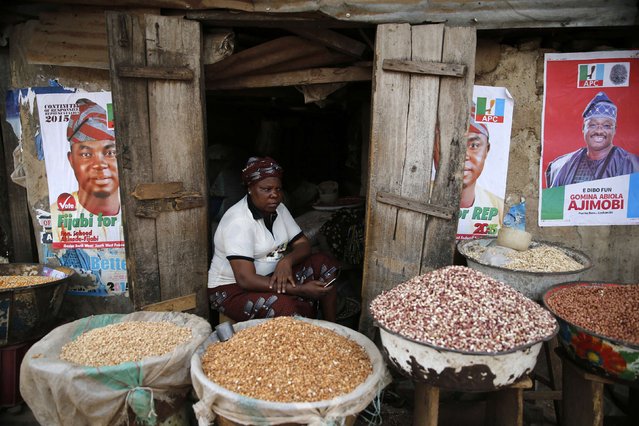
Latefat Alao, 56, a ethnic Yoruba Muslim woman, waits for customers in front of her in Beere market in Ibadan, southwest Nigeria, January 29, 2015. Much of the grain and wheat traders like Alao sell comes from the north and Boko Haram's campaign has negatively affected farmers and food markets. (Photo by Akintunde Akinleye/Reuters)

Latefat Alao, 56, a ethnic Yoruba Muslim woman, waits for customers in front of her in Beere market in Ibadan, southwest Nigeria, January 29, 2015. Much of the grain and wheat traders like Alao sell comes from the north and Boko Haram's campaign has negatively affected farmers and food markets. Reuters photographer Akintunde Akinleye photographed Nigerians and asked them about their views on the elections as well as their hopes and concerns for the country. (Photo by Akintunde Akinleye/Reuters)
Details
12 Feb 2015 12:44:00
An art installation formed with milk churns, made by land art artist Gerard Benoit a la Guillaume, is seen at the Chenau de Mayen in the resort of Leysin, Switzerland August 7, 2015. More than 80 milk churns were placed between the Tour d'Ai and the Tour de Mayen summits at an altitude of 2,000 meters (6,561 feet) above sea level under the direction of the artist, to be photographed for his ongoing art project entitled “Milk churns without borders”. (Photo by Denis Balibouse/Reuters)

An art installation formed with milk churns, made by land art artist Gerard Benoit a la Guillaume, is seen at the Chenau de Mayen in the resort of Leysin, Switzerland August 7, 2015. More than 80 milk churns were placed between the Tour d'Ai and the Tour de Mayen summits at an altitude of 2,000 meters (6,561 feet) above sea level under the direction of the artist, to be photographed for his ongoing art project entitled “Milk churns without borders”. (Photo by Denis Balibouse/Reuters)
Details
08 Aug 2015 13:16:00
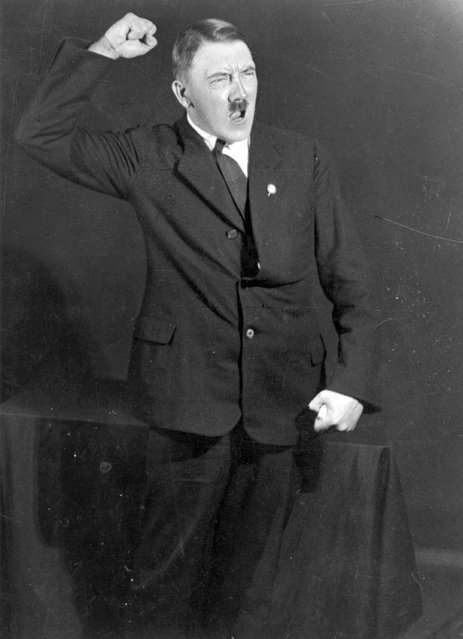
1925: Hitler posing to a recording of one of his speeches after his release from Landsberg Prison. (Photo by Heinrich Hoffmann/Keystone Features)

Adolf Hitler (1889–1945), leader of the National Socialist German Workers' Party (NSDAP), strikes a pose for photographer Heinrich Hoffmann whilst listening to a recording of his own speeches, 1925. After seeing the photographs, Hitler ordered Hoffmann to destroy the negatives, but he disobeyed. (Photo by Heinrich Hoffmann). P.S. All pictures are presented in high resolution.
Details
15 Sep 2012 09:08:00