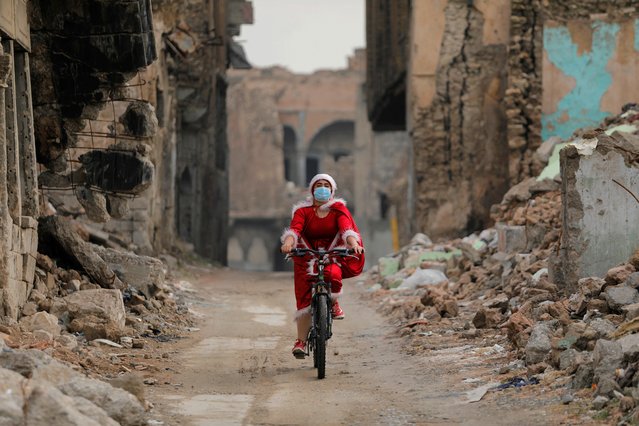
An Iraqi woman, dressed as Santa Claus, rides her bicycle amid the spread of the coronavirus in the old city of Mosul, Iraq, December 18, 2020. (Photo by Abdullah Rashid/Reuters)
Iranian soccer fan wait for the start of the group B match between Iran and Spain at the 2018 soccer World Cup in the Kazan Arena in Kazan, Russia, Wednesday, June 20, 2018. (Photo by Diego Azubel/EPA/EFE)
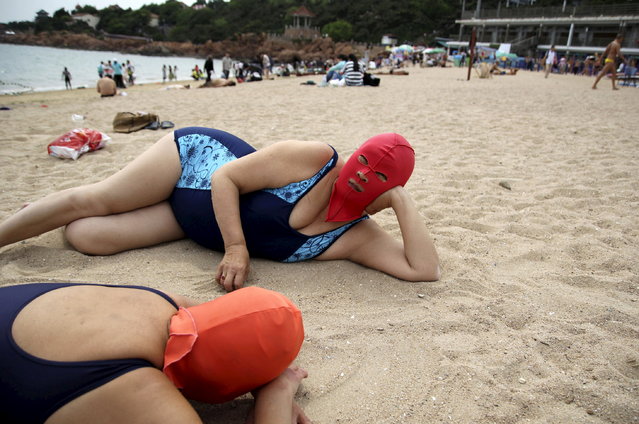
Women wearing face-kini masks lie on a beach to rest in Qingdao, Shandong province, China, June 3, 2015. A pale complexion is highly prized as delicate and feminine in China while dark skin suggests tanning caused by farming the fields or other lowly, outdoor work. (Photo by Reuters/Stringer)
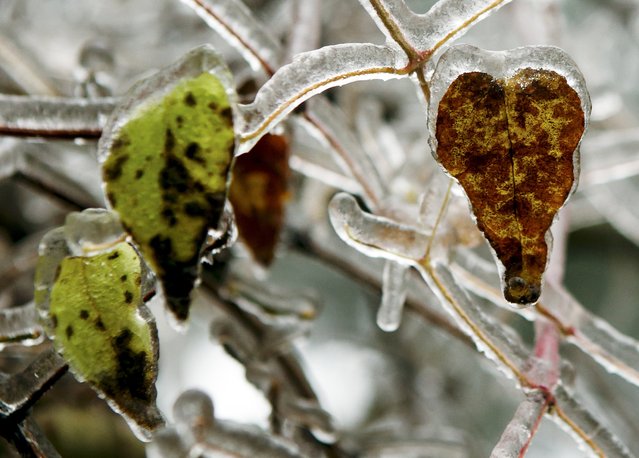
Ice covered leafs are pictured on a tree near Amstall in northern Austria, December 2, 2014. Freezing fog and rain covered parts of the region with ice, causing blocked roads due to fallen trees and closed schools for security reasons, local media report. (Photo by Heinz-Peter Bader/Reuters)
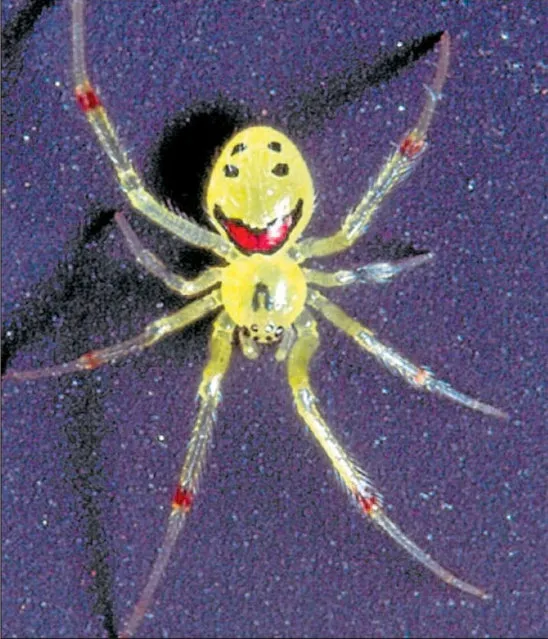
Theridion grallator, also known as the "happy face spider", is a spider in the family Theridiidae. Its Hawaiian name is nananana makakiʻi (face-patterned spider). The specific epithet grallator is Latin for "stilt walker", a reference to the species' long, spindly legs.
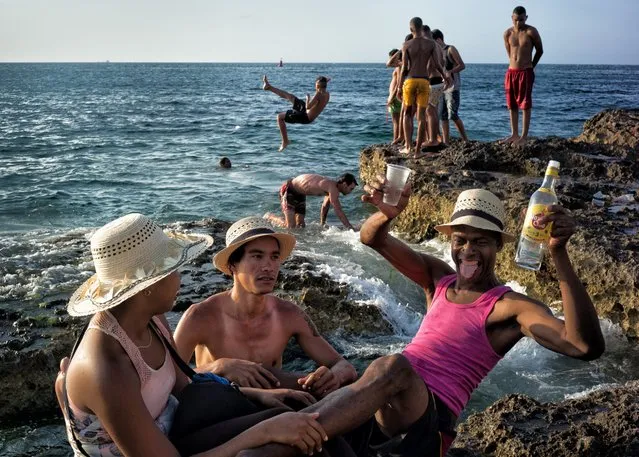
Photographer Dotan Saguy visited Cuba expecting to find resentment toward Americans, but he says that, instead, “Every Cuban I met was warm and welcoming despite me being an American”. Here: Several groups of locals relax on the Malecon in Old Havana, Cuba May 1, 2016. Some chat and drink rum while others dive into the warm Caribbean Sea. (Photo by Dotan Saguy)
Vanessa, thirty-five, had three children with an abusive husband. She “lost her mind, started doing heroin”, after losing the children, who were taken away and given to her mother. The drugs led to homelessness and prostitution. She grew up on Arthur Avenue in the Bronx, but now spends her time in Hunts Point, “trying to survive everyday. Just doing whatever it takes”.
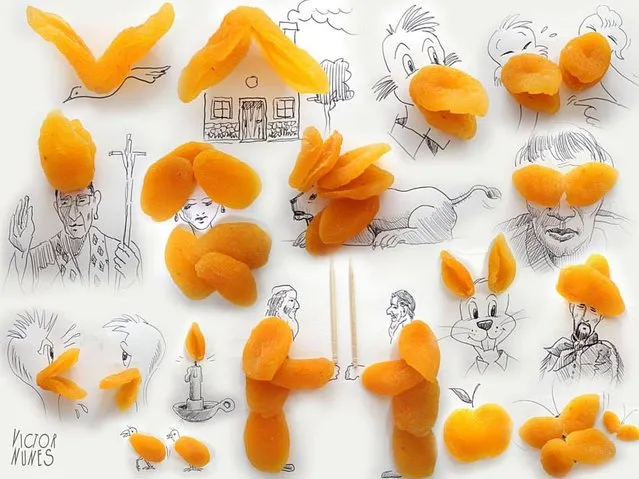
Artist Victor Nunes combines every-day objects with simple illustrations to turn them into pictures of faces, animals and other playful scenes. His images invite us to look at the world differently and find creative images in our surroundings. Nunes’ art is a great example of pareidolia, which is our propensity to give meaning to random objects (like in this post about seeing faces in random objects). It’s the reason why we associate a smiley face with a human face and why some of Nunes’ pieces of popcorn or bread resemble faces to us.