Loading...
Done
Women take part in a rally called “March of Whores” to protest against discrimination and violence against women on International Women's Day in Bogota, Colombia, March 8, 2016. (Photo by John Vizcaino/Reuters)

Women take part in a rally called “March of Whores” to protest against discrimination and violence against women on International Women's Day in Bogota, Colombia, March 8, 2016. (Photo by John Vizcaino/Reuters)
Details
10 Mar 2016 12:43:00
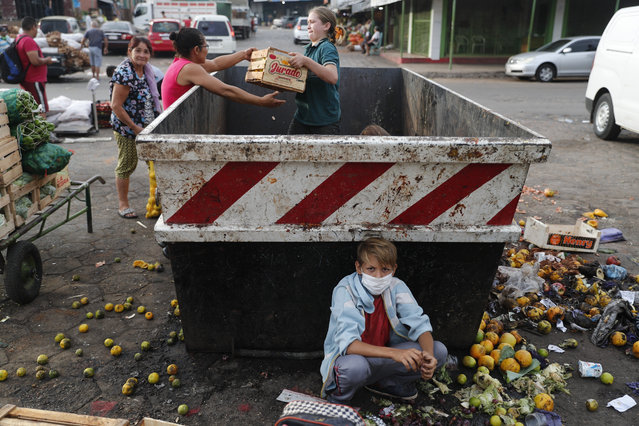
Fabian Ramirez, 11, scavenges a trash container for vegetables with his family that were discarded at the “Mercado de Abasto”, a market for vendors, during the fourth week of a quarantine to help contain the spread of the new coronavirus in Asuncion, Paraguay, Thursday, April 2, 2020. COVID-19 causes mild or moderate symptoms for most people, but for some, especially older adults and people with existing health problems, it can cause more severe illness or death. (Photo by Jorge Saenz/AP Photo)

Fabian Ramirez, 11, scavenges a trash container for vegetables with his family that were discarded at the “Mercado de Abasto”, a market for vendors, during the fourth week of a quarantine to help contain the spread of the new coronavirus in Asuncion, Paraguay, Thursday, April 2, 2020. (Photo by Jorge Saenz/AP Photo)
Details
05 Apr 2020 00:07:00
1st prize in the People Observed Portraits Stories category. Carla Kogelman, the Netherlands. The photo shows Hannah and Alena, two sisters living in the rural village of Merkenbrechts, Austria. (Photo by Carla Kogelman/World Press Photo)

1st prize in the People Observed Portraits Stories category. Carla Kogelman, the Netherlands. The photo shows Hannah and Alena, two sisters living in the rural village of Merkenbrechts, Austria. (Photo by Carla Kogelman/World Press Photo)
Details
16 Feb 2014 12:34:00
The finishing touches are made to a new wax figure of Theresa May at Madame Tussauds in London, England on November 7, 2017. (Photo by Victoria Jones/PA Wire)

The finishing touches are made to a new wax figure of Theresa May at Madame Tussauds in London, England on November 7, 2017. (Photo by Victoria Jones/PA Wire)
Details
09 Nov 2017 05:55:00
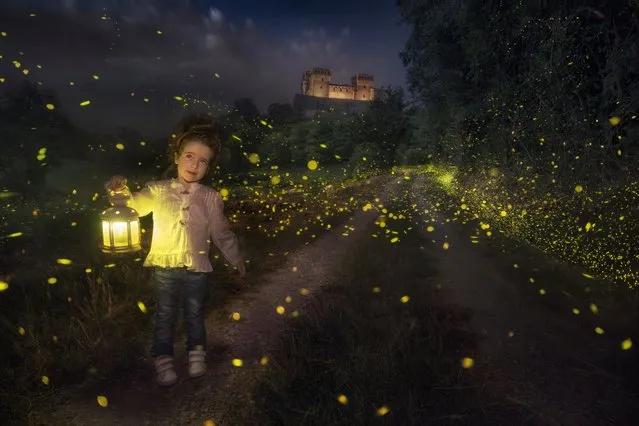
Thousands of fireflies dance around Aurora Ghizzi Panizza, age 4, in the grounds of the 15th-century Castello di Torrechiara in Parma, Italy on July 16, 2022. (Photo by Alberto Ghizzi Panizza/Animal News Agency)

Thousands of fireflies dance around Aurora Ghizzi Panizza, age 4, in the grounds of the 15th-century Castello di Torrechiara in Parma, Italy on July 16, 2022. (Photo by Alberto Ghizzi Panizza/Animal News Agency)
Details
28 Oct 2023 06:14:00
A woman rides a Vespa during the Annual Columbus day parade in New York on October 11, 2021. (Photo by Kena Betancur/AFP Photo)

A woman rides a Vespa during the Annual Columbus day parade in New York on October 11, 2021. (Photo by Kena Betancur/AFP Photo)
Details
18 Oct 2021 07:29:00
New York Police officers arrest a drag queen during a weekly “We Choose Freedom” march through the West Village, Thursday, November 5, 2020, in New York. (Photo by Seth Wenig/AP Photo)

New York Police officers arrest a drag queen during a weekly “We Choose Freedom” march through the West Village, Thursday, November 5, 2020, in New York. (Photo by Seth Wenig/AP Photo)
Details
09 Nov 2020 00:01:00
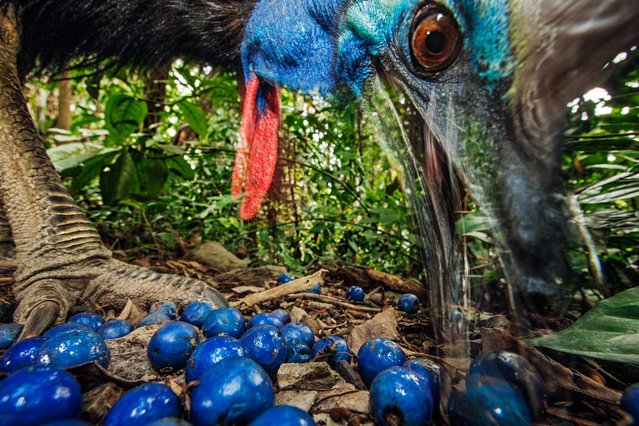
“Cassowaries are large, flightless birds related to emus and (more distantly) to ostriches, rheas, and kiwis”, writes Olivia Judson in the September issue of National Geographic magazine. (Photo by Christian Ziegler/National Geographic)

“Cassowaries are large, flightless birds related to emus and (more distantly) to ostriches, rheas, and kiwis”, writes Olivia Judson in the September issue of National Geographic magazine. How large? People-size: Adult males stand well over five foot five and top 110 pounds. Females are even taller, and can weigh more than 160 pounds. Dangerous when roused, they’re shy and peaceable when left alone. But even birds this big and tough are prey to habitat loss. The dense New Guinea and Australia rain forests where they live have dwindled. Today cassowaries might number 1,500 to 2,000. And because they help shape those same forests – by moving seeds from one place to another – “if they vanish”, Judson writes, “the structure of the forest would gradually change” too. (Photo by Christian Ziegler/National Geographic)

Details
06 Jan 2014 12:21:00