Loading...
Done
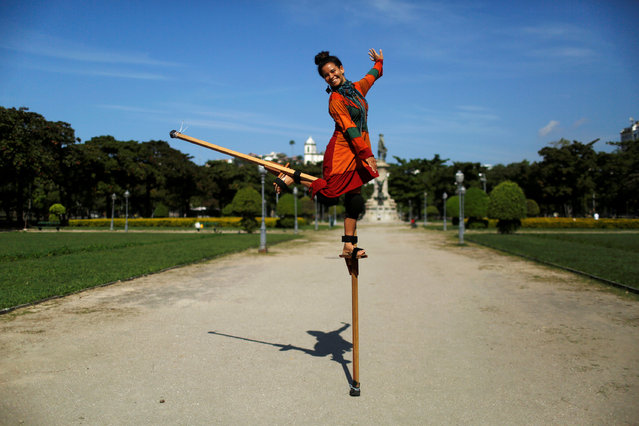
Raquel Poti, a 32-year-old street artist, poses at a park in Rio de Janeiro, Brazil, June 25, 2016. Raquel thinks the Olympics promotes a lifestyle that combines sports, culture and education. She is concerned about the large investment for the event while the population needs improvements in basic services. (Photo by Pilar Olivares/Reuters)

Just a week before Rio de Janeiro hosts South America's first Olympics, city residents expressed mixed feelings about the cost and security of the Games, while holding out hope they will bring joy to a nation facing economic and political crises. The conflicted thoughts mirror a recent survey by the Datafolha polling group showing that half of Brazilians were opposed to holding the Games, while 63 percent think the costs of hosting the event will outweigh benefits. (Photo by Pilar Olivares/Reuters)
Details
03 Aug 2016 11:51:00


Everyone wants to get something for nothing - whether it's a lucky upgrade that means you can turn left when you get on a plane instead or heading off into the economy seats, or even getting a few extra features thrown in for free when you buy a new car.

As some of the sharpest businesses around, no-one understands this quite as well as casinos and that's why they all have a system that they call comps. It's short for "complimentary offers" and these are special treats specially designed to reward you for your loyalty to the casino in question. They're basically bonuses.
Details
30 Jan 2018 23:53:00
A man wearing a Guy Fawkes mask enjoys a ride on a 350-meter (1148 feet) long water slide during 2015 City Silde Festa in central Seoul, South Korea, July 19, 2015. (Photo by Kim Hong-Ji/Reuters)

A man wearing a Guy Fawkes mask enjoys a ride on a 350-meter (1148 feet) long water slide during 2015 City Silde Festa in central Seoul, South Korea, July 19, 2015. A 350 meter-long waterslide has been installed in downtown of Seoul, the longest waterslide to be recorded in Korea, according to local media. (Photo by Kim Hong-Ji/Reuters)
Details
20 Jul 2015 09:45:00
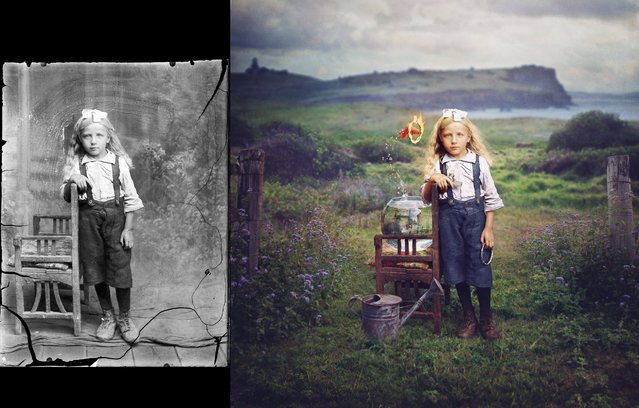
The Costica photo on the left inspired Australia-based photographer Jane Long to create her version, titled “Innocence”. (Photo by Costica Acsinte Archive/Jane Long)

The “Dancing With Costica” series began when Australia-based photographer Jane Long decided to brush up on her retouching skills. After finding the Costica Acsinte Archive on Flickr, she became fascinated with the images and their subjects, wanting to bring them to life and give them a story. Here: the Costica photo on the left inspired Jane Long to create her version, titled “Innocence”. (Photo by Costica Acsinte Archive/Jane Long)
Details
01 Sep 2014 09:48:00


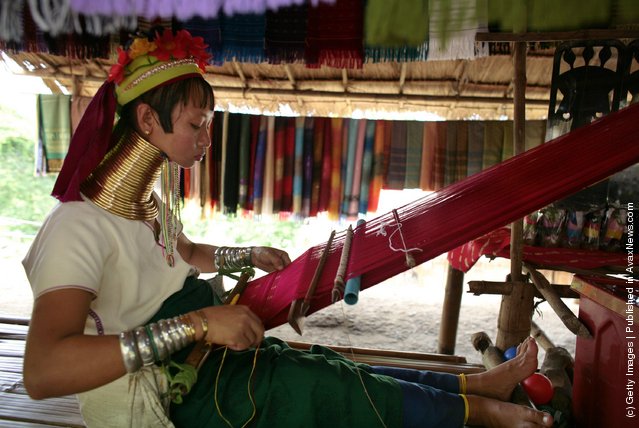
Mah Chan, a Long Neck Padaung hill tribe woman weaves a scraf for sale to tourists in a small village where 30 familes live July 13, 2006 in Chiang Dao, Thailand. All the Long Neck villages are set up for tourists and just over a year ago the hill tribe members were hand picked to move closer to Chiang Mai from more remote communities so that they could be more accessible. The Padaung women famously wear brass rings around their necks, beginning at five-years-old, to distort the growth of their collarbones and making them look like they have long necks. They are originally from eastern Burma near the Thailand border. (Photo by Paula Bronstein/Getty Images)
Details
19 Apr 2011 11:56:00
Long Exposure Airport Photos ByTerence Chang

Terence Chang's (aka exxonvaldez) long exposure photographs, capturing only streaks of light as airplanes arrive and depart from the San Francisco airport, certainly are stunning. There's just something so magical about seeing the various patterns created in the sky, even over a relatively short amount of time.
Details
08 Nov 2013 11:23:00
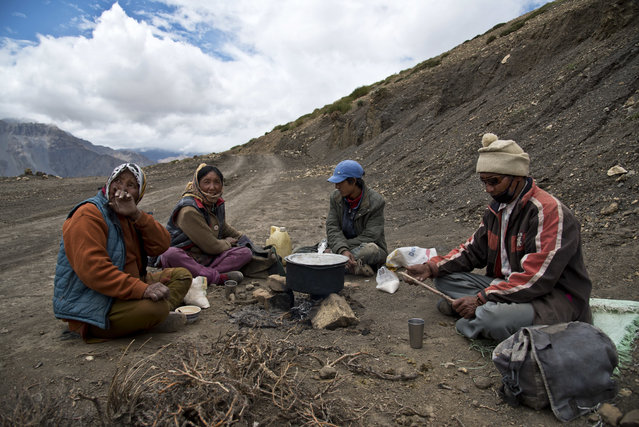
In this August 17, 2016, photo, from left to right, Chhering Chodom, 60, Tashi Yangzom, 50, Lobsang Chhering, 27, and Dorje Tandup, 58, drink milk tea on the side of the road. For centuries, the sleepy valley nestled in the Indian Himalayas remained a hidden Buddhist enclave forbidden to outsiders. Enduring the harsh year-round conditions of the high mountain desert, the people of Spiti Valley lived by a simple communal code – share the Earth's bounty, be hospitable to neighbors, and eschew greed and temptation at all turns. That's all starting to change, for better or worse. Since India began allowing its own citizens as well as outsiders to visit the valley in the early 1990s, tourism and trade have boomed. And the marks of modernization, such as solar panels, asphalt roads and concrete buildings, have begun to appear around some of the villages that dot the remote landscape at altitudes above 4,000 meters (13,000 feet). (Photo by Thomas Cytrynowicz/AP Photo)

In this August 17, 2016, photo, from left to right, Chhering Chodom, 60, Tashi Yangzom, 50, Lobsang Chhering, 27, and Dorje Tandup, 58, drink milk tea on the side of the road. For centuries, the sleepy valley nestled in the Indian Himalayas remained a hidden Buddhist enclave forbidden to outsiders. Enduring the harsh year-round conditions of the high mountain desert, the people of Spiti Valley lived by a simple communal code – share the Earth's bounty, be hospitable to neighbors, and eschew greed and temptation at all turns. That's all starting to change, for better or worse. (Photo by Thomas Cytrynowicz/AP Photo)
Details
15 Sep 2016 09:22:00
How Made It? We have Answer!!!

Wooden Puzzle Solutions Tooth and Nail
Details
08 Feb 2013 14:13:00