Loading...
Done
Estonia's olympic team female marathon runners triplets (L-R) Lily, Liina and Leila Luik run during a training session in Tartu, Estonia, May 26, 2016. Leila, Liina and Lily Luik will make Olympics history as the first identical triplets to compete against each other when they cross the start line for the women's marathon in Rio. (Photo by Ints Kalnins/Reuters)

Estonia's olympic team female marathon runners triplets (L-R) Lily, Liina and Leila Luik run during a training session in Tartu, Estonia, May 26, 2016. Leila, Liina and Lily Luik will make Olympics history as the first identical triplets to compete against each other when they cross the start line for the women's marathon in Rio. (Photo by Ints Kalnins/Reuters)
Details
27 May 2016 13:04:00
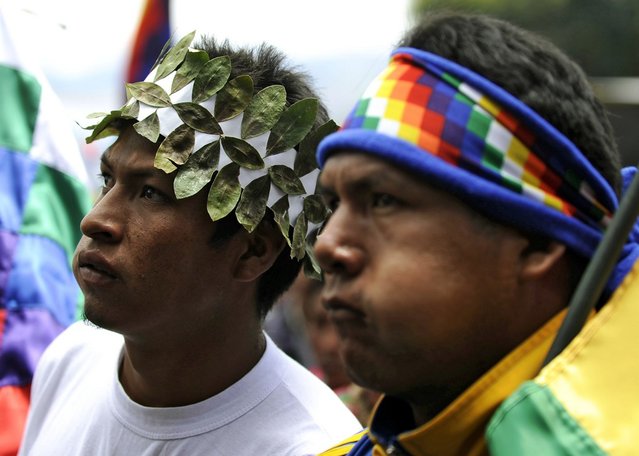
Coca growers chew coca leaves during a celebration for the reincorporation of Bolivia to the UN Convention Against Illicit Traffic in Narcotic Drugs in La Paz on January 14, 2013. "The coca leaf is not any more seen as cocaine (..), it is a victory of our identity" said Bolivian President Evo Morales. AFP PHOTO/Jorge Bernal        (Photo credit should read JORGE BERNAL/AFP/Getty Images)

Coca growers chew coca leaves during a celebration for the reincorporation of Bolivia to the UN Convention Against Illicit Traffic in Narcotic Drugs in La Paz on January 14, 2013. “The coca leaf is not any more seen as cocaine (...), it is a victory of our identity” said Bolivian President Evo Morales. (Photo by Jorge Bernal/AFP Photo)
Details
15 Jan 2013 10:16:00
Pakistani Waseem Akram, 27, dances during a private party in Rawalpindi, Pakistan. By day, Akram sells mobile phone accessories from an alleyway shop in an old neighborhood of this Pakistani city, Thursday, January 15, 2015. (Photo by Muhammed Muheisen/AP Photo)

Pakistani Waseem Akram, 27, dances during a private party in Rawalpindi, Pakistan. By day, Akram sells mobile phone accessories from an alleyway shop in an old neighborhood of this Pakistani city, Thursday, January 15, 2015. Across conservative Pakistan, where Islamic extremists launch near-daily attacks and many follow a strict interpretation of their Muslim faith, male cross-dressers and the transgendered face a challenge of balancing two identities. Some left their villages for the anonymity of a big city, fearing the reactions of their families while still concealing their identity from neighbors and co-workers. (Photo by Muhammed Muheisen/AP Photo)
Details
21 Jan 2015 13:27:00
Issues tackled in the show include gender, wealth, consumerism, the environment, protest and identity building. Here: David LaChapelle – October 2004. (Photo by David LaChapelle/The Guardian)

Vogue Italia is hosting a series of shows in Milan exploring how the magazine seeks to engage with hot social and political issues and provoke debate through images by top photographers. The Photo Vogue festival in Milan is hosting three exhibitions. The first, Fashion and Politics in Vogue Italia, looks at the magazine’s ambition to be a catalyst for change – in subtle and playful ways. Here: David LaChapelle – October 2004. (Photo by David LaChapelle/The Guardian)
Details
22 Nov 2017 06:10:00
Agence SEARCH

Another step further into the world of lattice shell structures: From Buckminster Fuller to Massimiliano Fuksas and James Law’s ‘Cybertecture Egg’, Agence SEARCH express their fascination by experimenting with the retail world proposing their version of ‘Cybertecture Egg’ for the interior of Beaugrenelle Shopping Mall without modifying the existing architecture. Thus the visitor’s first perception goes beyond the scale of the building, to encompass its referential universe, its status, and its identity.
Details
09 Jun 2015 10:30:00
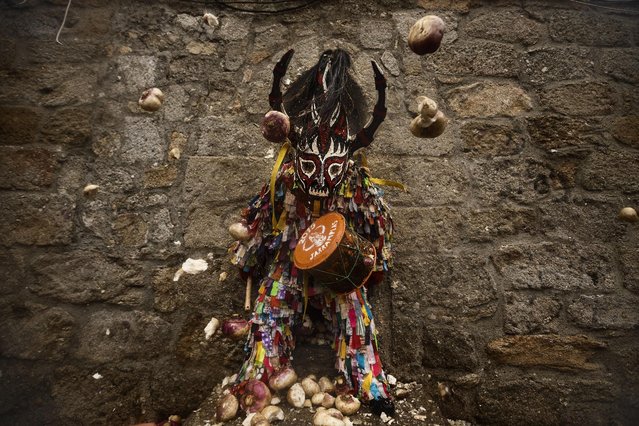
People throw turnips at the Jarramplas as he makes his way through the streets beating his drum during the Jarramplas Festival in Piornal, Spain, Tuesday, January 20, 2015. Jarramplas is a character that wears a costume made from colorful strips of fabric, and a devil-like mask and beats a drum through the streets of Piornal while residents throw turnips as a punishment for stealing cattle. (Photo by Daniel Ochoa de Olza/AP Photo)

People throw turnips at the Jarramplas as he makes his way through the streets beating his drum during the Jarramplas Festival in Piornal, Spain, Tuesday, January 20, 2015. Jarramplas is a character that wears a costume made from colorful strips of fabric, and a devil-like mask and beats a drum through the streets of Piornal while residents throw turnips as a punishment for stealing cattle. The exact origin of the festival are not known, various theories exist from the mythological punishment of Caco by Hercules, to a cattle thief ridiculed and expelled by his neighbors. The Jarramplas Festival takes place every year from the 19th till the 20th of January on Saint Sebastian Day. (Photo by Daniel Ochoa de Olza/AP Photo)
Details
21 Jan 2015 13:42:00
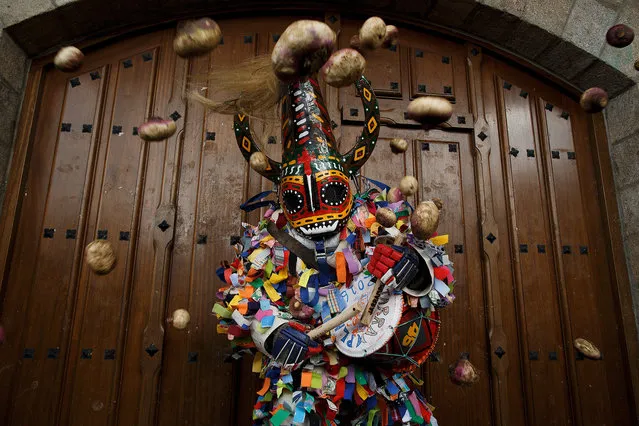
People throw turnips at the Jarramplas as he comes out from the church beating his drum during the Jarramplas Festival on January 20, 2016 in Piornal, Caceres province, Spain. The centuries old Jarramplas festival takes place annually every January 19-20 on Saint Sebastian Day and this year they expect to use more than 20 thousand kilogrames of turnips. Even though the exact origins of the festival are not known, various theories exist including the mythological punishment of Caco by Hercules. (Photo by Pablo Blazquez Dominguez/Getty Images)

People throw turnips at the Jarramplas as he comes out from the church beating his drum during the Jarramplas Festival on January 20, 2016 in Piornal, Caceres province, Spain. The centuries old Jarramplas festival takes place annually every January 19-20 on Saint Sebastian Day and this year they expect to use more than 20 thousand kilogrames of turnips. Even though the exact origins of the festival are not known, various theories exist including the mythological punishment of Caco by Hercules, a relation to ceremonies celebrated by the American Indians that were seen by the first conquerors, to a cattle thief ridiculed and expelled by his village neighbours. It is generally believed to symbolize the expulsion of everything bad. (Photo by Pablo Blazquez Dominguez/Getty Images)
Details
21 Jan 2016 13:21:00


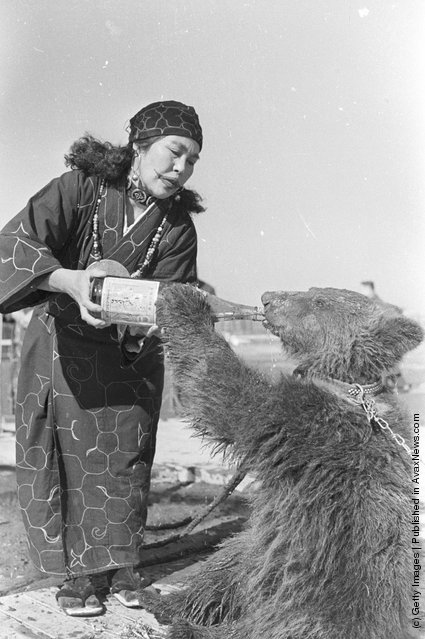
“The Ainu (アイヌ?), also called Aynu, Aino (アイノ), and in historical texts Ezo (蝦夷), are indigenous people or groups in Japan and Russia. Historically they spoke the Ainu language and related varieties and lived in Hokkaidō, the Kuril Islands, and much of Sakhalin. Most of those who identify themselves as Ainu still live in this same region, though the exact number of living Ainu is unknown. This is due to ethnic issues in Japan resulting in those with Ainu backgrounds hiding their identities and confusion over mixed heritages. In Japan, because of intermarriage over many years with Japanese, the concept of a 'pure Ainu' ethnic group is no longer feasible. Official estimates of the population are of around 25,000, while the unofficial number is upwards of 200,000 people”. – Wkipedia

Photo: A captive bear drinking from a large bottle held by an Ainu tribeswoman. (Photo by Evans/Three Lions/Getty Images). Circa 1955

Details
24 Mar 2011 14:01:00