Loading...
Done
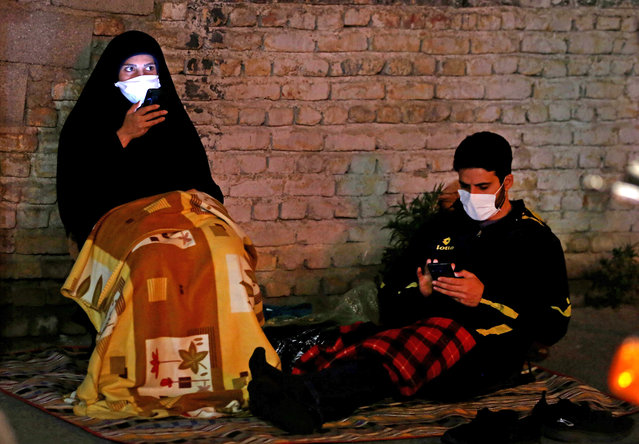
Iranians wearing face masks against the Covid-19 coronavirus attends Laylat al-Qadr prayers, one of the holiest nights during the Muslim fasting month of Ramadan, outside a mosque in the Tehran, on May 13, 2020. (Photo by Atta Kenare/AFP Photo)

Iranians wearing face masks against the Covid-19 coronavirus attends Laylat al-Qadr prayers, one of the holiest nights during the Muslim fasting month of Ramadan, outside a mosque in the Tehran, on May 13, 2020. (Photo by Atta Kenare/AFP Photo)
Details
28 May 2020 00:01:00
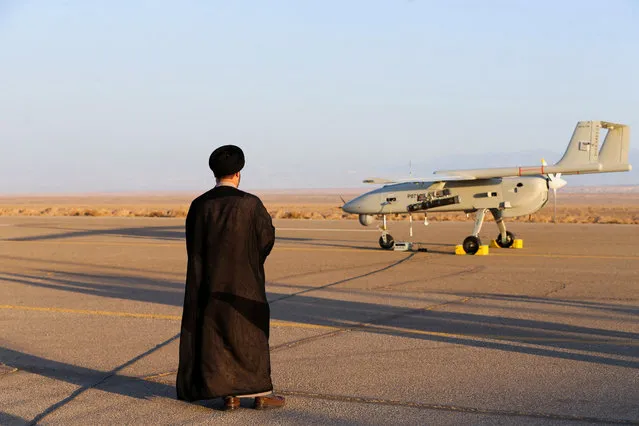
An Iranian cleric stands near a drone during a military exercise in an undisclosed location in Iran, in this handout image obtained on August 24, 2022. (Photo by Iranian Army/WANA (West Asia News Agency)/Handout via Rtuters)

An Iranian cleric stands near a drone during a military exercise in an undisclosed location in Iran, in this handout image obtained on August 24, 2022. (Photo by Iranian Army/WANA (West Asia News Agency)/Handout via Rtuters)
Details
22 Sep 2022 05:13:00
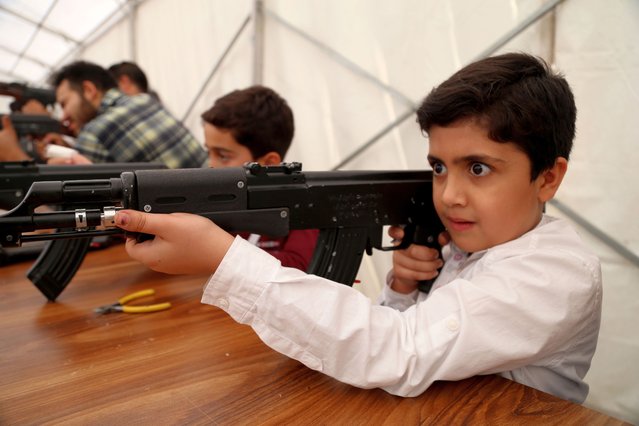
Iranian visitors practice shooting with shooting simulators made in Iran at a police shooting simulation booth at the 19th International Police Security and Safety Equipment Exhibition (IPAS 2022) at the grand Mosalla mosque in Tehran, Iran, on October 20, 2022. (Photo by Rouzbeh Fouladi/Avalon)

Iranian visitors practice shooting with shooting simulators made in Iran at a police shooting simulation booth at the 19th International Police Security and Safety Equipment Exhibition (IPAS 2022) at the grand Mosalla mosque in Tehran, Iran, on October 20, 2022. (Photo by Rouzbeh Fouladi/Avalon)
Details
29 Oct 2022 04:00:00
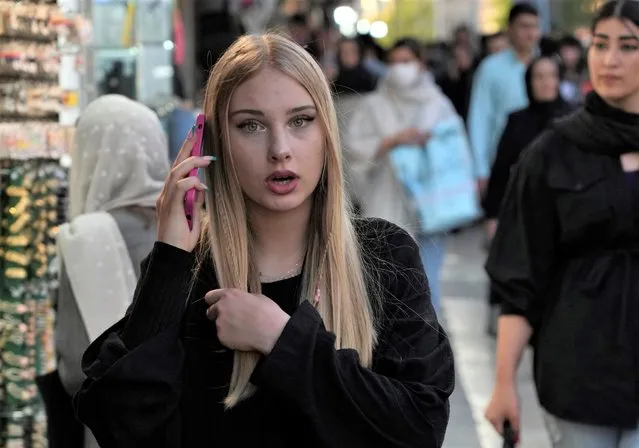
A woman talks on her cellphone as she walks around Tajrish commercial district without wearing the mandatory Islamic headscarf in northern Tehran, Iran, Saturday, April 29, 2023. More women are choosing not to wear the mandatory headscarf, or the hijab, publicly in Iran. Such open defiance of the law follows months of protests over the September death of 22-year-old Mahsa Amini while in the custody of the country's morality police, for wearing her hijab too loosely. (Photo by Vahid Salemi/AP Photo)

A woman talks on her cellphone as she walks around Tajrish commercial district without wearing the mandatory Islamic headscarf in northern Tehran, Iran, Saturday, April 29, 2023. More women are choosing not to wear the mandatory headscarf, or the hijab, publicly in Iran. Such open defiance of the law follows months of protests over the September death of 22-year-old Mahsa Amini while in the custody of the country's morality police, for wearing her hijab too loosely. (Photo by Vahid Salemi/AP Photo)
Details
30 May 2023 02:30:00
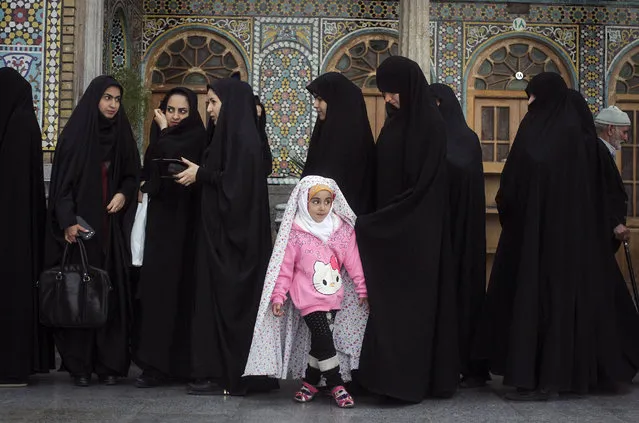
Voters line up to cast their ballots at a polling station in the city of Qom, Iran. Elections for Iran's parliament (Majlis) and Assembly of Experts kicked off on Friday, February 26, 2016. (Photo by Ahmad Halabisaz/Xinhua via ZUMA Wire)

Voters line up to cast their ballots at a polling station in the city of Qom, Iran. Elections for Iran's parliament (Majlis) and Assembly of Experts kicked off on Friday, February 26, 2016. (Photo by Ahmad Halabisaz/Xinhua via ZUMA Wire)
Details
27 Feb 2016 10:19:00
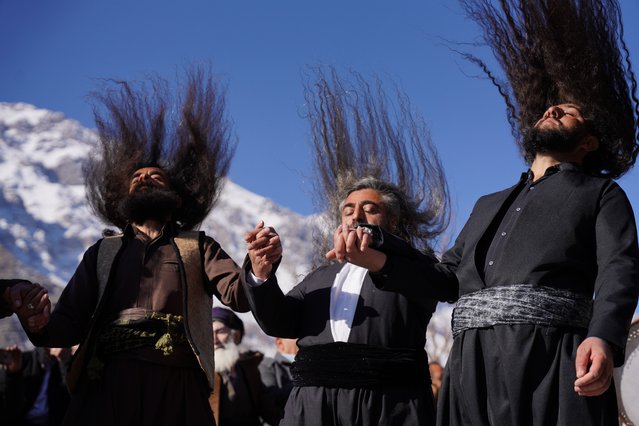
Men, wearing traditional clothes, are seen as “Pir Shaliar” event, which is celebrated twice a year, continues in the Hawraman, Iran on January 30, 2025. At the event, def teams consisting of men and women formed dhikr rings by playing the def on the slopes of the mountain accompanied by hymns. (Photo by Fariq Faraj Mahmood/Anadolu via Getty Images)

Men, wearing traditional clothes, are seen as “Pir Shaliar” event, which is celebrated twice a year, continues in the Hawraman, Iran on January 30, 2025. At the event, def teams consisting of men and women formed dhikr rings by playing the def on the slopes of the mountain accompanied by hymns. (Photo by Fariq Faraj Mahmood/Anadolu via Getty Images)
Details
15 Feb 2025 03:38:00
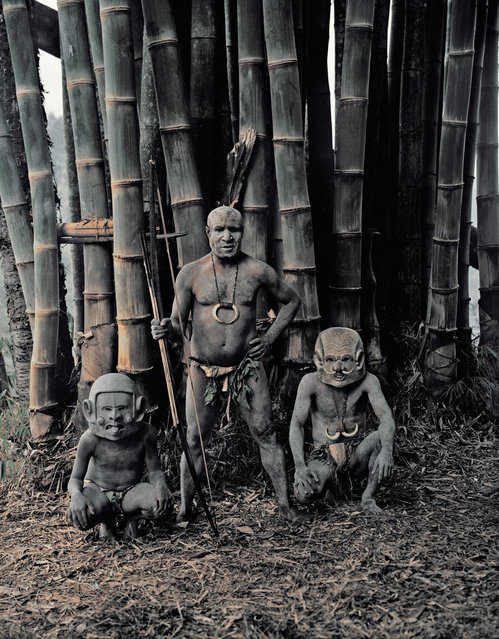
“Asaro from the Eastern Highlands”. The mudmen could not cover their faces with mud because the people of Papua New Guinea thought that the mud from the Asaro river was poisonous. So instead of covering their faces with this alleged poison, they made masks from pebbles that they heated and water from the waterfall, with unusual designs such as long or very short ears either going down to the chin or sticking up at the top, long joined eyebrows attached to the top of the ears, horns and sideways mouths. (Jimmy Nelson)

“Asaro from the Eastern Highlands”. The mudmen could not cover their faces with mud because the people of Papua New Guinea thought that the mud from the Asaro river was poisonous. So instead of covering their faces with this alleged poison, they made masks from pebbles that they heated and water from the waterfall, with unusual designs such as long or very short ears either going down to the chin or sticking up at the top, long joined eyebrows attached to the top of the ears, horns and sideways mouths. (Photo and caption by Jimmy Nelson)
Details
20 Oct 2013 08:54:00
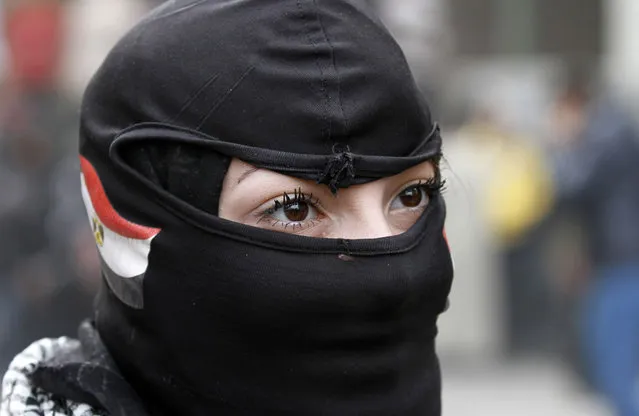
A young protester takes part in a protest near Tahrir Square to call for the fall of Islamist President on January 24, 2012 in Cairo. (Photo by Mohammed Abed/AFP Photo/The Atlantic)

A young protester takes part in a protest near Tahrir Square to call for the fall of Islamist President on January 24, 2012 in Cairo. (Photo by Mohammed Abed/AFP Photo via The Atlantic)


Details
01 Feb 2013 10:33:00