A smiling gecko bursts through a gap in the bark to surprise photographer in West Java, Indonesia in the last decade of March 2025. (Photo by Dzul Duzulfikri/Animal News Agency)
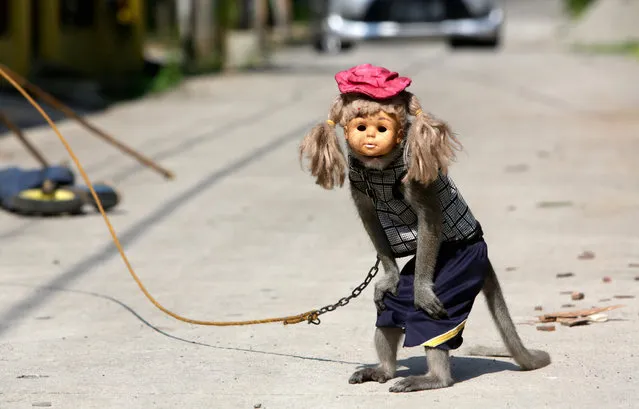
A chained male monkey in a costume and wearing a toy mask performs at a street in Depok, West Java, Indonesia, 30 September 2021. A performing monkey in a street, known as “Topeng Monyet” (lit. Monkey Mask), is a popular form of cheap entertainment in Indonesia, especially on the island of Java. (Photo by Adi Weda/EPA/EFE)
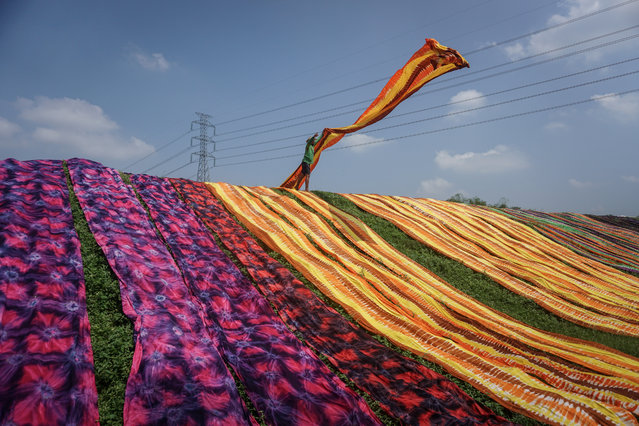
A worker throws a cloth during a drying process at Sukoharjo near Solo, Central Java province, Indonesia, April 23, 2019 in this photo taken by Antara Foto. (Photo by Mohammad Ayudha/Antara Foto via Reuters)
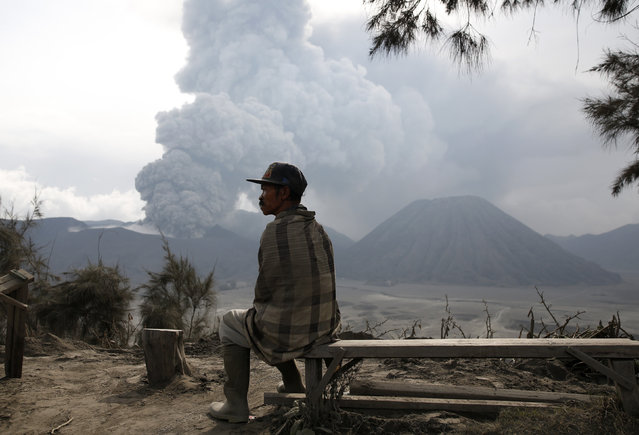
A local resident rests on a bench as Mount Bromo volcano erupts in the background in Ngadisari, Probolinggo, East Java, Indonesia January 5, 2016. (Photo by Darren Whiteside/Reuters)
Patience paid off for the photographer who waited for hours to catch a crocodile on Java, the largest Indonesian island in March 2023. (Photo by Tanto Yensen/Solent News)
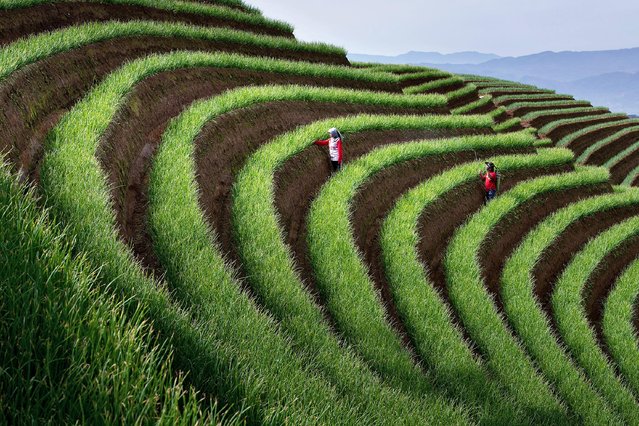
Workers tend green onion plants among nearly 1,000 acres of terracing in fields in the Majalengka Regency of West Java in Indonesia in July 2021. (Photo by Andika Oky Arisandi/Solent News)
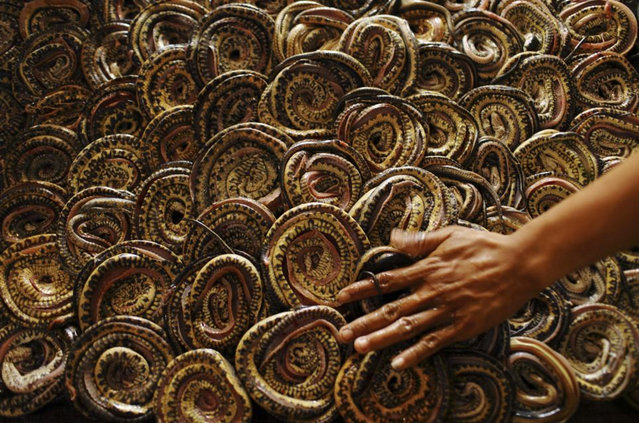
Images from a snake slaughterhouse at Kapetakan village in Indonesia’s West Java province. Wakira, who is known as “Boss Cobra”, owns the slaughterhouse that produces snake meat and skin. Snake meat is believed by some to be a remedy for skin diseases and asthma, as well as an aid to increase virility. The snake skins, measuring in the hundreds of metres, are sold to bag factories in the West and Central Java provinces on a monthly basis. The price of a bag made from snake skin costs between 150,000 rupiah ($ 15.60) and 300,000 rupiah ($31.20), depending on its size. That snakeskin handbag you’ll buy is costing a hell of a lot more.
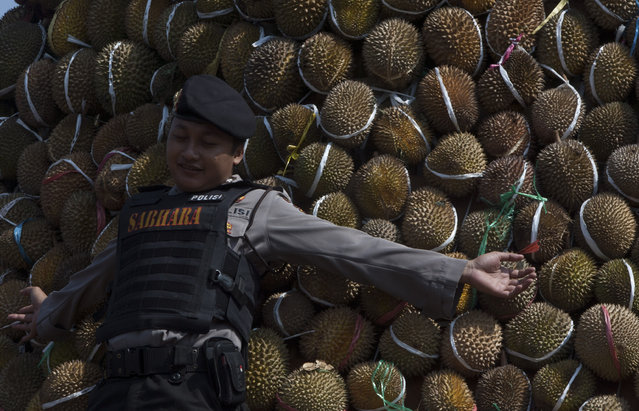
A police poses on the durians during festival durian on the giant mount of durian at northern slopes of Mount Arjuna in East Java. Each year, nine villages in Wonosalam district hold a festival to give thanks for an abundance of this stinky, spiky fruit, which they pile in a 10-meter-high pyramid and distribute among the hungry masses. (Photo by Sigit Pamungkas/JG Photo)