Loading...
Done
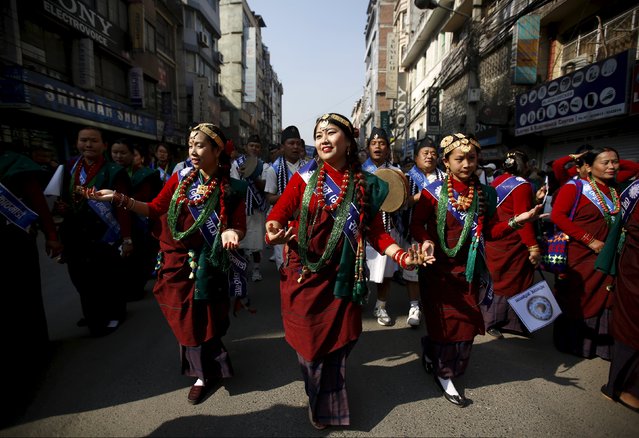
Gurung girls wearing traditional costumes dance while taking part in a New Year parade in Kathmandu, Nepal December 30, 2015. Members of the Gurung community in Nepal celebrate their Tamu Lhosar or Losar (New Year) with a feast and various cultural programs to usher in the year of the Monkey. (Photo by Navesh Chitrakar/Reuters)

Gurung girls wearing traditional costumes dance while taking part in a New Year parade in Kathmandu, Nepal December 30, 2015. Members of the Gurung community in Nepal celebrate their Tamu Lhosar or Losar (New Year) with a feast and various cultural programs to usher in the year of the Monkey. (Photo by Navesh Chitrakar/Reuters)
Details
01 Jan 2016 08:01:00
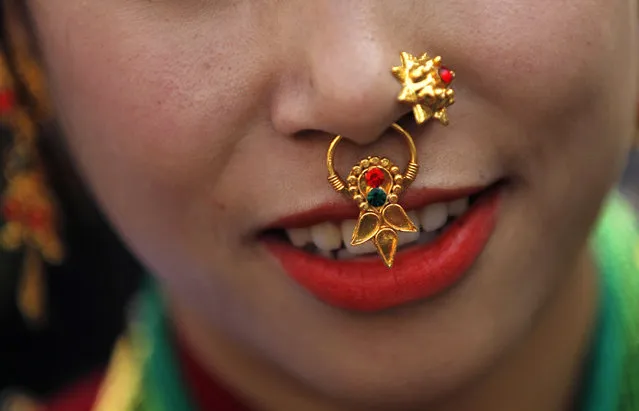
A Nepalese Gurung community woman, wearing traditional attire, prepares to participate in a parade to mark their New Year known as “Tamu Loshar” in Kathmandu, Nepal, Friday, December 30, 2016. The indigenous Gurungs, also known as Tamu, are celebrating the advent of the year of the bird. (Photo by Niranjan Shrestha/AP Photo)

A Nepalese Gurung community woman, wearing traditional attire, prepares to participate in a parade to mark their New Year known as “Tamu Loshar” in Kathmandu, Nepal, Friday, December 30, 2016. The indigenous Gurungs, also known as Tamu, are celebrating the advent of the year of the bird. (Photo by Niranjan Shrestha/AP Photo)
Details
31 Dec 2016 10:44:00
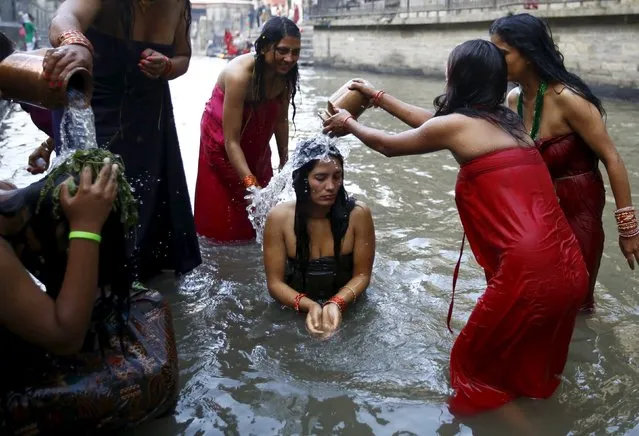
Nepalese women performs ritual as they take a holy bath in the Bagmati River, during the Rishi Panchami festival, in Kathmandu, Nepal September 18, 2015. Rishi Panchami is observed on the last day of Teej when women worship Sapta Rishi (Seven Saints) to ask for forgiveness for sins committed during their menstrual periods throughout the year. (Photo by Navesh Chitrakar/Reuters)

Nepalese women performs ritual as they take a holy bath in the Bagmati River, during the Rishi Panchami festival, in Kathmandu, Nepal September 18, 2015. Rishi Panchami is observed on the last day of Teej when women worship Sapta Rishi (Seven Saints) to ask for forgiveness for sins committed during their menstrual periods throughout the year. The Hindu religion considers menstruation as a representation of impurity and women are prohibited from taking part in religious practices during their monthly menstruations. (Photo by Navesh Chitrakar/Reuters)
Details
21 Sep 2015 12:23:00
A woman with coloured powder smeared on her face smile as she celebrates Holi, the Festival of Colours, in Kathmandu, Nepal, March 22, 2016. (Photo by Navesh Chitrakar/Reuters)

A woman with coloured powder smeared on her face smile as she celebrates Holi, the Festival of Colours, in Kathmandu, Nepal, March 22, 2016. (Photo by Navesh Chitrakar/Reuters)
Details
23 Mar 2016 12:11:00
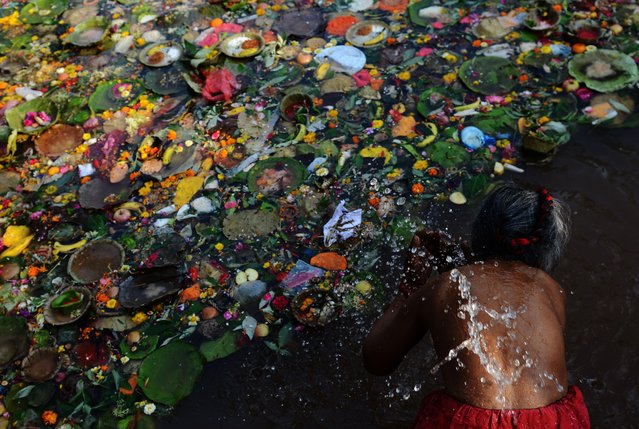
A Nepalese Hindu devotee takes a holy bath as they mark the Mother's Day Festival at Matathirtha on the outskirts of Kathmandu on May 6, 2016. Nepalese Hindu devotees come from across the country to bathe, offer prayers and leave offerings at the Matathirtha Temple during the event, which honours mothers who have passed away. (Photo by Prakash Mathema/AFP Photo)

A Nepalese Hindu devotee takes a holy bath as they mark the Mother's Day Festival at Matathirtha on the outskirts of Kathmandu on May 6, 2016. Nepalese Hindu devotees come from across the country to bathe, offer prayers and leave offerings at the Matathirtha Temple during the event, which honours mothers who have passed away. (Photo by Prakash Mathema/AFP Photo)
Details
08 May 2016 10:51:00


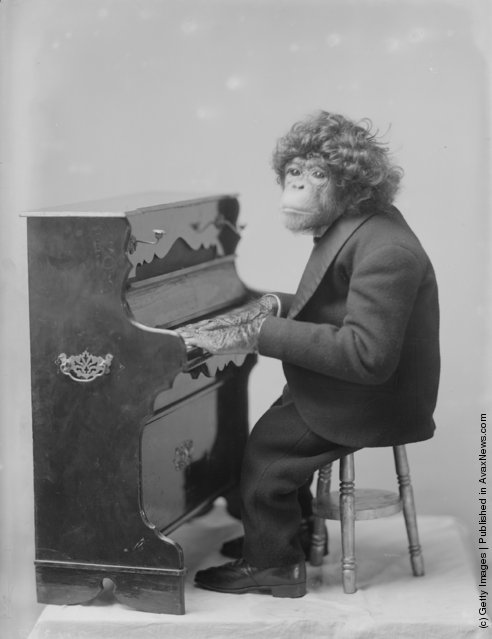
Esau the ape at the piano. (Photo by Reinhold Thiele/Topical Press Agency/Getty Images). Circa 1900
Details
27 Mar 2011 12:07:00


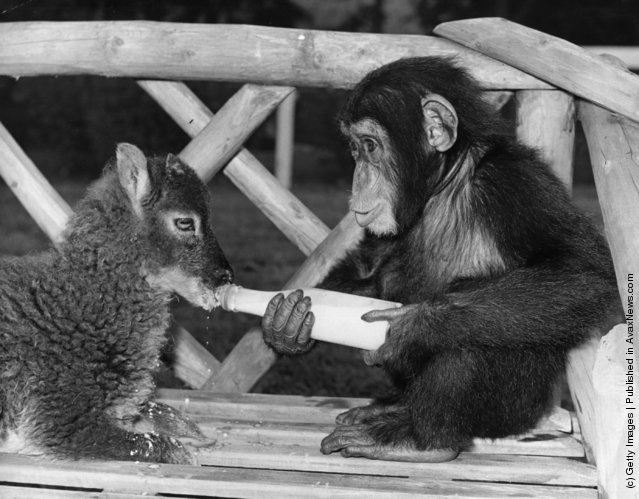
A chimpanzee bottle-feeds a lamb at Southam Zoo Farm in Warwickshire. The owners of the zoo, Mr and Mrs Clews, bring up many of the animals as their pets; the animals, are, as a result, of a friendly disposition. (Photo by Fox Photos/Getty Images). 23rd August 1968
Details
01 Apr 2011 07:47:00
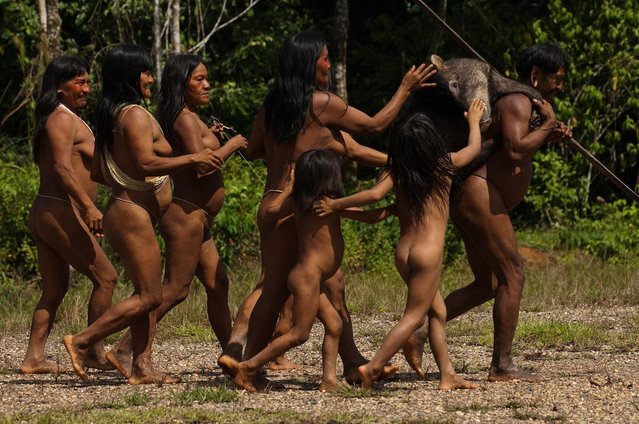
Spectacular images offering insight into the lives of the Huaorani people in the Ecuadorian Amazon have been revealed showing how they use traditional methods to hunt monkeys for food. The stunning pictures were taken by conservation photographer Pete Oxford from Torquay, Devon in the Ecuadorian Amazon. “The Huaorani Indians are a forest people highly in tune with their environment. Many are now totally acculturated since the 1950s by missionaries”, said Pete. “Today they face radical change to their culture to the proximity of oil exploration within their territory and the Yasuni National Park and Biosphere Reserve, they are vastly changed. Some still live very traditionally and for this shoot, through my Huaorani friend, a direct relative of those photographed he wanted to depict them as close to their original culture as possible. They still largely hunt with blow pipes and spears eating a lot of monkeys and peccaries”. The Huaorani are also known as the Waorani, Waodani or the Waos and are native Amerindians. Their lands are located between the Curaray and Napo rivers and speak the Huaorani language. Pete says that during his visit he was welcomed into the group and hopes that ancient cultures can be saved. Here: The tribe were seen celebrating after a hunter returned to camp with a wild pig. (Photo by Pete Oxford/Mediadrumworld.com)

Spectacular images offering insight into the lives of the Huaorani people in the Ecuadorian Amazon have been revealed showing how they use traditional methods to hunt monkeys for food. The stunning pictures were taken by conservation photographer Pete Oxford from Torquay, Devon in the Ecuadorian Amazon. Here: The tribe were seen celebrating after a hunter returned to camp with a wild pig. (Photo by Pete Oxford/Mediadrumworld.com)
Details
20 Jan 2017 07:58:00