India's yoga guru Baba Ramdev performs yoga on the banks of the river Ganges ahead of International Yoga day, in the northern town of Haridwar, India, June 19, 2020. (Photo by Sunil Kataria/Reuters)
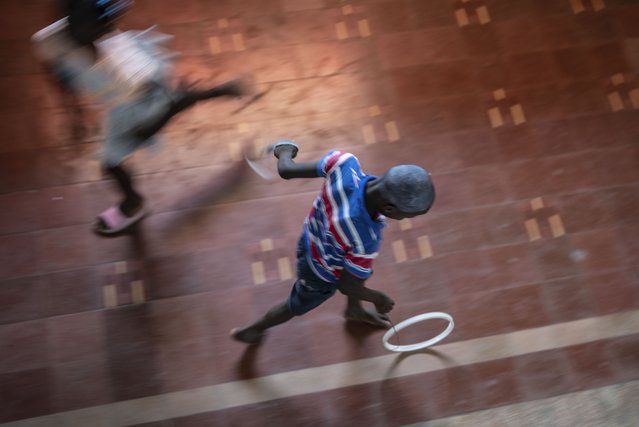
A youth rolls a hoop in the National Theater where families displaced by gang violence are taking shelter in Port-au-Prince, Haiti, May 9, 2024. (Photo by Ramon Espinosa/AP Photo)
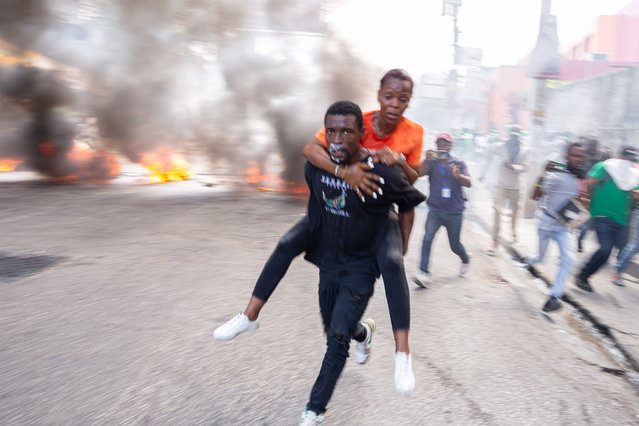
People protest to demand the departure of the Transitional Presidential Council due to insecurity and gang violence in Port-au-Prince, Haiti on March 26, 2025. While authorities, including the National Palace and several ministries have all left downtown to escape the armed gang attacks in Port-au-Prince. Meanwhile, the people continue to fall victim to gang bullets. (Photo by Guerinault Louis/Anadolu via Getty Images)
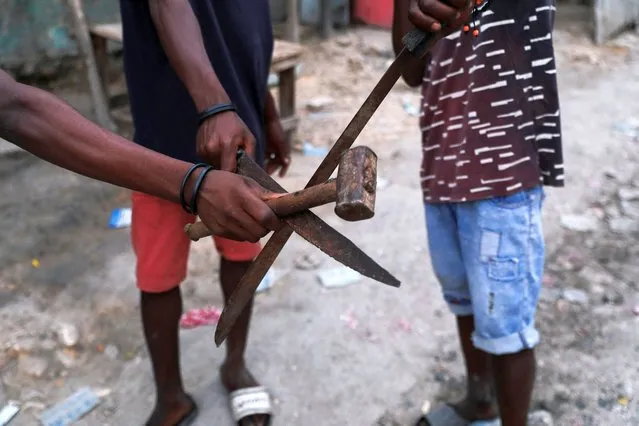
Men who are part of a neighbourhood vigilante group hold a hammer and machetes while posing for a photograph after suspected gang leader Makandal was killed and set on fire, amid an escalation in gang violence, in Port-au-Prince, Haiti on March 20, 2024. (Photo by Ralph Tedy Erol/Reuters)
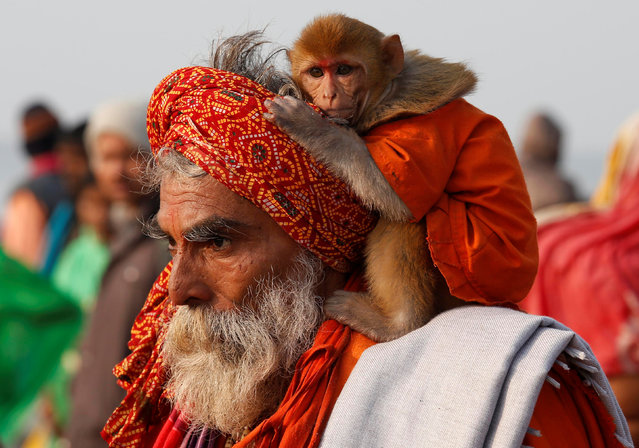
A Sadhu or a Hindu holy man carrying his pet monkey walks after taking a dip at the confluence of the river Ganges and the Bay of Bengal on the occasion of “Makar Sankranti” festival at Sagar Island, south of Kolkata, India, January 14, 2017. (Photo by Rupak De Chowdhuri/Reuters)
A Hindu holy man or Sadhu walks back to his ashram after taking a dip at Sangam, confluence of Ganges river, Yamuna river and mythical Saraswati river in Allahabad, India, Thursday, August 4, 2016. (Photo by Rajesh Kumar Singh/AP Photo)
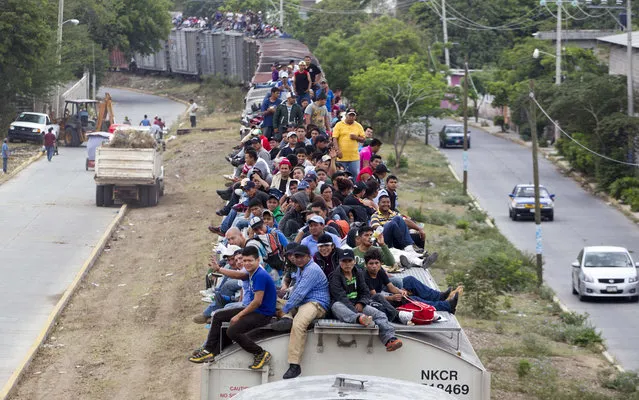
Migrants ride on top of a northern bound train toward the US-Mexico border in Juchitan, southern Mexico, Monday, April 29, 2013. Migrants crossing Mexico to get to the U.S. have increasingly become targets of criminal gangs who kidnap them to obtain ransom money. (Photo by Eduardo Verdugo/AP Photo)
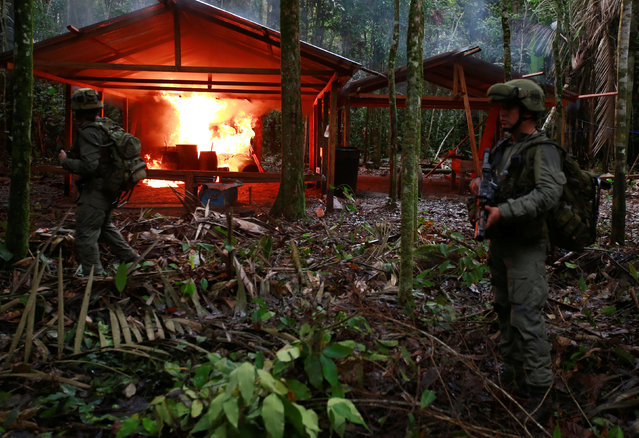
A Colombian anti-narcotics policeman stands guard after burning a cocaine lab, which police said belongs to criminal gangs, in a rural area of Calamar in Guaviare state, Colombia, August 2, 2016. Colombian law enforcement has destroyed 104 cocaine laboratories capable of producing some 100 tonnes of the drug annually, the head of the anti-narcotics police said on Tuesday. (Photo by John Vizcaino/Reuters)