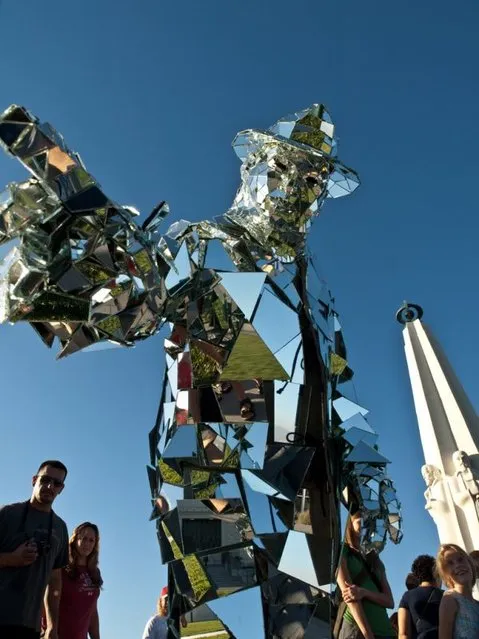
“The ‘mirror man’ aka ‘The Collector‘ is by the artist Gustav Troger of San Francisco & Vienna. He is in North America now on another ‘The Collector’ tour.”
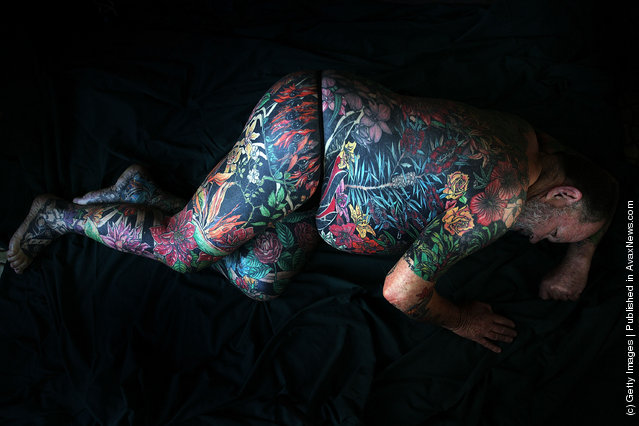
Retired teacher Geoff Ostling displays his tattooed skin at a portrait session at his home in Petersham on May 11, 2009 in Sydney, Australia. The 62-year old has pledged to donate his skin to the National Gallery in Canberra after his death. Ostling, who did not get his first tattoo until he was in his forties, is now covered in the artwork by artist eX de Merci from neck to ankle with the theme 'all the flowers of a Sydney garden'. (Photo by Lisa Maree Williams/Getty Images)
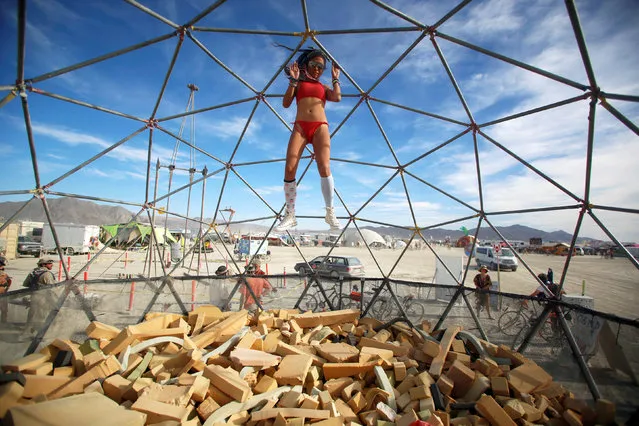
Lulu, her Playa name, falls into a foam pit as approximately 70,000 people from all over the world gather for the 30th annual Burning Man arts and music festival in the Black Rock Desert of Nevada, U.S. September 1, 2016. (Photo by Jim Urquhart/Reuters)
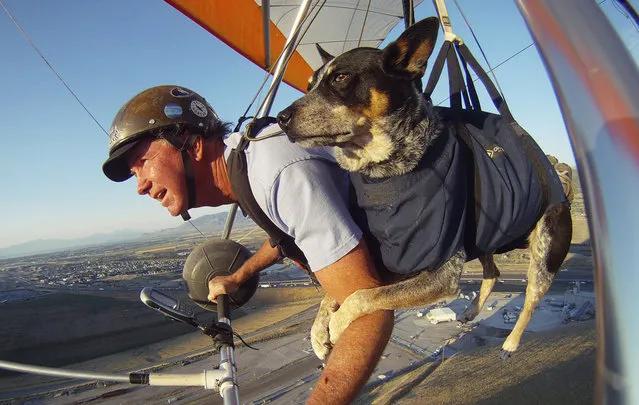
Dan McManus and his service dog Shadow hang glide together outside Salt Lake City, Utah, July 22, 2013. McManus suffers from anxiety and Shadow's presence and companionship help him to manage the symptoms. The two have been flying together for about nine years with a specially made harness for Shadow. (Photo by Jim Urquhart/Reuters)
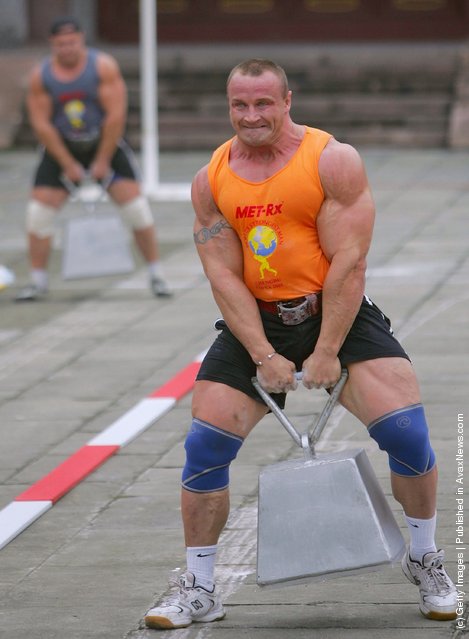
Mariusz Zbigniew Pudzianowski of Poland leads a match of the 2005 World's Strongest Man Competition at Wuhou Temple on September 27, 2005 in Chengdu of Sichuan Province, southwest China. (Photo by China Photos/Getty Images)
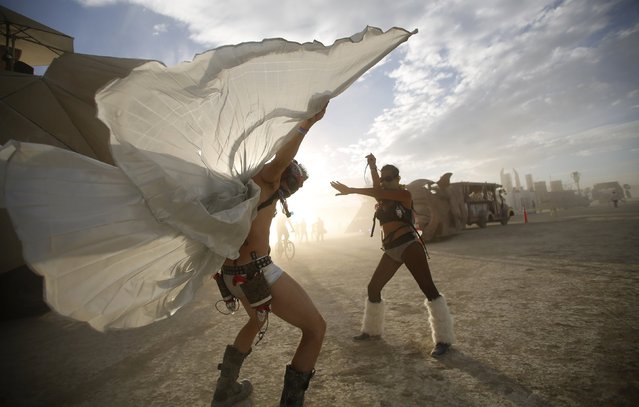
Dillon Bracken (L) and Atalya Stachel dance during the Burning Man 2014 “Caravansary” arts and music festival in the Black Rock Desert of Nevada, August 30, 2014. Over 65,000 people from all over the world have gathered at the sold out festival to spend a week in the remote desert cut off from much of the outside world to experience art, music and the unique community that develops. (Photo by Jim Urquhart/Reuters)
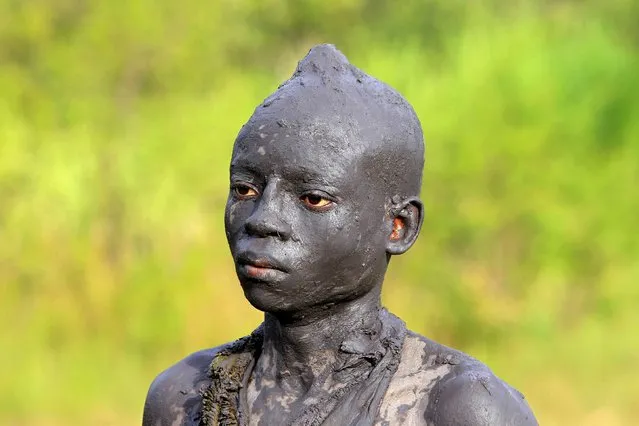
A Bukusu youth stands covered in mud in preparation for a circumcision ritual in Kenya's western region of Bungoma August 9, 2014. Circumcision rituals, which take place in August, are celebrated amongst some Kenyan tribes as an annual rite of passage into adulthood. (Photo by Noor Khamis/Reuters)
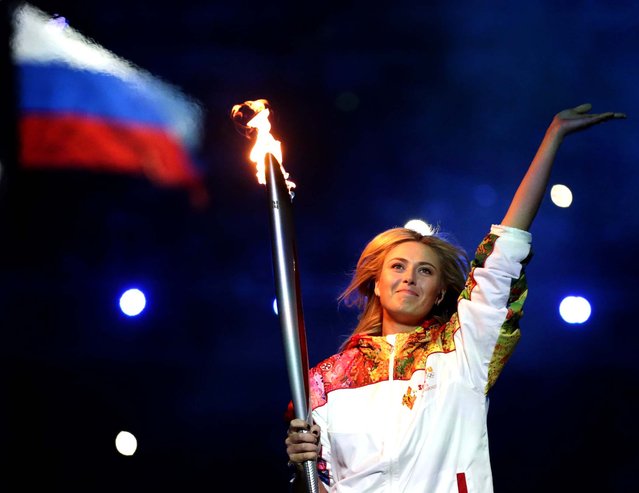
Russia's Maria Sharapova carries the torch during the opening ceremony of the 2014 Winter Olympics in Sochi, Russia, Friday, February 7, 2014. (Photo by Matt Dunham/Associated Press)