Loading...
Done
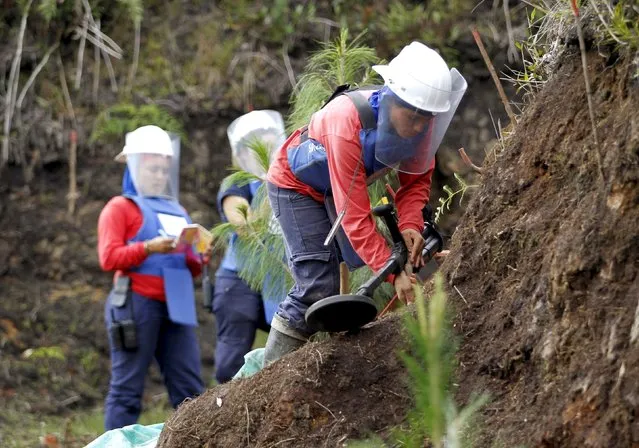
Natalia Arango works with her mine detector in a zone of landmines planted by rebels groups near Sonson in Antioquia province, November 19, 2015. (Photo by Fredy Builes/Reuters)

Natalia Arango works with her mine detector in a zone of landmines planted by rebels groups near Sonson in Antioquia province, November 19, 2015. Women's work takes on a nontraditional meaning for fifteen Colombian women who work to rid the Antioquia Mountains of deadly landmines as the country edges closer to a peace agreement with Marxist rebels to end over a decade of conflict which has claimed 220,000 lives. (Photo by Fredy Builes/Reuters)
Details
27 Nov 2015 04:44:00
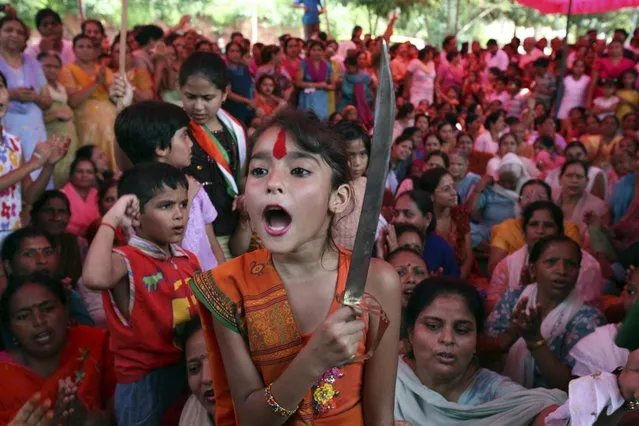
A girl holds a sword during a protest in Jammu August 20, 2008. (Photo by Amit Gupta/Reuters)

A girl holds a sword during a protest in Jammu August 20, 2008. (Photo by Amit Gupta/Reuters)
Details
14 Oct 2014 10:37:00
Colombia midfielder Natalia Gaitan (3) goes up for a header against Mexico midfielder Nayeli Rangel (7) in Moncton, June 9, 2015. (Photo by Matt Kryger/USA TODAY Sports)

Colombia midfielder Natalia Gaitan (3) goes up for a header against Mexico midfielder Nayeli Rangel (7) in Moncton, June 9, 2015. (Photo by Matt Kryger/USA TODAY Sports)
Details
27 Jun 2015 13:48:00
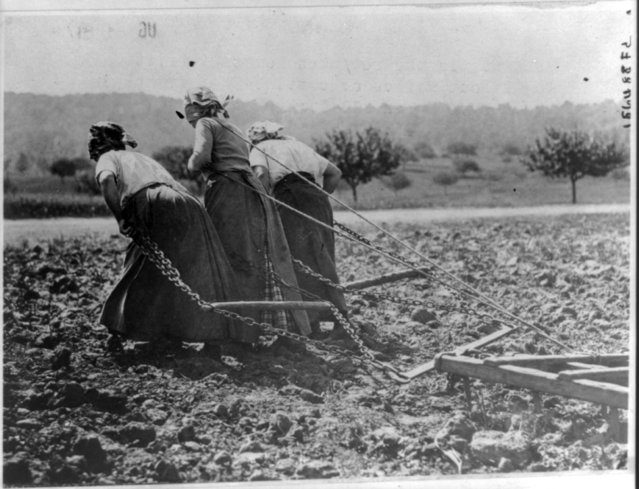
Peasants in the re-taken Somme District work in the fields, circa 1916- 1917, in this Library of Congress handout photo. (Photo by Reuters/Bain Collection/Library of Congress)

Peasants in the re-taken Somme District work in the fields, circa 1916- 1917, in this Library of Congress handout photo. For women 100 years ago, opportunities to work beyond the home and take part in political life were very limited. As the 20th century progressed, hard-won progress included gradually improved voting rights, while the upheaval of war pushed doors ajar as women worked as part of the war effort. U.S. Library of Congress archive photos show women's workplaces ranging from a flour mill in England to a coal mine in Belgium or Lincoln Motor Co.'s welding department in Detroit. International Women's Day is celebrated on March 8. (Photo by Reuters/Bain Collection/Library of Congress)
Details
03 Mar 2016 11:39:00
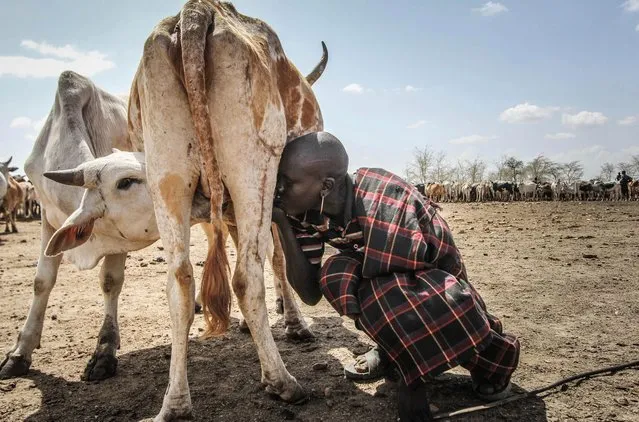
Cattle are the most important way of livelihood for the Karamojong: they provide milk, meat, blood and money when sold, Karamoja, Uganda, February 2017. (Photo by Sumy Sadurni/Barcroft Images)

Cattle are the most important way of livelihood for the Karamojong: they provide milk, meat, blood and money when sold, Karamoja, Uganda, February 2017. (Photo by Sumy Sadurni/Barcroft Images)
Details
17 Feb 2017 00:02:00
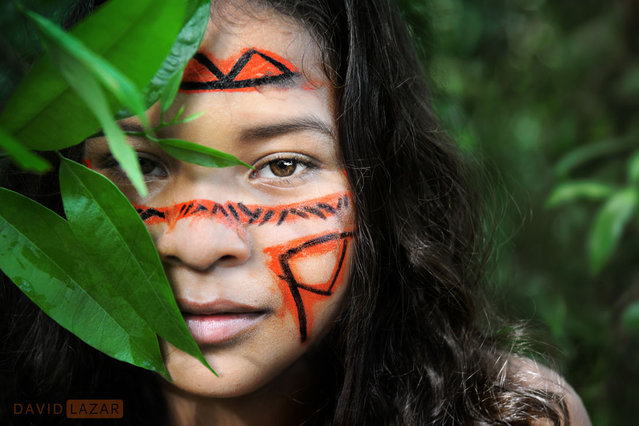
Amazon Tribe By David Lazar (Video)

Photographer David Lazar captured photos of native Dessana tribe, nearly 3,000 miles away from Brazil's capital. Tribe is only accessible by boat from city of Manaus. Surrounded by trees, waterfalls and tropical wildlife, this Amazon tribe is a world away from the beaches of Rio.
Details
27 Oct 2016 21:46:00
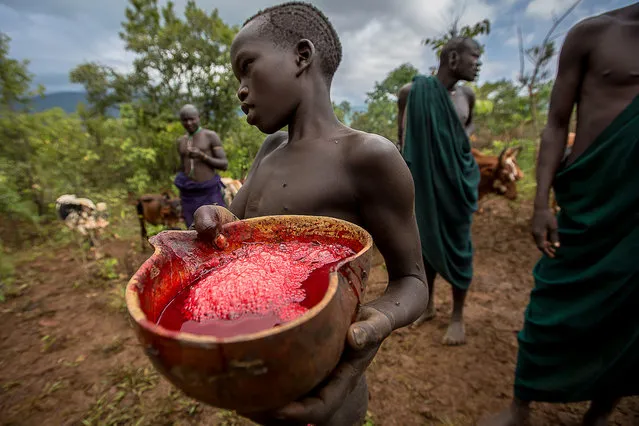
Surma tribe at a blood drinking ritual

“Suri tribes boys are collecting the blood of a cow in a calabash the vein of the animal was opened with a bow and an arrow. Like most pastoralists the Surma people are drinking fresh blood which is from the cow vein. Only some minutes after the wound at the vein is closed again the animals are back with their herd”. (Photo and caption by Anthony Pappone)
Details
17 Nov 2013 11:12:00
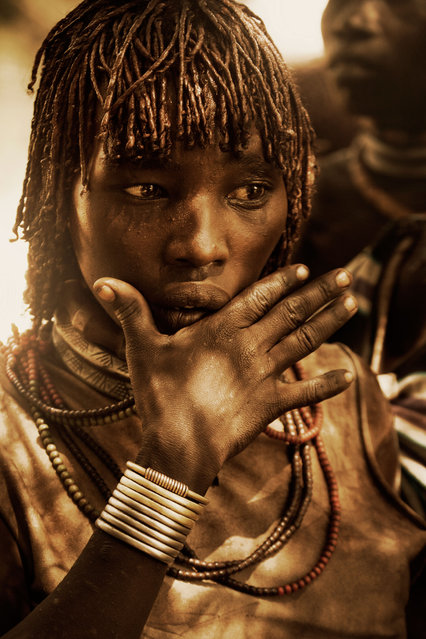
The Hamar people traditionally use red ocher clay to braid the hair of their women. (Photo by Diego Arroyo)

During his time in Ethiopia, New York-based art director and photographer Diego Arroyo spent time with the Hamar, Mursi, Dassanech, and Arbore Tribes. They, along with several others tribes, make up the 200,000 people situated in Africa’s Great Rift Valley. The people of the Omo Valley are still primarily herders and farmers, living an isolated and simple life. While they have yet to be truly touched by globalization, they could soon disappear. Their way of life is being threatened by a massive hydroelectric dam. (Photo by Diego Arroyo)
Details
13 Aug 2014 10:00:00