Loading...
Done
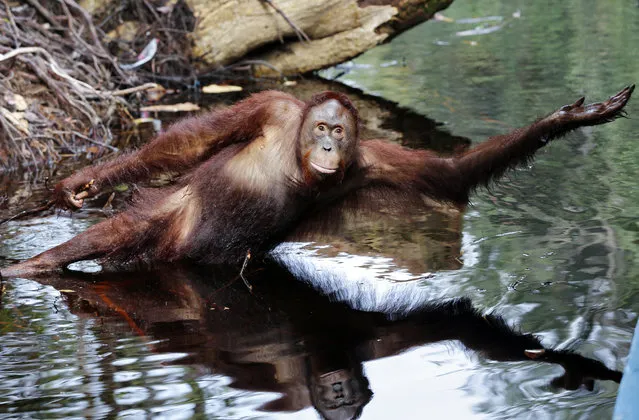
Bujang, a 35-year-old male orangutan rescued from a circus in Sumatra, washes his face on a sanctuary island surrounded by a river where non-releasable orangutans are protected for life at the Samboja Lestari Orangutan Rehabilitation Center run by the non-profit Borneo Orangutan Survival (BOS) Foundation in Samboja, East Kalimantan, on July 12, 2024. (Photo by Yasuyoshi Chiba/AFP Photo)

Bujang, a 35-year-old male orangutan rescued from a circus in Sumatra, washes his face on a sanctuary island surrounded by a river where non-releasable orangutans are protected for life at the Samboja Lestari Orangutan Rehabilitation Center run by the non-profit Borneo Orangutan Survival (BOS) Foundation in Samboja, East Kalimantan, on July 12, 2024. (Photo by Yasuyoshi Chiba/AFP Photo)

Details
14 Nov 2025 03:17:00
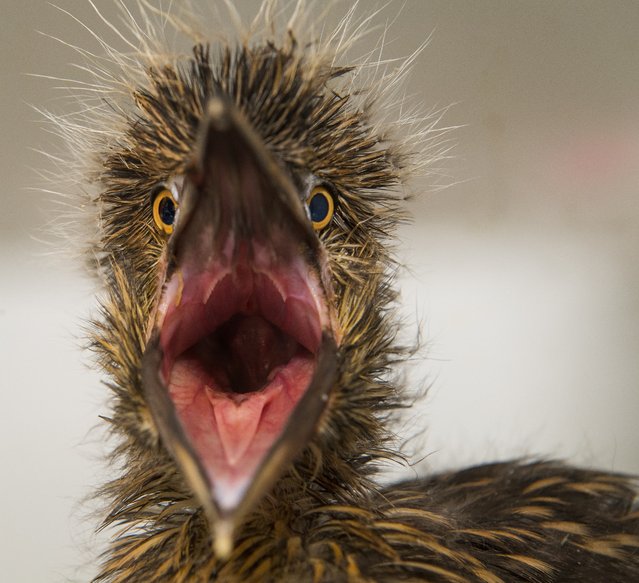
A baby Black-crowned Night Heron squawks in its incubator while being cared for at City Wildlife rescue and rehabilitation center in Washington, DC on May 31, 2017. The heron is one of several that have been brought to CW by the staff at The National Zoo over the past few years. The heron is a native bird and has made an established rookery inside the zoo grounds over a hundred years ago.  Every year at this time, some of the chicks get pushed or fall out of the nest and require human care.  Because the birds are native and not part of the Smithsonian collection, they partnered with CW to rehabilitate the herons for re-release back to the flock inside Zoo. They're reintroduced back to their flock so that they can migrate together in the Fall. The Black-crowned heron usually migrates from the DC area down to southeast North Carolina, some going as far as Jacksonville, FL in winter. The Black-crowned heron is the species of greatest conservation need in the District of Columbia because their numbers are in such rapid decline due to habitat loss. (Photo Linda Davidson/The Washington Post)

A baby Black-crowned Night Heron squawks in its incubator while being cared for at City Wildlife rescue and rehabilitation center in Washington, DC on May 31, 2017. The heron is one of several that have been brought to CW by the staff at The National Zoo over the past few years. (Photo Linda Davidson/The Washington Post)
Details
04 Jun 2017 08:04:00
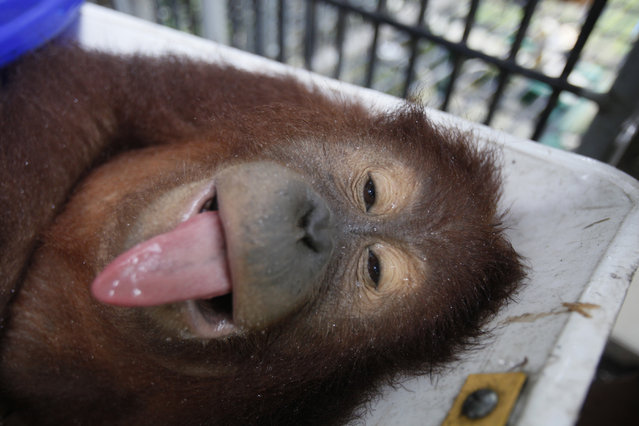
An approximately 8 year-old male orangutan named Siamang reacts under the influence of tranquilizer as it's being prepared to be released into the wild at a rehabilitation center in Kuta Mbelin, North Sumatra, Indonesia, Friday, July 10, 2015. (Photo by Binsar Bakkara/AP Photo)

An approximately 8 year-old male orangutan named Siamang reacts under the influence of tranquilizer as it's being prepared to be released into the wild at a rehabilitation center in Kuta Mbelin, North Sumatra, Indonesia, Friday, July 10, 2015. The orangutans at the center were mostly rescued from palm oil plantations or confiscated from homes where they were kept as pet animals. Orangutan populations in Indonesia's Borneo and Sumatra island are facing severe threats from habitat loss, illegal logging, fires and poaching. Conservationists predicted that without immediate action, orangutans are likely to be the first great ape to become extinct in the wild. (Photo by Binsar Bakkara/AP Photo)
Details
11 Jul 2015 13:57:00
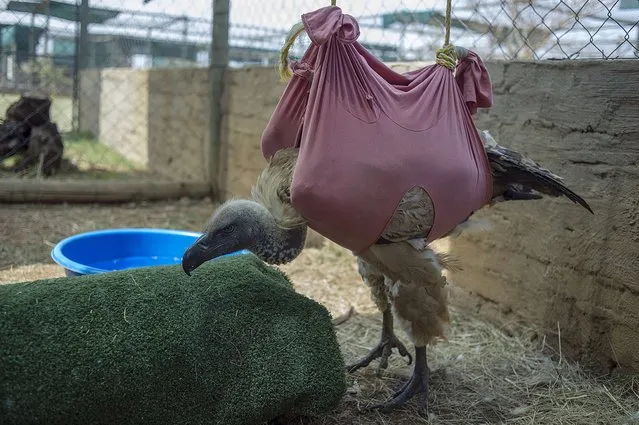
An injured vulture is treated at the VulPro Vulture Rehabilitation Centre in Hartebeepoortdam in the Magalisburg region on September 15, 2015. Confined to southern Africa, just under 4,000 breeding pairs of Cape Vultures remain in the wild, mostly in South Africa, Lesotho and Botswana. Unless conservation efforts are successful, Africa's largest vulture species may be facing eventual extinction. (Photo by Mujahid Safodien/AFP Photo)

An injured vulture is treated at the VulPro Vulture Rehabilitation Centre in Hartebeepoortdam in the Magalisburg region on September 15, 2015. Confined to southern Africa, just under 4,000 breeding pairs of Cape Vultures remain in the wild, mostly in South Africa, Lesotho and Botswana. Unless conservation efforts are successful, Africa's largest vulture species may be facing eventual extinction. (Photo by Mujahid Safodien/AFP Photo)
Details
19 Sep 2015 12:27:00
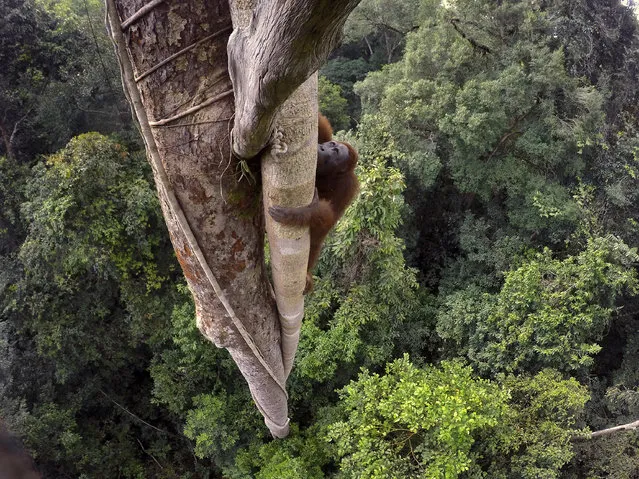
“Tough Times for Orangutans”. Nature, first prize stories. Tim Laman, USA. Location: West Kalimantan, Indonesia. A Bornean orangutan climbs over 30 meters up a tree in the rain forest of Gunung Palung National Park, West Kalimantan, Indonesia, August 12, 2015. The lives of wild orangutans are brought to light. Threats to these orangutans from fires, the illegal animal trade and loss of habitat due to deforestation have resulted in many orphan orangutans ending up at rehabilitation centers. (Photo by Tim Laman/World Press Photo Contest)

“Tough Times for Orangutans”. Nature, first prize stories. Tim Laman, USA. Location: West Kalimantan, Indonesia. A Bornean orangutan climbs over 30 meters up a tree in the rain forest of Gunung Palung National Park, West Kalimantan, Indonesia, August 12, 2015. The lives of wild orangutans are brought to light. Threats to these orangutans from fires, the illegal animal trade and loss of habitat due to deforestation have resulted in many orphan orangutans ending up at rehabilitation centers. (Photo by Tim Laman/World Press Photo Contest)
Details
19 Feb 2016 13:06:00
Male orangutan Percy is reflected in the Sekonyer River as he reaches over to try and touch a wooden klotok boat carrying crew and tourists, in Tanjung Puting National Park, in Kalimantan (Indonesian Borneo), Indonesia, September 4, 2013. Percy is a son, born and living in the wild, of a female orangutan named Princess, a freed former captive orangutan that anthropologist Dr Birute Galdikas rescued, rehabilitated and returned to the wild. (Photo by Barbara Walton/EPA)

Male orangutan Percy is reflected in the Sekonyer River as he reaches over to try and touch a wooden klotok boat carrying crew and tourists, in Tanjung Puting National Park, in Kalimantan (Indonesian Borneo), Indonesia, September 4, 2013. Percy is a son, born and living in the wild, of a female orangutan named Princess, a freed former captive orangutan that anthropologist Dr Birute Galdikas rescued, rehabilitated and returned to the wild. (Photo by Barbara Walton/EPA)
Details
03 Jul 2014 12:26:00
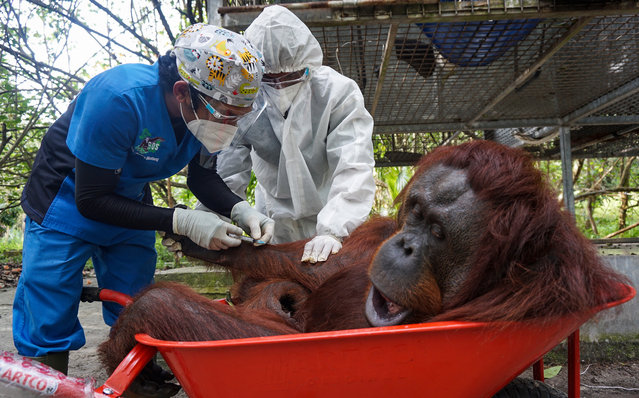
A handout photo made available by Borneo Orangutan Survival Foundation (BOSF) shows veterinarian wearing protective masks and suit, conducting anesthesia procedure on Nenuah, a nine year old Bornean Orangutan before being transported and released to the Bukit Batikap protection forest, at the Nyaru Menteng Orangutan Rehabilitation Center in Palangkaraya, Central Kalimantan, Indonesia, 15 February 2021. BOSF and the national nature conservation agency (BKSDA) released 10 orangutans back to the wild in Bukit Batikap Protection Forest in Central Kalimantan and the Kehje Sewen Forest in East Kalimantan amid the pandemic according to BOSF. (Photo by BOSF Handout/EPA/EFE)

A handout photo made available by Borneo Orangutan Survival Foundation (BOSF) shows veterinarian wearing protective masks and suit, conducting anesthesia procedure on Nenuah, a nine year old Bornean Orangutan before being transported and released to the Bukit Batikap protection forest, at the Nyaru Menteng Orangutan Rehabilitation Center in Palangkaraya, Central Kalimantan, Indonesia, 15 February 2021. BOSF and the national nature conservation agency (BKSDA) released 10 orangutans back to the wild in Bukit Batikap Protection Forest in Central Kalimantan and the Kehje Sewen Forest in East Kalimantan amid the pandemic according to BOSF. (Photo by BOSF Handout/EPA/EFE)
Details
07 Mar 2021 09:54:00
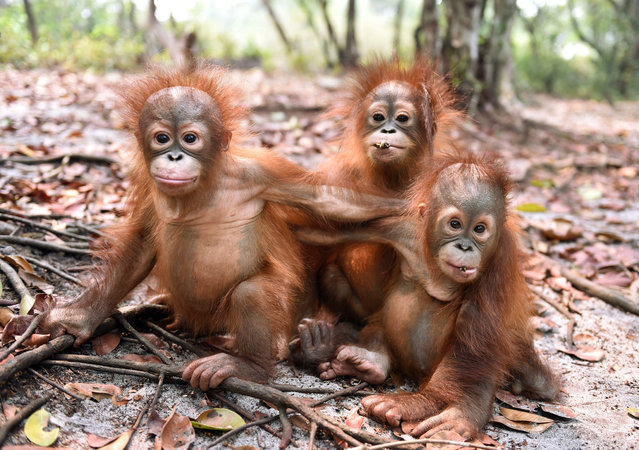
This handout picture taken and released by the Borneo Orangutan Survival Foundation (BOSF) on October 26, 2015 shows baby orangutans, which had previously suffered from respiratory problems, playing at a nursery in the rehabilitation centre operated by the BOSF on the outskirts of Palangkaraya in Central Kalimantan. (Photo by AFP Photo/Borneo Orangutan Survival Foundation/Indrayana)

This handout picture taken and released by the Borneo Orangutan Survival Foundation (BOSF) on October 26, 2015 shows baby orangutans, which had previously suffered from respiratory problems, playing at a nursery in the rehabilitation centre operated by the BOSF on the outskirts of Palangkaraya in Central Kalimantan. Endangered orangutans are falling victim to a devastating haze crisis that has left them sick, malnourished and severely traumatised as fires rage through Indonesia's forests, reducing their habitat to a charred wasteland. (Photo by AFP Photo/Borneo Orangutan Survival Foundation/Indrayana)
Details
02 Nov 2015 08:05:00