Loading...
Done
Spectacular images offering insight into the lives of the Huaorani people in the Ecuadorian Amazon have been revealed showing how they use traditional methods to hunt monkeys for food. The stunning pictures were taken by conservation photographer Pete Oxford from Torquay, Devon in the Ecuadorian Amazon. “The Huaorani Indians are a forest people highly in tune with their environment. Many are now totally acculturated since the 1950s by missionaries”, said Pete. “Today they face radical change to their culture to the proximity of oil exploration within their territory and the Yasuni National Park and Biosphere Reserve, they are vastly changed. Some still live very traditionally and for this shoot, through my Huaorani friend, a direct relative of those photographed he wanted to depict them as close to their original culture as possible. They still largely hunt with blow pipes and spears eating a lot of monkeys and peccaries”. The Huaorani are also known as the Waorani, Waodani or the Waos and are native Amerindians. Their lands are located between the Curaray and Napo rivers and speak the Huaorani language. Pete says that during his visit he was welcomed into the group and hopes that ancient cultures can be saved. Here: The tribe were seen celebrating after a hunter returned to camp with a wild pig. (Photo by Pete Oxford/Mediadrumworld.com)

Spectacular images offering insight into the lives of the Huaorani people in the Ecuadorian Amazon have been revealed showing how they use traditional methods to hunt monkeys for food. The stunning pictures were taken by conservation photographer Pete Oxford from Torquay, Devon in the Ecuadorian Amazon. Here: The tribe were seen celebrating after a hunter returned to camp with a wild pig. (Photo by Pete Oxford/Mediadrumworld.com)
Details
20 Jan 2017 07:58:00
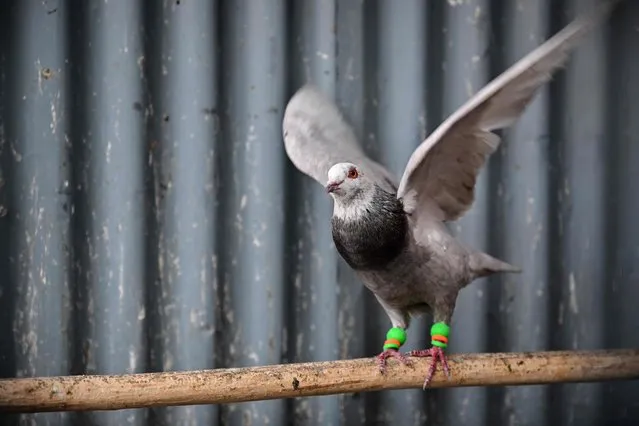
A pigeon stretches its wings in the Ka Faroshi bird market in Kabul on July 16, 2022. (Photo by Lillian Suwanrumpha/AFP Photo)

A pigeon stretches its wings in the Ka Faroshi bird market in Kabul on July 16, 2022. (Photo by Lillian Suwanrumpha/AFP Photo)
Details
20 Jul 2022 04:33:00
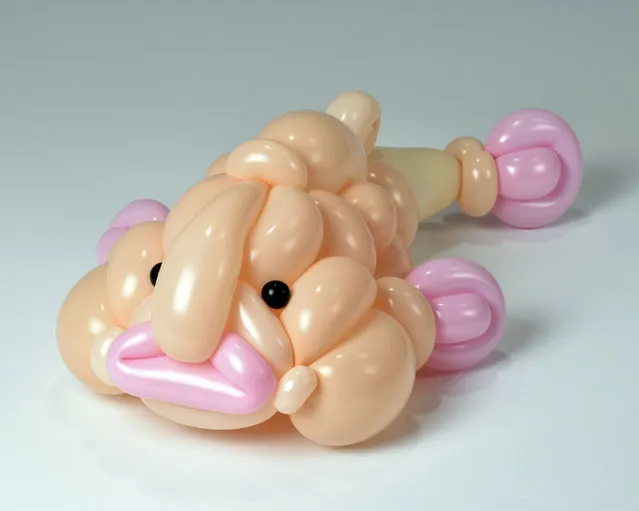
Blobfish by Masayoshi Matsumoto. (Photo by Masayoshi Matsumoto/Caters News Agency)

A Japanese artist is making a name for himself by creating animal sculptures out of balloons. Masayoshi Matsumoto, 29, has thus far created a wide range of intricate figures from the animal kingdom. Here: Blobfish by Masayoshi Matsumoto. (Photo by Masayoshi Matsumoto/Caters News Agency)
Details
01 Oct 2019 00:03:00
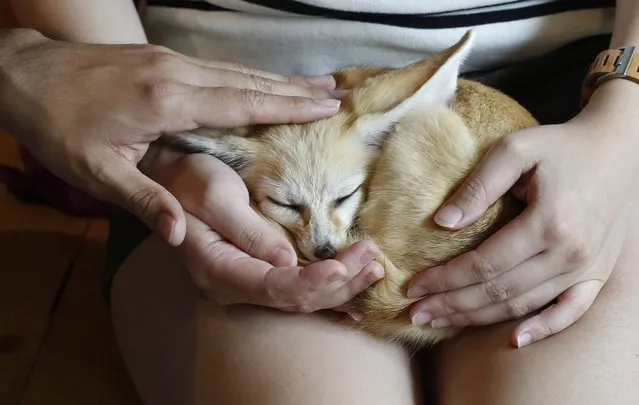
A picture made available on 07 March 2016 shows visitors petting and holding a Fennec fox, native to the Sahara, in the petting room at the Little Zoo Cafe, a business built to capitalize on Thais' love for exotic animals, and food, on the outskirts of Bangkok, Thailand, 05 March 2016. (Photo by Barbara Walton/EPA)

A picture made available on 07 March 2016 shows visitors petting and holding a Fennec fox, native to the Sahara, in the petting room at the Little Zoo Cafe, a business built to capitalize on Thais' love for exotic animals, and food, on the outskirts of Bangkok, Thailand, 05 March 2016. The cafe boasts Fennec foxes, Meerkat, native to parts of Africa, Silver Fox, Raccoon and Chinchillas, along with a menu of Thai food and Cheesecake, among other sweet deserts. Nature is a faraway fantasy in the bustling exhaust-filled cement city of Bangkok, fuelling a demand to own and be close to exotic pets. The trend to be near to a species that was once wild, in a city environment, far from the natural setting, has drawn criticism but continues to grow. (Photo by Barbara Walton/EPA)
Details
13 Mar 2016 09:38:00
Vegetarian 19-year-old model Courtney Stodden gets ready to serve veggie hot dogs wearing a lettuce bikini during a People for the Ethical Treatment of Animals (PETA)  free veggie dog handout on Capitol Hill in Washington, DC, July 16, 2014. (Photo by Jim Watson/AFP Photo)

Vegetarian 19-year-old model Courtney Stodden gets ready to serve veggie hot dogs wearing a lettuce bikini during a People for the Ethical Treatment of Animals (PETA) free veggie dog handout on Capitol Hill in Washington, DC, July 16, 2014. (Photo by Jim Watson/AFP Photo)
Details
19 Jul 2014 10:52:00
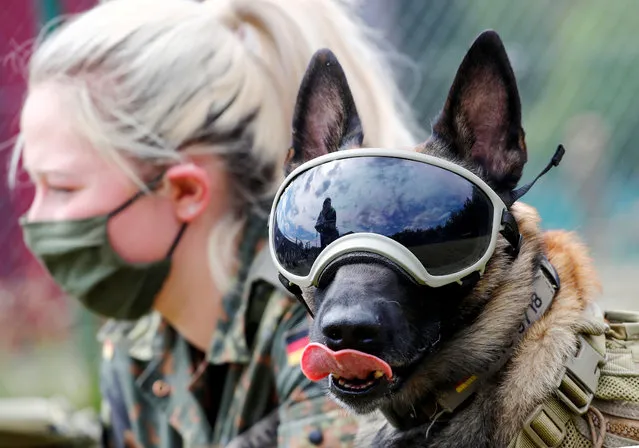
Five-year-old sniffing dog “Vine” wears protection goggles against the sun and dust as he poses together with Giulia Gausemann for photographers, at the sniffing dogs school of the German Army (Bundeswehr) in Daun, Germany, July 24, 2020. The Bundeswehr sniffing dogs school and the veterinarian university of Hanover are developing a training programme to sniff out the coronavirus disease (COVID-19) with dogs at airports, border crossings and other highly frequented places. (Photo by Wolfgang Rattay/Reuters)

Five-year-old sniffing dog “Vine” wears protection goggles against the sun and dust as he poses together with Giulia Gausemann for photographers, at the sniffing dogs school of the German Army (Bundeswehr) in Daun, Germany, July 24, 2020. The Bundeswehr sniffing dogs school and the veterinarian university of Hanover are developing a training programme to sniff out the coronavirus disease (COVID-19) with dogs at airports, border crossings and other highly frequented places. (Photo by Wolfgang Rattay/Reuters)
Details
26 Jul 2020 00:01:00
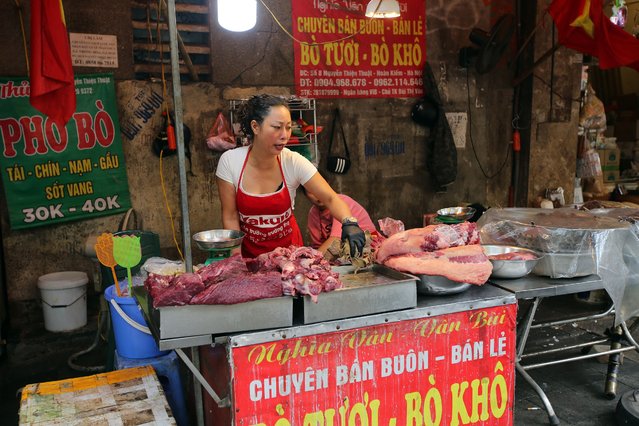
A vendor sells beef at a market in Hanoi, Vietnam 01 October 2024. Vietnam's official manufacturing Purchasing Managers' Index (PMI) declined to 47.3 points in September, down from 52.4 points in the previous month, according to the latest survey from S&P Global. (Photo by Luong Thai Linh/EPA)

A vendor sells beef at a market in Hanoi, Vietnam 01 October 2024. Vietnam's official manufacturing Purchasing Managers' Index (PMI) declined to 47.3 points in September, down from 52.4 points in the previous month, according to the latest survey from S&P Global. (Photo by Luong Thai Linh/EPA)
Details
16 Dec 2024 03:55:00
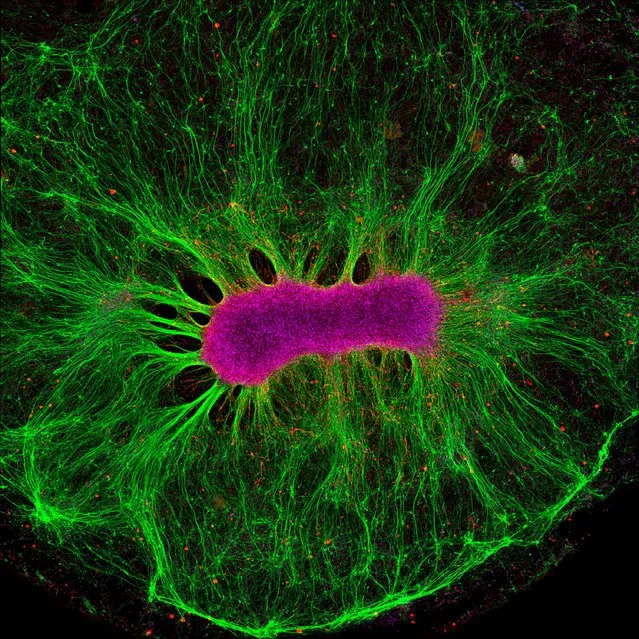
Brain-on-a-chip. Dazzling in green and magenta this image shows the nerve fibres (in green) produced by neural stem cells (in magenta) as they grow on a synthetic gel. Captured by a technique known as confocal microscopy, the image is part of research shedding light on how tinkering with the environment can affect the way in which nerve fibres grow. (Photo by Collin Edington and Iris Lee/Massachusetts Institute of Technology/Wellcome Images)

Brain-on-a-chip. Dazzling in green and magenta this image shows the nerve fibres (in green) produced by neural stem cells (in magenta) as they grow on a synthetic gel. Captured by a technique known as confocal microscopy, the image is part of research shedding light on how tinkering with the environment can affect the way in which nerve fibres grow. (Photo by Collin Edington and Iris Lee/Massachusetts Institute of Technology/Wellcome Images)
Details
17 Mar 2017 00:01:00