A robot takes part in what is billed as the world's first robot half marathon during the Humanoid Robot Half-Marathon held in Beijing on Saturday, April 19, 2025. (Photo by Ng Han Guan/AP Photo)
Colorado Rockies' Charlie Blackmon, back, douses Randal Grichuk as he is interviewed by field announcer Kelsey Wingert, right, following Grichuk's three-run home run off Milwaukee Brewers relief pitcher Taylor Rogers during the 10th inning of a baseball game Tuesday, September 6, 2022, in Denver. (Photo by David Zalubowski/AP Photo)
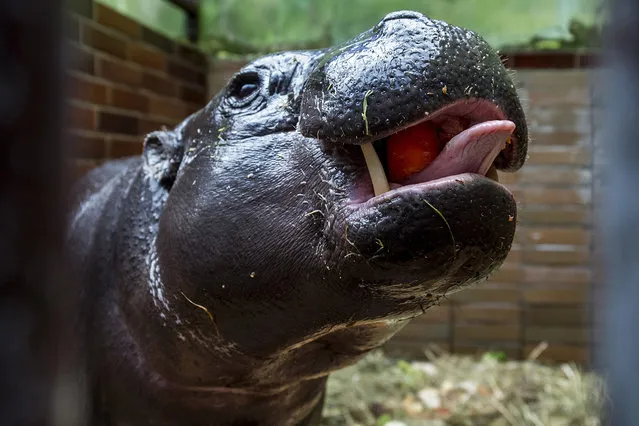
Female of pygmy hippopotamus called Malaya from Netherlands in zoo in Dvur Kralove nad Labem, Czech Republic, February 22, 2016. (Photo by David Tanecek/CTK via ZUMA Press)
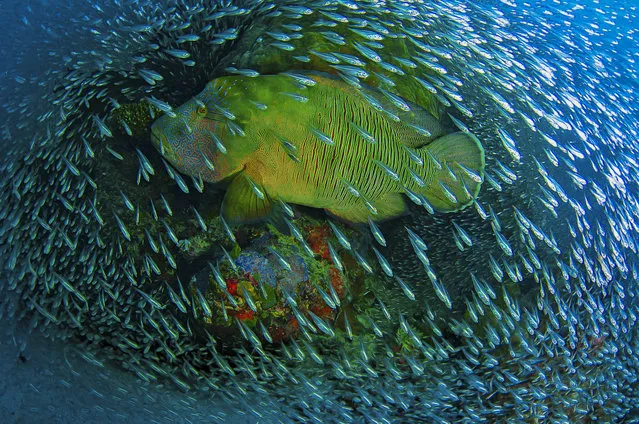
“7584 Fish”. On a windy day right after a Cyclone passed the far northern Great Barrier Reef i took some friends out to the reef. Never before i saw that many glass fish on this particular coral “bommie”. Just when i setup my camera, this Napoleon Wrasse swam right through the school of fish building a living frame. Photo location: Cairns, Great Barrier Reef, Flynn Reef, Australia. (Photo and caption by Christian Miller/National Geographic Photo Contest)
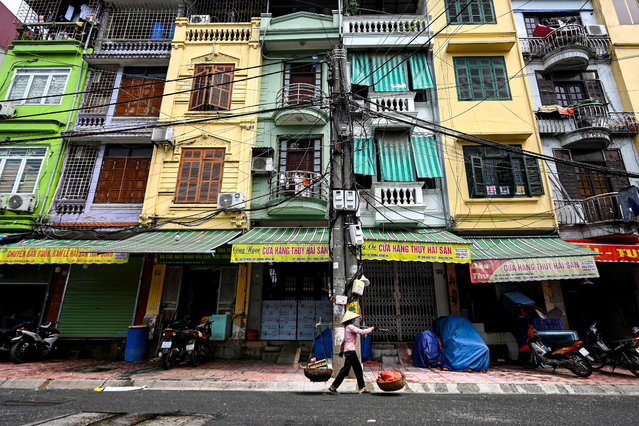
This photograph taken on June 8, 2021 shows a street vendor walking past narrow residential houses, known as “nha ong” in Vietnamese or “tube houses”, in an urban area of Hanoi. (Photo by Manan Vatsyayana/AFP Photo)
Grace Ann Nader, Brooks Nader, Mary Holland Nader and Sarah Jane Nader celebrate their new show “Love Thy Nader” at the top of the Empire State Building in NYC on August 26, 2025. (Photo by Erik Pendzich/Rex Features/Shutterstock)
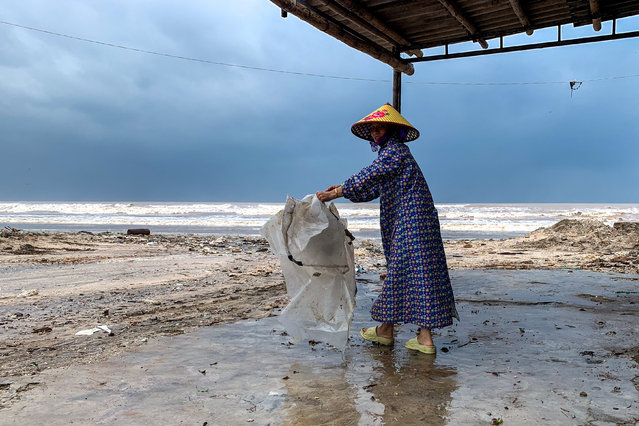
A woman wearing a raincoat collects a plastic bag near a beach as Typhoon Bualoi nears, in Nghe An province, Vietnam, on September 28, 2025. (Photo by Thinh Nguyen/Reuters)
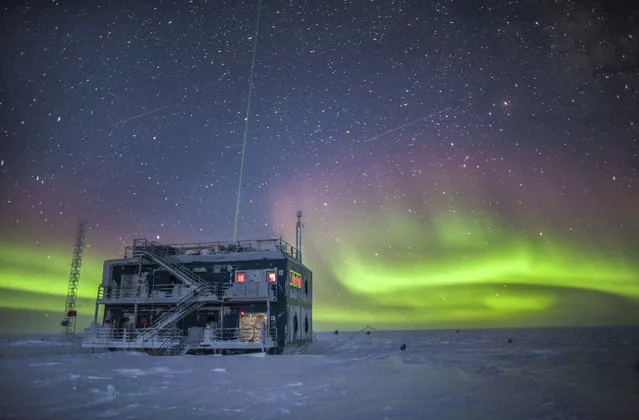
This undated photo provided by NOAA in May 2018 shows aurora australis near the South Pole Atmospheric Research Observatory in Antarctica. When a hole in the ozone formed over Antarctica, countries around the world in 1987 agreed to phase out several types of ozone-depleting chemicals called chlorofluorocarbons (CFCs). Production was banned, emissions fell and the hole shriveled. But according to a study released on Wednesday, May 16, 2018, scientists say since 2013, there’s more of a banned CFC going into the atmosphere. (Photo by Patrick Cullis/NOAA via AP Photo)