Loading...
Done
Performers take part in a parade during the annual Cervantes market (Mercado Cervantino) in the hometown of famous Spanish writer Miguel de Cervantes, Alcala de Henares, Spain, October 9, 2015. (Photo by Susana Vera/Reuters)

Performers take part in a parade during the annual Cervantes market (Mercado Cervantino) in the hometown of famous Spanish writer Miguel de Cervantes, Alcala de Henares, Spain, October 9, 2015. The Mercado Cervantino, which represents a market and fair from the 16th and 17th centuries, takes place in the city's historic centre and commemorates Miguel de Cervantes' baptism, which took place on October 9, 1547. (Photo by Susana Vera/Reuters)
Details
13 Oct 2015 08:06:00
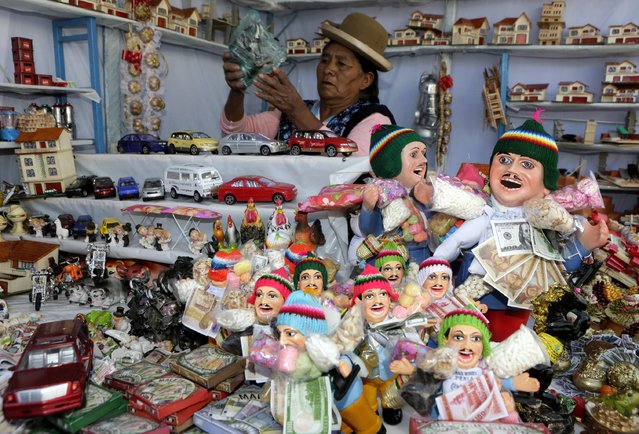
A woman sells statues of the Ekeko, god of fortune, at the traditional “Alasitas” fair in La Paz January 24, 2015. During the fair, Bolivians buy miniature versions of goods like cars, money and houses they would like to own in real life during the year. (Photo by David Mercado/Reuters)

A woman sells statues of the Ekeko, god of fortune, at the traditional “Alasitas” fair in La Paz January 24, 2015. During the fair, Bolivians buy miniature versions of goods like cars, money and houses they would like to own in real life during the year. (Photo by David Mercado/Reuters)
Details
25 Jan 2015 09:59:00
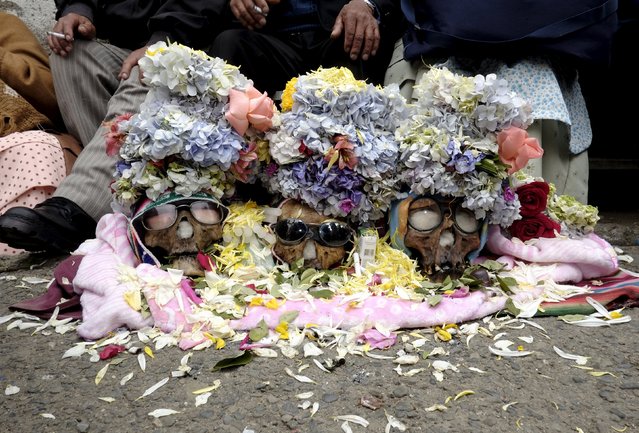
Skulls placed on the floor are seen during a ceremony held for the "Dia de las natitas" (Day of the Skull) celebrations at the General Cemetery of La Paz, November 8, 2015. (Photo by David Mercado/Reuters)

Skulls placed on the floor are seen during a ceremony held for the "Dia de las natitas" (Day of the Skull) celebrations at the General Cemetery of La Paz, November 8, 2015. Bolivians, who keep close relatives skulls at home as a macabre talisman, flock to the cemetery chapel once a year to have the craniums blessed and to bring themselves good luck in the future. (Photo by David Mercado/Reuters)
Details
12 Nov 2015 08:01:00
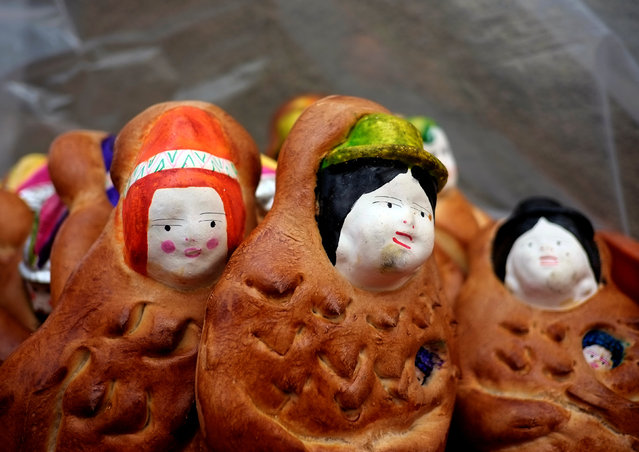
“T'antawawas” (children's bread) are displayed in a popular market to commemorate All Saints Day in La Paz, October 30, 2016. (Photo by David Mercado/Reuters)

“T'antawawas” (children's bread) are displayed in a popular market to commemorate All Saints Day in La Paz, October 30, 2016. (Photo by David Mercado/Reuters)
Details
01 Dec 2016 12:36:00
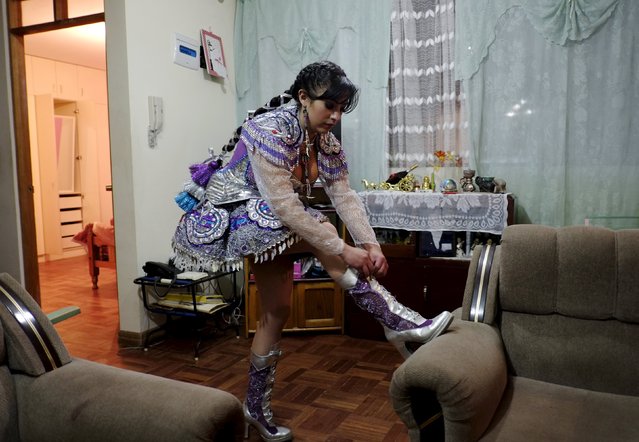
Alicia Vargas, 23, a performer from the Urus Diablada group, tied the laces of her boots before a practice ahead of Carnival in Oruro, Bolivia February 5, 2016. (Photo by David Mercado/Reuters)

Alicia Vargas, 23, a performer from the Urus Diablada group, tied the laces of her boots before a practice ahead of Carnival in Oruro, Bolivia February 5, 2016. (Photo by David Mercado/Reuters)
Details
08 Feb 2016 11:15:00
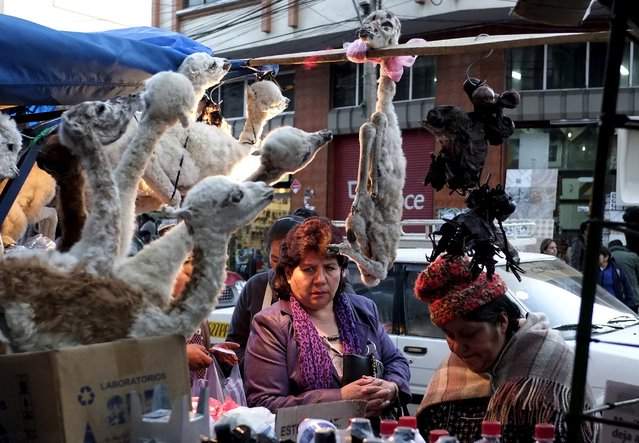
A woman (C) shops for an offering at the witch doctor's street in La Paz, July 31, 2015. (Photo by David Mercado/Reuters)

A woman (C) shops for an offering at the witch doctor's street in La Paz, July 31, 2015. According to Andean culture, the all the month of August is a time to give offerings to “Pachamama” to give thanks for their farms and health. The Aymaras use coca leaves, candies, animal fat, llama fetuses, some dried fruits, powdered minerals and alcohol during these rituals. (Photo by David Mercado/Reuters)
Details
02 Aug 2015 12:27:00
A witch doctor prepares an offering for the inauguration of the World People's Conference on Climate Change and the Defense of Life, prior to the World Climate Change Conference, in Tiquipaya, Bolivia, October 10, 2015. (Photo by David Mercado/Reuters)

A witch doctor prepares an offering for the inauguration of the World People's Conference on Climate Change and the Defense of Life, prior to the World Climate Change Conference, in Tiquipaya, Bolivia, October 10, 2015. Almost 150 nations, including major emitters led by China and the United States, have submitted plans to the United Nations for curbing greenhouse gas emissions blamed by the U.N. for causing more floods, droughts and heat waves. France will host the conference in Le Bourget, near Paris, from November 30 to December 11, 2015. (Photo by David Mercado/Reuters)
Details
14 Oct 2015 08:00:00
A porter stands at the bottom of the Illimani mountain, on the outskirts of La Paz, Bolivia, April 16, 2016. (Photo by David Mercado/Reuters)

A porter stands at the bottom of the Illimani mountain, on the outskirts of La Paz, Bolivia, April 16, 2016. For years, Lydia Huayllas, 48, has worked as a cook at base camps and mountain-climbing refuges on the steep, glacial slopes of Huayna Potosi, a 19,974-foot (6,088-meter) Andean peak outside of La Paz, Bolivia. But two years ago, she and 10 other Aymara indigenous women, ages 42 to 50, who also worked as porters and cooks for mountaineers, put on crampons – spikes fixed to a boot for climbing – under their wide traditional skirts and started to do their own climbing. (Photo by David Mercado/Reuters)
Details
22 Apr 2016 12:33:00