Loading...
Done
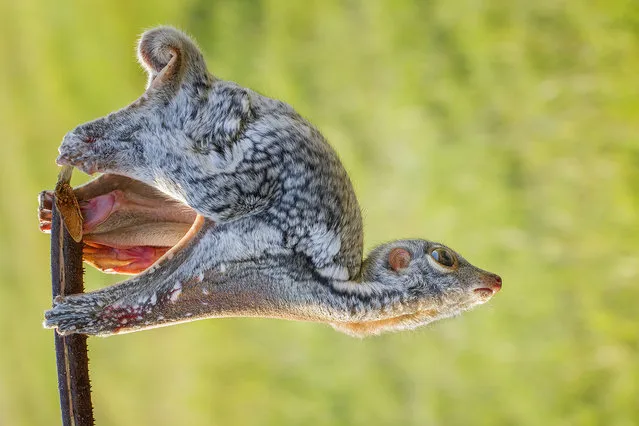
“Warming up”. This photo I capture in the early afternoon, the animal species of lemurs fly. Photo location: Sambas, West Kalimantan, Indonesia. (Photo and caption by Hendy Mp/National Geographic Photo Contest)

“Warming up”. This photo I capture in the early afternoon, the animal species of lemurs fly. Photo location: Sambas, West Kalimantan, Indonesia. (Photo and caption by Hendy Mp/National Geographic Photo Contest)
Details
03 Oct 2014 11:52:00
Zookeepers measure the length of a pueblan milk snake

Zookeepers measure the length of a pueblan milk snake in the Reptile House of ZSL London Zoo as part of their annual weighing and measuring of their animals on August 25, 2011 in London, England. The heights and weights of over 750 different animal species at the zoo are recorded into the International Species Information System, to monitor their health and share the data with other zoos across the world. (Photo by Oli Scarff/Getty Images)
Details
26 Aug 2011 09:42:00
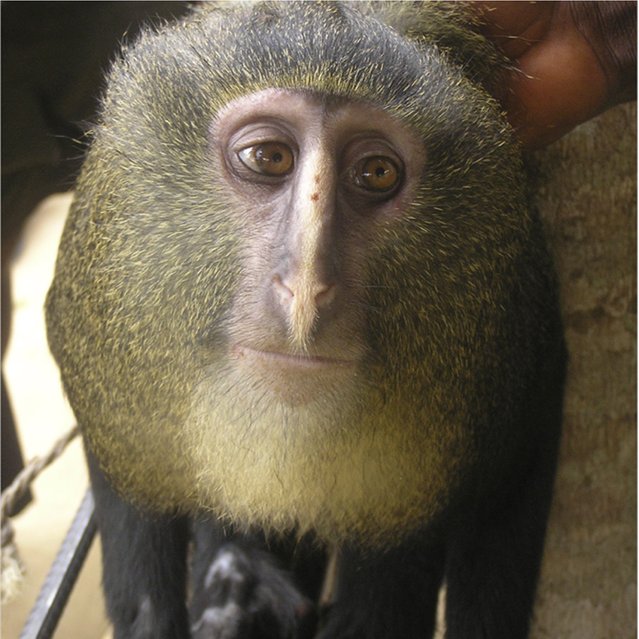
A new species of monkey found in the Democratic Republic of the Congo and identified as Lesula (Cercopithecus lomamiensis) is seen in this undated photograph from an article published September 12, 2012 in the science journal PLOS One. (Photo by Hart J. A., Detwiler K. M., Gilbert C. C./Reuters)

A new species of monkey found in the Democratic Republic of the Congo and identified as Lesula (Cercopithecus lomamiensis) is seen in this undated photograph from an article published September 12, 2012 in the science journal PLOS One. The monkey was first seen in 2007 by researchers John and Terese Hart of the Peabody Museum of Natural History at Yale Research Project. The finding of C. lomamiensis represents only the second new species of African monkey to be discovered in the past 28 years, according to the research article. (Photo by Hart J. A., Detwiler K. M., Gilbert C. C./Reuters)
Details
27 Sep 2012 08:17:00


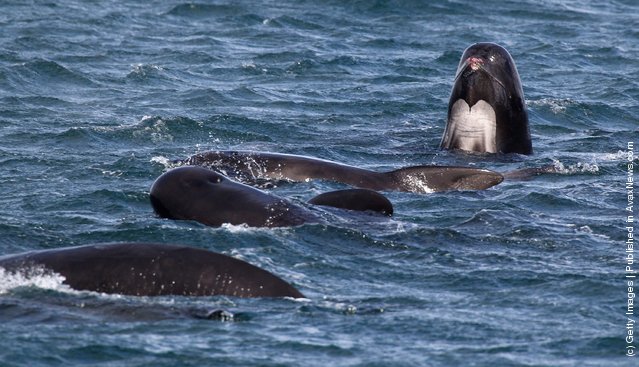
“Pilot whales are cetaceans belonging to the genus Globicephala. There are two extant species, the long-finned pilot whale (G. melas) and the short-finned pilot whale (G. macrorhynchus). The two are not readily distinguished at sea and analysis of the skulls is the best way to tell the difference between the two species. Between the two species, pilot whales range in waters nearly worldwide with long-finned pilot whales living in cooler waters and short-finned pilot whales living in warmer waters. Pilot whales are among the largest of the oceanic dolphins, exceeded in size only by the killer whale. They and other large members of the dolphin family are also known as blackfish”. – Wikipedia

Photo: Pilot whales swim in Loch Carron on May 20, 2011 in South Uist, Scotland. A major operation is underway to prevent up to 100 pilot whales from stranding on the rocky shoreline of Loch Carron on South Uist in the Western Isles. (Photo by Jeff J Mitchell/Getty Images)

Details
21 May 2011 07:58:00
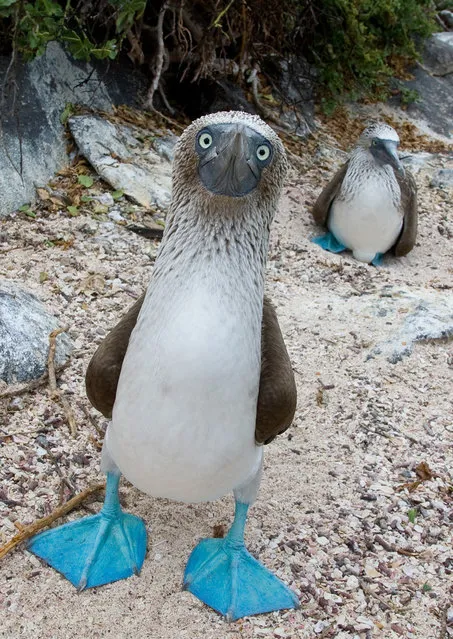
Blue-Footed Booby

The blue-footed booby (Sula nebouxii) is a marine bird in the family Sulidae, which includes ten species of long-winged seabirds. Blue-footed boobies belong to the genus Sula, which comprises six species of boobies. It is easily recognizable by its distinctive bright blue feet, which is a sexually selected trait. Males display their feet in an elaborate mating ritual by lifting their feet up and down while strutting before the female.

See Also: Red
Details
03 Oct 2014 12:42:00
Glacier National Park Montana

Glacier National Park is a national park located in the U.S. state of Montana, on the Canada–United States border with the Canadian provinces of Alberta and British Columbia. The park encompasses over 1,000,000 acres (4,000 km2) and includes parts of two mountain ranges (sub-ranges of the Rocky Mountains), over 130 named lakes, more than 1,000 different species of plants and hundreds of species of animals. This vast pristine ecosystem is the centerpiece of what has been referred to as the "Crown of the Continent Ecosystem", a region of protected land encompassing 16,000 square miles (41,000 km2).
Details
29 Oct 2013 11:13:00
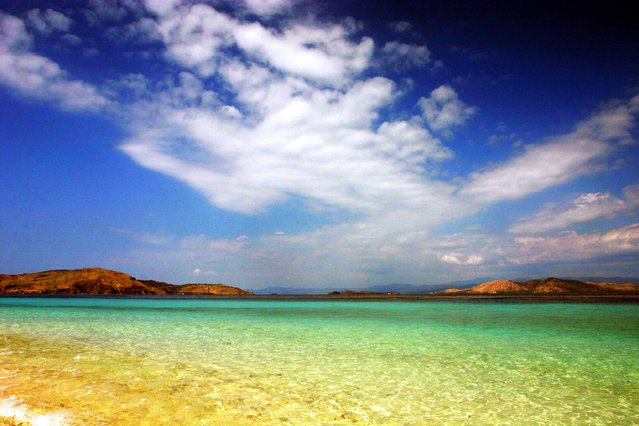
Komodo National Park

The Komodo National Park is a national park in Indonesia located within the Lesser Sunda Islands in the border region between the provinces of East Nusa Tenggara and West Nusa Tenggara. The park includes the three larger islands Komodo, Padar and Rinca, and 26 smaller ones, with a total area of 1,733 km² (603 km² of it land). The national park was founded in 1980 to protect the Komodo dragon, the world's largest lizard. Later it was dedicated to protecting other species, including marine species. In 1991 the national park was declared a UNESCO World Heritage Site and later as Man and Biosphere Reserve.
Details
12 Aug 2013 12:28:00
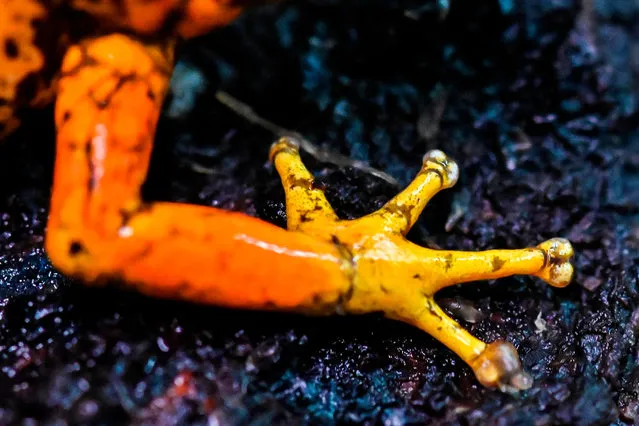
A leg of a “diablito” frog (Oophaga sylvatica) is photographed in a laboratory at a laboratory in the zoo of Cali, Colombia, on July 19, 2019. Colombia is the second country with the largest number of amphibians in the world after Brazil. More than 40% of amphibian species worldwide are in danger of extinction. (Photo by Luis Robayo/AFP Photo)

A leg of a “diablito” frog (Oophaga sylvatica) is photographed in a laboratory at a laboratory in the zoo of Cali, Colombia, on July 19, 2019. Colombia is the second country with the largest number of amphibians in the world after Brazil. More than 40% of amphibian species worldwide are in danger of extinction. (Photo by Luis Robayo/AFP Photo)
Details
28 Nov 2020 00:03:00