Loading...
Done
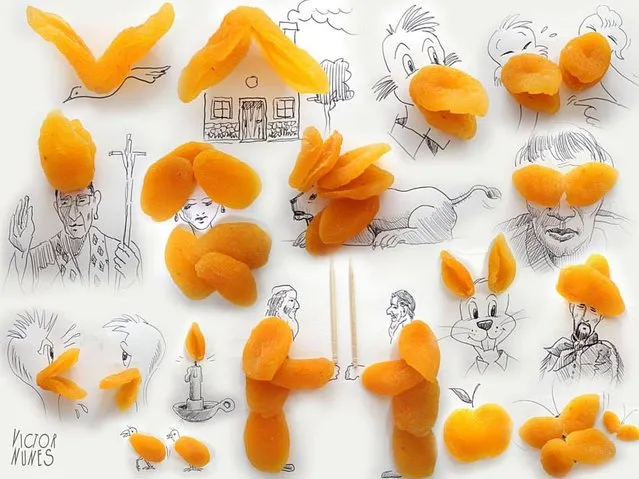
Food In Faces By Victor Nunes

Artist Victor Nunes combines every-day objects with simple illustrations to turn them into pictures of faces, animals and other playful scenes. His images invite us to look at the world differently and find creative images in our surroundings. Nunes’ art is a great example of pareidolia, which is our propensity to give meaning to random objects (like in this post about seeing faces in random objects). It’s the reason why we associate a smiley face with a human face and why some of Nunes’ pieces of popcorn or bread resemble faces to us.
Details
02 Feb 2014 11:58:00
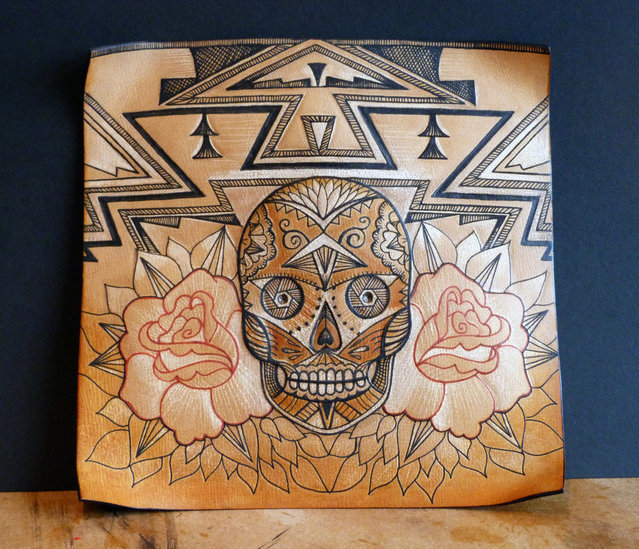
Tattooed Leather Art By Punctured Artefact

Tattoos always seem to fascinate us, which is probably one of the reasons why Dionne Marshall has turned to tattooing patterns onto leather. The designs she creates are reminiscent of tattoos favored by people in Central America. Working with leather is a lot harder than working with paints or pencils. Unlike the latter, there is no room for mistakes when you make a tattoo. This is the reason why there are so few artists that specialize in creating art by tattooing leather. However, the results are definitely worth it, as this is a truly unique form of art with a primal feeling to it. (Photo by Dionne Marshall)
Details
18 Oct 2014 06:01:00
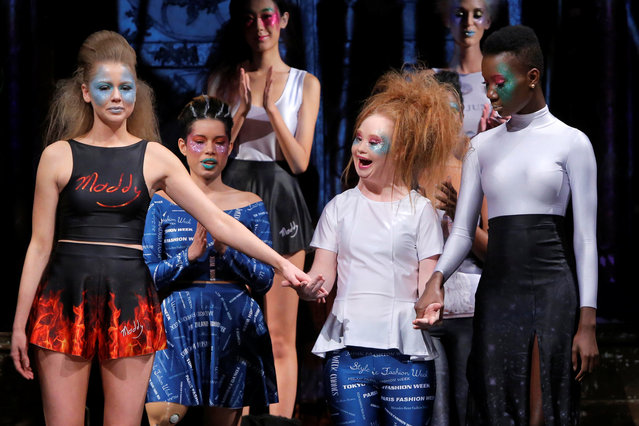
Australian model and designer Madeline Stuart, who has Down syndrome, acknowledges attendees after presenting creations from her label 21 Reasons Why By Madeline Stuart during New York Fashion Week in Manhattan, New York, U.S., February 12, 2017. (Photo by Andrew Kelly/Reuters)

Australian model and designer Madeline Stuart, who has Down syndrome, acknowledges attendees after presenting creations from her label 21 Reasons Why By Madeline Stuart during New York Fashion Week in Manhattan, New York, U.S., February 12, 2017. (Photo by Andrew Kelly/Reuters)
Details
15 Feb 2017 00:03:00
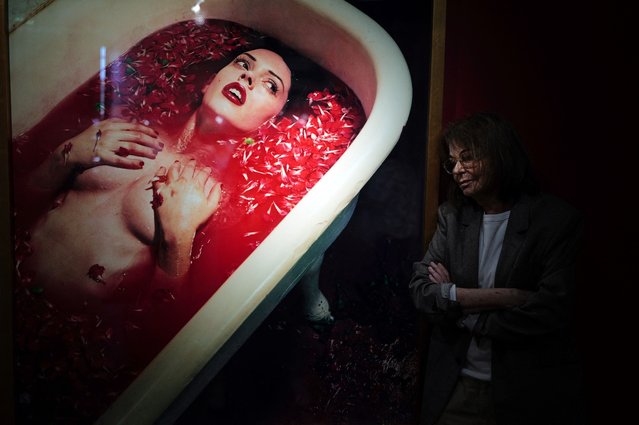
French photographer Bettina Rheims poses next to her work, two days before the opening of her exhibition “Pourquoi m'as-tu abandonnée ?” (Why did you abandon me?) at the Museum of Photography Charles Negre, in Nice on June 13, 2024. (Photo by Valery Hache/AFP Photo)

French photographer Bettina Rheims poses next to her work, two days before the opening of her exhibition “Pourquoi m'as-tu abandonnée ?” (Why did you abandon me?) at the Museum of Photography Charles Negre, in Nice on June 13, 2024. (Photo by Valery Hache/AFP Photo)
Details
08 Jul 2024 06:03:00
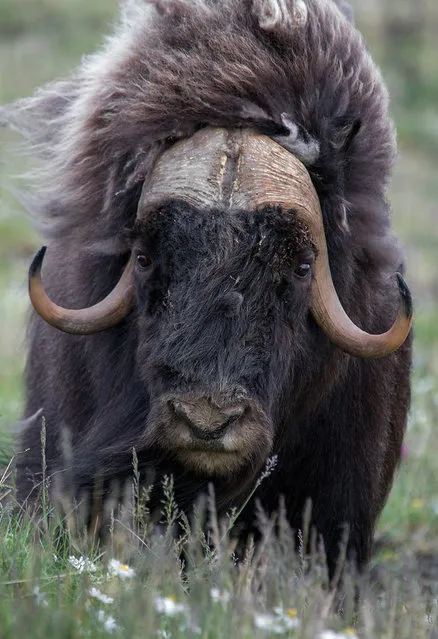
Wild Musk Oxen in Arctic Prairie in Russia

Vitaly Gorshkov, a wildlife photographer, captured these animals in their natural habitat. He says that these animals are so hairy that it is difficult to distinguish the front from the back. The oxen aren’t really afraid of humans that is why it is easy to approach them and take pictures.
Details
25 Apr 2014 12:10:00
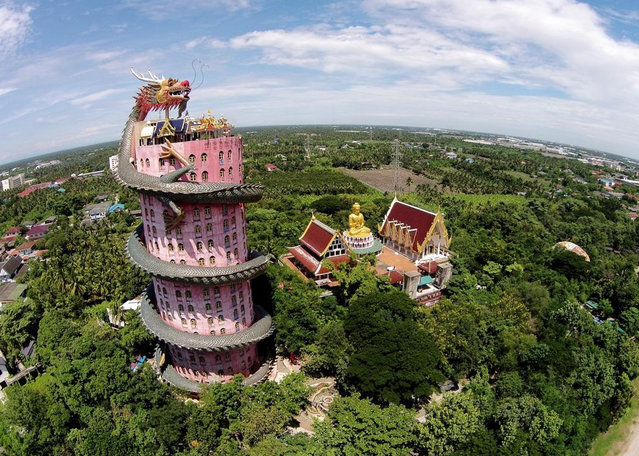
The Wat Samphran temple in Bangkok, Thailand

With the Wat Samphran Temple, what you see is what you get: while a smattering of awed visitors across the web have expressed admiration for this impressive work of architecture, details such as when it was built, who designed it, or why this 17-story tower is in the clutches of a massive, beautiful dragon are nowhere to be found.
Details
16 May 2015 09:51:00
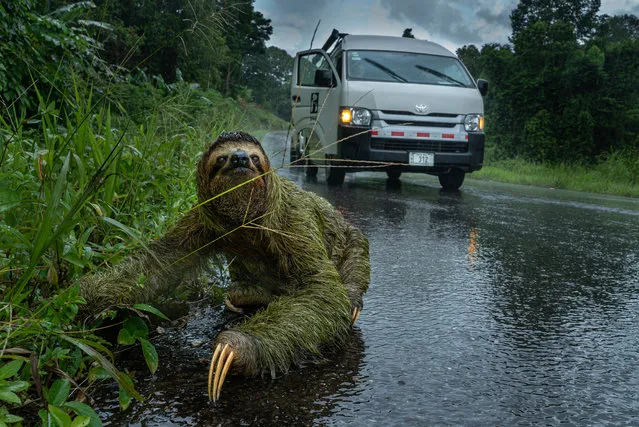
People and Nature category winner: Why did the sloth cross the road? by Andrew Whitworth (Osa Conservation and University of Glasgow), taken in Osa Peninsula, Costa Rica. “I was driving out from the Osa Peninsula, located on the southern Pacific coast of Costa Rica on a dark, stormy day. This female three-toed sloth (Bradypus variegatus) had luckily just about made it across the road, and the drivers of the Toyota on this occasion had spotted her in good time”. (Photo by Andrew Whitworth/2019 British Ecological Society Photography Competition)

People and Nature category winner: Why did the sloth cross the road? by Andrew Whitworth (Osa Conservation and University of Glasgow), taken in Osa Peninsula, Costa Rica. “I was driving out from the Osa Peninsula, located on the southern Pacific coast of Costa Rica on a dark, stormy day. This female three-toed sloth (Bradypus variegatus) had luckily just about made it across the road, and the drivers of the Toyota on this occasion had spotted her in good time”. (Photo by Andrew Whitworth/2019 British Ecological Society Photography Competition)
Details
30 Nov 2019 00:05:00
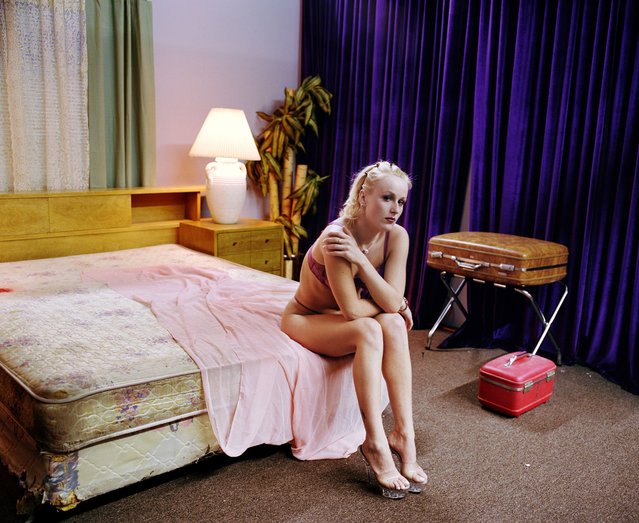
«Sharon Wild (from the series The Valley)», 2001. Larry Sultan grew up in California’s San Fernando Valley, which was a source of inspiration for a number of his projects. His series The Valley (2004) addresses the use of ordinary homes as sets for pornographic films, and asks why the ideal of middle-class domesticity lends itself to this most curious form of cultural appropriation. (Photo by Larry Sultan)

«Sharon Wild (from the series The Valley)», 2001. Larry Sultan grew up in California’s San Fernando Valley, which was a source of inspiration for a number of his projects. His series The Valley (2004) addresses the use of ordinary homes as sets for pornographic films, and asks why the ideal of middle-class domesticity lends itself to this most curious form of cultural appropriation. (Photo by Larry Sultan)
Details
03 Aug 2025 03:50:00