Loading...
Done
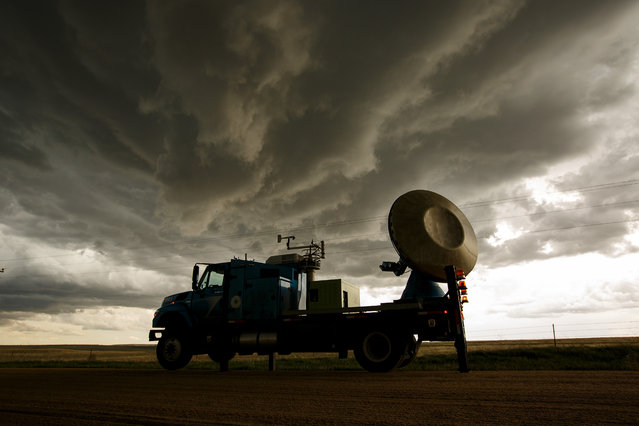
The Doppler on Wheels (DOW) vehicle scans a supercell thunderstorm during a tornado research mission, May 8, 2017 in Elbert County near Agate, Colorado. Doppler on Wheels (DOW) is a mobile doppler radar mounted on a truck that brings instruments directly into storms, allowing scientists to scan storms and tornadoes and make 3-D maps of wind and debris. (Photo by Drew Angerer/Getty Images)

The Doppler on Wheels (DOW) vehicle scans a supercell thunderstorm during a tornado research mission, May 8, 2017 in Elbert County near Agate, Colorado. Doppler on Wheels (DOW) is a mobile doppler radar mounted on a truck that brings instruments directly into storms, allowing scientists to scan storms and tornadoes and make 3-D maps of wind and debris. (Photo by Drew Angerer/Getty Images)
Details
18 May 2017 08:54:00
Max Gold, 20, of NYC, cruises on his skateboard as thousands gather on the National Mall for the March for Science on Saturday, April 22, 2017, in Washington, DC.  Activists and scientists descend on the nation's capital to rally for environmental causes and government policies rooted in scientific research as part of the Earth Day and March for Science rallies. (Photo by Jahi Chikwendiu/The Washington Post)

Max Gold, 20, of NYC, cruises on his skateboard as thousands gather on the National Mall for the March for Science on Saturday, April 22, 2017, in Washington, DC. Activists and scientists descend on the nation's capital to rally for environmental causes and government policies rooted in scientific research as part of the Earth Day and March for Science rallies. (Photo by Jahi Chikwendiu/The Washington Post)
Details
22 May 2017 07:38:00
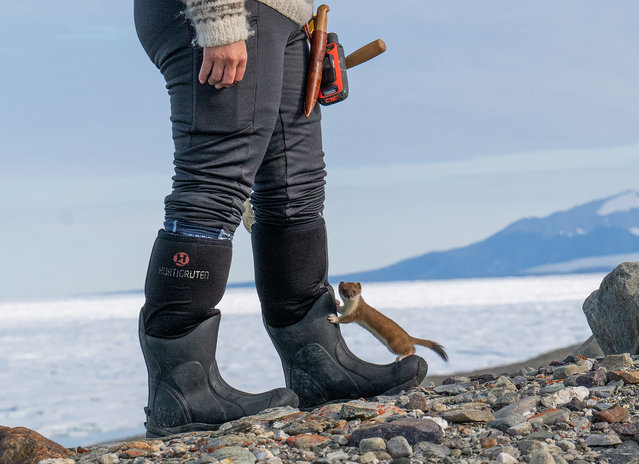
Scientists trekking for days to the undisputed furthest north land point on the planet, in October 2024 were greeted by an unexpected welcoming party: a stoat, whom they named Randall. The team were heading to Kaffeklubben Island, also known as Inuit Qeqertaat, off the northern tip of Greenland, about 440 miles from the North Pole, when Randall emerged from a cairn of rocks, showing no fear as he went to investigate them. (Photo by Jeff Kerby/Magnus News)

Scientists trekking for days to the undisputed furthest north land point on the planet, in October 2024 were greeted by an unexpected welcoming party: a stoat, whom they named Randall. The team were heading to Kaffeklubben Island, also known as Inuit Qeqertaat, off the northern tip of Greenland, about 440 miles from the North Pole, when Randall emerged from a cairn of rocks, showing no fear as he went to investigate them. (Photo by Jeff Kerby/Magnus News)
Details
27 Oct 2024 04:30:00
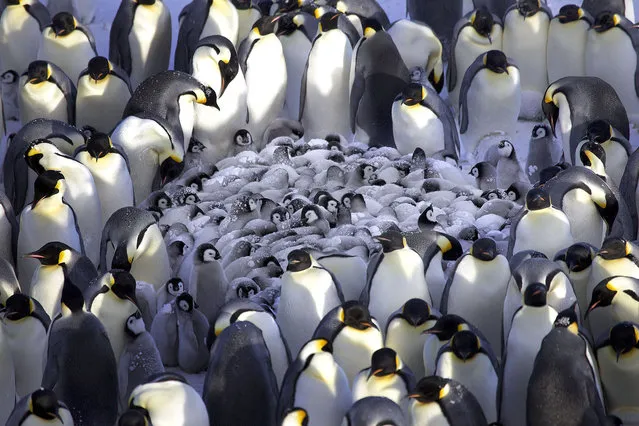
Emperor penguins gathered together to keep their chicks warm in these pictures. Marine scientist Frederique Oliver snapped the protective parents in Antarctica as they huddled against the huge winds.The adorable birds have to battle temperatures on -20 degrees Celsius as well as winds of up to 40 knots on the ice. (Photo by Frederique Oliver/Caters News)

Emperor penguins gathered together to keep their chicks warm in these pictures. Marine scientist Frederique Oliver snapped the protective parents in Antarctica as they huddled against the huge winds.The adorable birds have to battle temperatures on -20 degrees Celsius as well as winds of up to 40 knots on the ice. (Photo by Frederique Oliver/Caters News)
Details
18 Feb 2015 13:24:00
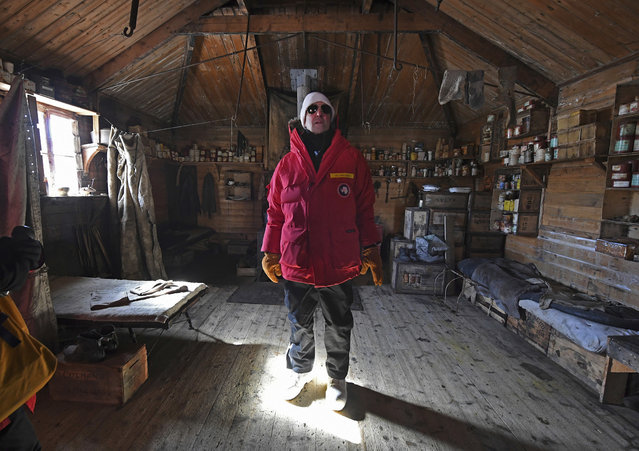
U.S. Secretary of State John Kerry stands inside the historic Shackleton hut near McMurdo Station, Antarctica, Friday, November 11, 2016. Kerry became the highest-ranking American official to visit Antarctica when he landed for a two-day trip on Friday. He's been hearing from scientists about the impact of climate change on the frozen continent. Kerry's aides described the trip as a learning opportunity for the secretary of state. He has been receiving briefings from scientists working to understand the effects of climate change on Antarctica. Kerry has made climate change an intensive focus of American diplomacy during his term, and had previously spent decades working on the issue as a U.S. senator. Trump has called climate change a hoax and said he would “cancel” U.S. involvement in the landmark Paris Agreement on global warming. (Photo by Mark Ralston/Pool Photo via AP Photo)

U.S. Secretary of State John Kerry stands inside the historic Shackleton hut near McMurdo Station, Antarctica, Friday, November 11, 2016. Kerry became the highest-ranking American official to visit Antarctica when he landed for a two-day trip on Friday. He's been hearing from scientists about the impact of climate change on the frozen continent. Kerry's aides described the trip as a learning opportunity for the secretary of state. He has been receiving briefings from scientists working to understand the effects of climate change on Antarctica. Kerry has made climate change an intensive focus of American diplomacy during his term, and had previously spent decades working on the issue as a U.S. senator. Trump has called climate change a hoax and said he would “cancel” U.S. involvement in the landmark Paris Agreement on global warming. (Photo by Mark Ralston/Pool Photo via AP Photo)
Details
12 Nov 2016 10:09:00
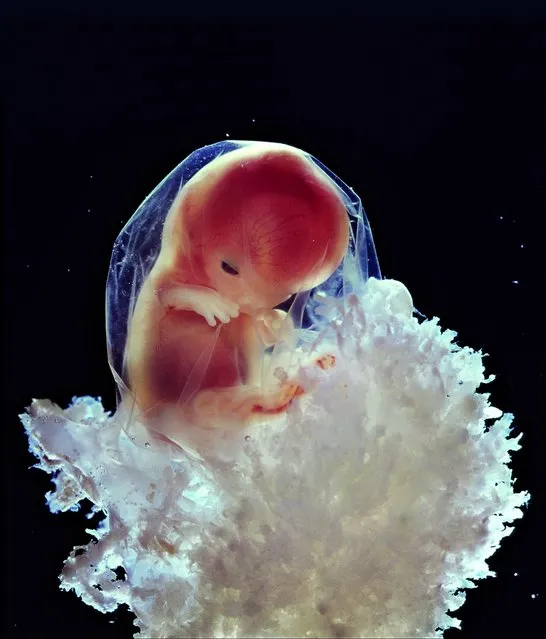
The photography of Lennart Nilsson

Lennart Nilsson is a Swedish photographer and scientist. Born in 1922 he is one of Swedens first photojournalists and has become famous for groundbreaking macro medical photos of subjects once considered unphotographabl
Details
09 Oct 2012 13:53:00
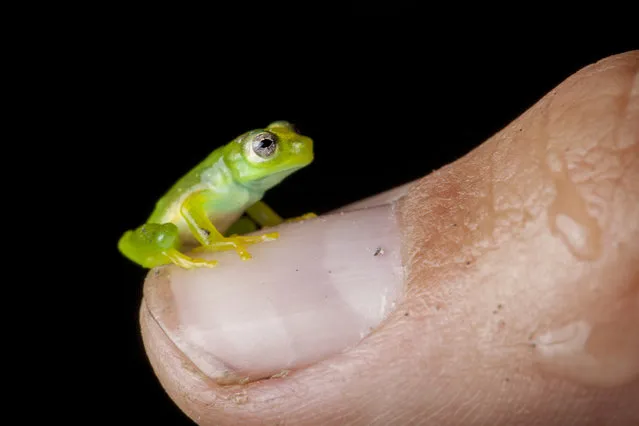
Miniature glass frog. (Photo by Robin Moore)

Thousands of species of amphibians are endangered and hundreds have already disappeared, but in recent years, a team of scientists and conservationists have re-discovered some of these “lost” species and uncovered previously unknown varieties. Here: Miniature glass frog. (Photo by Robin Moore)
Details
10 Oct 2014 12:55:00
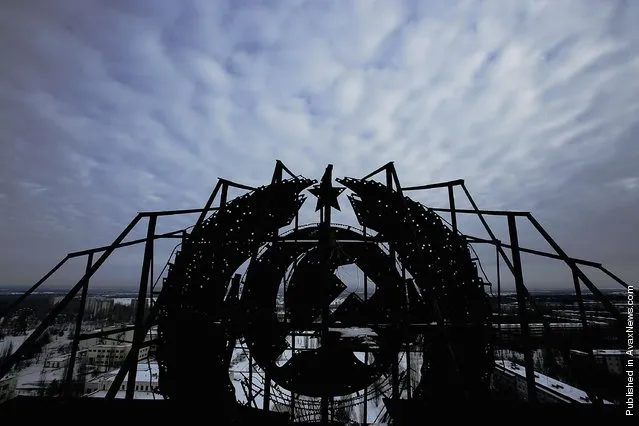
Chernobyl

Scaffolding holding a remnant of the Soviet Union, the hammer and sickle, is seen on a rooftop of an abandoned building in the town of Pripyat on January 25, 2006 near Chernobyl, Ukraine. The town of Pripyat, deserted since the 1986 catastrophe, once housed 30,000 people, the majority of being workers from the Chernobyl Nuclear Power Plant. Days after the catastrophe the inhabitants were relocated to other locations in the Soviet Union. The town of Pripyat has remained uninhabited since. Prypyat and the surrounding area will not be safe for human habitation for several centuries. Scientists estimate that the most dangerous radioactive elements will take up to 900 years to decay sufficiently to render the area safe.
Details
14 Mar 2011 10:20:00