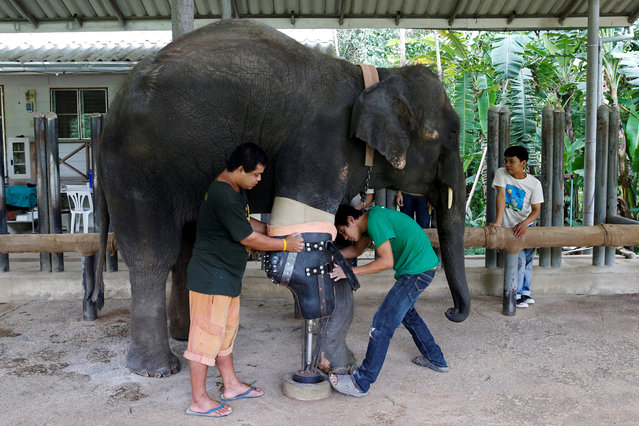
Mosha, the elephant that was injured by a landmine, has her prosthetic leg attached at the Friends of the Asian Elephant Foundation in Lampang, Thailand, June 29, 2016. Mosha was 7 months old when she stepped on a land mine near Thailand’s border with Myanmar and lost a front leg. That was a decade ago... (Photo by Athit Perawongmetha/Reuters)
A model waits backstage before the Spring/Summer 2017 Fashion Palette show at New York Fashion Week in Manhattan, New York, U.S., September 8, 2016. (Photo by Andrew Kelly/Reuters)
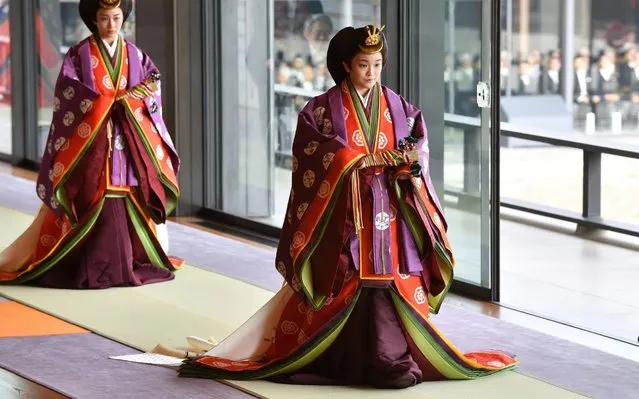
Japan's Princess Mako (R) attends the enthronement ceremony where Emperor Naruhito officially proclaimed his ascension to the Chrysanthemum Throne at the Imperial Palace in Tokyo on October 22, 2019. (Photo by Kazuhiro Nogi/Pool/Anadolu Agency via Getty Images)
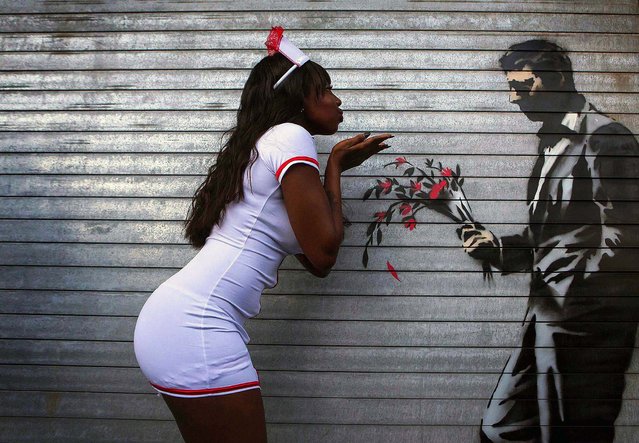
A dancer poses with a new installation of art by British graffiti artist Banksy painted on the front door of the Hustler Club in New York, October 24, 2013. Known for his anti-authoritarian black-and-white stenciled images, which have sold at auction for upwards of $2 million, the British street artist is treating New Yorkers to a daily dose of spray-painted art – while eluding the police and incurring the wrath of New York Mayor Michael Bloomberg. (Photo by Eric Thayer/Reuters)
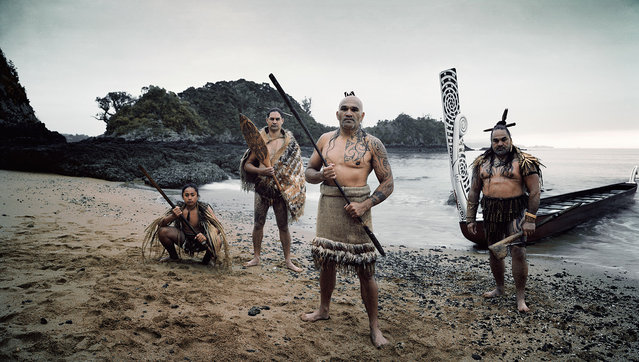
The long and intriguing story of the origine of the indigenous Maori people can be traced back to the 13th century, the mythical homeland Hawaiki, Eastern Polynesia. Due to centuries of isolation, the Maori established a distinct society with characteristic art, a separate language and unique mythology. Defining aspects of Maori traditional culture include art, dance, legends, tattoos and community. While the arrival of European colonists in the 18th centure had a profound impact on the Maori way of life, many aspects of traditional society have survived into the 21th century.