Loading...
Done
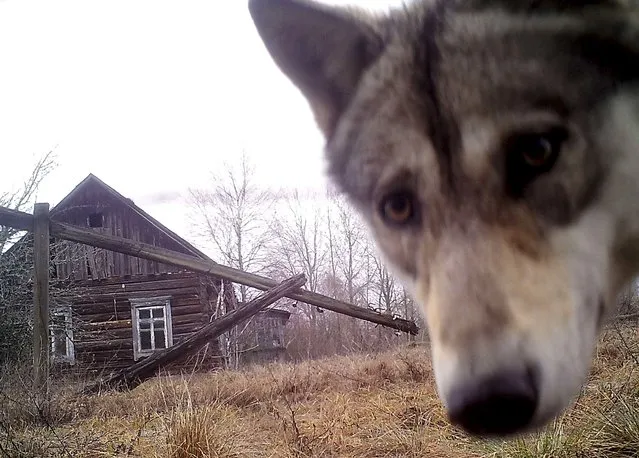
A wolf looks into the camera at the 30 km (19 miles) exclusion zone around the Chernobyl nuclear reactor in the abandoned village of Orevichi, Belarus, March 2, 2016. (Photo by Vasily Fedosenko/Reuters)

A wolf looks into the camera at the 30 km (19 miles) exclusion zone around the Chernobyl nuclear reactor in the abandoned village of Orevichi, Belarus, March 2, 2016. What happens to the environment when humans disappear? Thirty years after the Chernobyl nuclear disaster, booming populations of wolf, elk and other wildlife in the vast contaminated zone in Belarus and Ukraine provide a clue. (Photo by Vasily Fedosenko/Reuters)
Details
08 Apr 2016 15:13:00
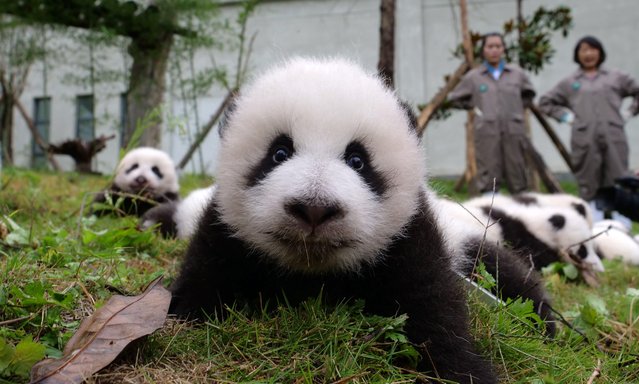
19 giant panda cubs, all born this year, meet the public at the Shenshuping Base of the China Conservation and Research Centre for the Giant Panda on October 13, 2017 in Ngawa Tibetan and Qiang Autonomous Prefecture, China. So far China Conservation and Research Centre for the Giant Panda has successfully bred 42 giant pandas this year. (Photo by VCG/VCG via Getty Images)

19 giant panda cubs, all born this year, meet the public at the Shenshuping Base of the China Conservation and Research Centre for the Giant Panda on October 13, 2017 in Ngawa Tibetan and Qiang Autonomous Prefecture, China. So far China Conservation and Research Centre for the Giant Panda has successfully bred 42 giant pandas this year. (Photo by VCG/VCG via Getty Images)
Details
15 Oct 2017 08:17:00
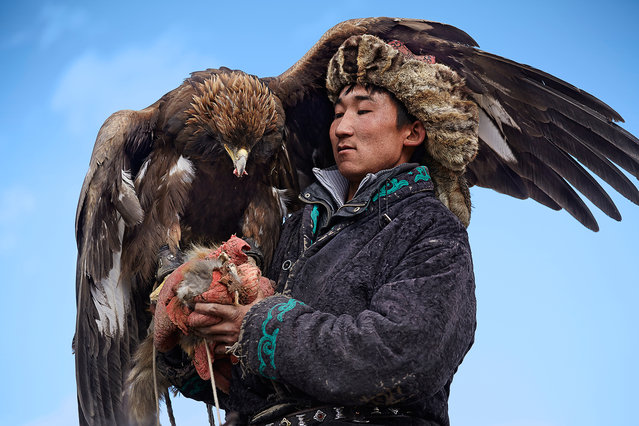
In one of the planet’s most desolate and harsh terrains, the Altai Mountains which run from Siberia in Russia down to Mongolia’s Gobi Desert, hunting with eagles is currently only practiced by a handful of Kyrgyz and Kazakhs. This form of falconry, the practice of hunting with the aid of birds of prey, can be traced back as far as 4,000 years in Central Asia. (Photo by Tariq Zaidi/The Washington Post)

In one of the planet’s most desolate and harsh terrains, the Altai Mountains which run from Siberia in Russia down to Mongolia’s Gobi Desert, hunting with eagles is currently only practiced by a handful of Kyrgyz and Kazakhs. This form of falconry, the practice of hunting with the aid of birds of prey, can be traced back as far as 4,000 years in Central Asia. Here: after a successful hunt, a proud hunter rewards his eagle by feeding it the lungs of the prey, which is considered the most highly prized part of the animal. (Photo by Tariq Zaidi/The Washington Post)
Details
22 Aug 2015 12:46:00
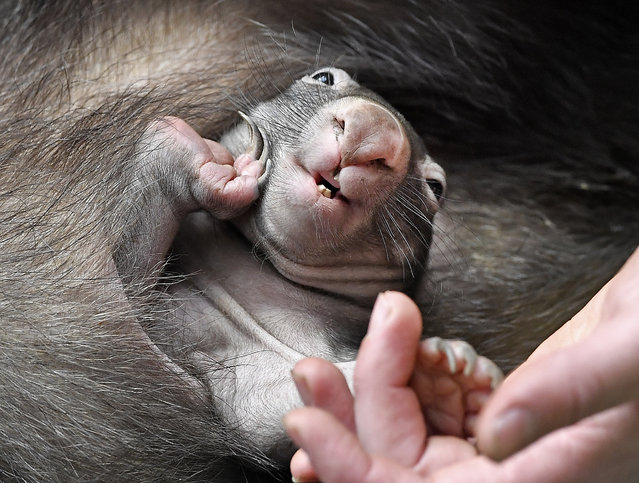
The little new born wombat baby APARI sitting in its mothers pouch at the zoo in Duisburg, Germany, Thursday, March 29, 2018. Wombat mother TINSEL once was found in the pouch of its dead mother on a street in Australia and was raised by zookeepers before she came to Germany. The zoo tried for 40 years in vain to breed a wombat, until APARI was born as the first one last week. (Photo by Martin Meissner/AP Photo)

The little new born wombat baby APARI sitting in its mothers pouch at the zoo in Duisburg, Germany, Thursday, March 29, 2018. Wombat mother TINSEL once was found in the pouch of its dead mother on a street in Australia and was raised by zookeepers before she came to Germany. The zoo tried for 40 years in vain to breed a wombat, until APARI was born as the first one last week. (Photo by Martin Meissner/AP Photo)
Details
01 Apr 2018 00:03:00
A servicewoman of the 65th Separate Mechanized Brigade of the Ukrainian Armed Forces attends a military drill near a frontline in Zaporizhzhia region, Ukraine on August 11, 2025. (Photo by Ukrainian Armed Forces via Reuters)

A servicewoman of the 65th Separate Mechanized Brigade of the Ukrainian Armed Forces attends a military drill near a frontline in Zaporizhzhia region, Ukraine on August 11, 2025. (Photo by Ukrainian Armed Forces via Reuters)
Details
10 Nov 2025 04:57:00
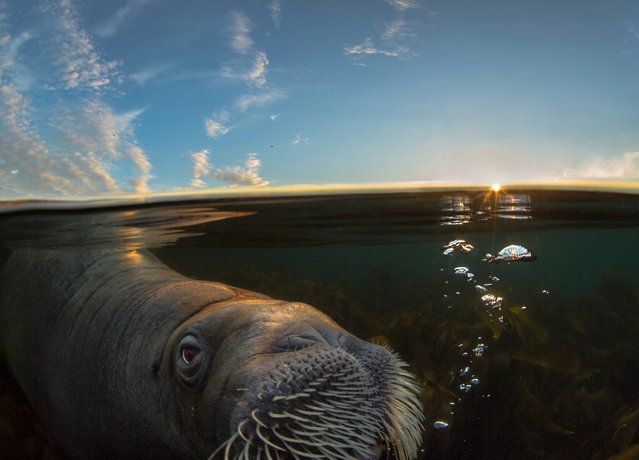
The Wildscreen festival is the world’s biggest celebration of screen-based natural history storytelling which takes place every two years in Bristol. Here: “Walrus in Midnight Sun”. Walrus feed mostly on bivalves in productive, shallow and often sandy habitats in the Arctic. This individual, though, arrived on a beach outside Tromsø, northern Norway, and found comfort on a stranded dead sperm whale. After two weeks he approached Audun, and only half a metre away he stretched his tusk forward and touched his hand gently. “This was one of the most memorable moments of my life”, Rikardsen says. He named the 500kg male Buddy. After two months, the dead whale was decomposed and Buddy suddenly disappeared. (Photo by Audun Rikardsen/Wildscreen 2016)

The Wildscreen festival is the world’s biggest celebration of screen-based natural history storytelling which takes place every two years in Bristol. Here: “Walrus in Midnight Sun”. Walrus feed mostly on bivalves in productive, shallow and often sandy habitats in the Arctic. This individual, though, arrived on a beach outside Tromsø, northern Norway, and found comfort on a stranded dead sperm whale. After two weeks he approached Audun, and only half a metre away he stretched his tusk forward and touched his hand gently. “This was one of the most memorable moments of my life”, Rikardsen says. He named the 500kg male Buddy. After two months, the dead whale was decomposed and Buddy suddenly disappeared. (Photo by Audun Rikardsen/Wildscreen 2016)
Details
07 Oct 2016 10:02:00
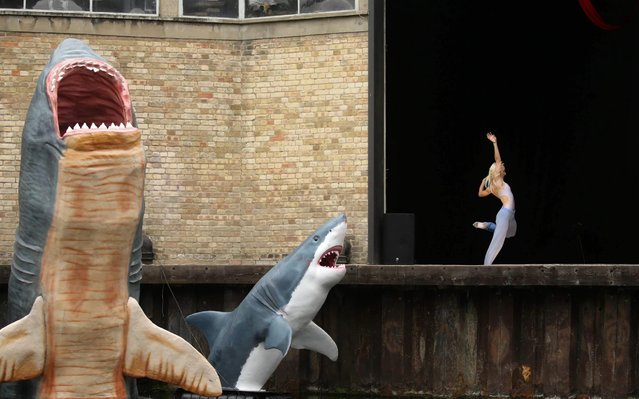
Dancers from The Royal Ballet perform beside the Regent's Canal in London on August 30, 2020, one of three performances they put on daily on weekends to experience performing in front of a live socially-distanced audience. (Photo by Isabel Infantes/AFP Photo)

Dancers from The Royal Ballet perform beside the Regent's Canal in London on August 30, 2020, one of three performances they put on daily on weekends to experience performing in front of a live socially-distanced audience. (Photo by Isabel Infantes/AFP Photo)
Details
11 Dec 2020 00:05:00
Groundsman Darren Cordingley on his way out of the maze on July 11, 2024. Gardeners have had their work cut out after spending a whopping 520 hours trimming one of the world's biggest hedge mazes. It has taken a team of 13 working eight hours a day for five days to tackle the enormous maze at the Longleat estate in Wiltshire, UK. (Photo by Max Willcock/Bournemouth News)

Groundsman Darren Cordingley on his way out of the maze on July 11, 2024. Gardeners have had their work cut out after spending a whopping 520 hours trimming one of the world's biggest hedge mazes. It has taken a team of 13 working eight hours a day for five days to tackle the enormous maze at the Longleat estate in Wiltshire, UK. (Photo by Max Willcock/Bournemouth News)
Details
16 Aug 2024 01:43:00