Loading...
Done
Young artists perform at the presentation of clowns in a hall of the Arts Palace during the first clown festival in Belarus in Bobruisk, some 150 km from Minsk, Belarus, 01 April 2018. (Photo by Tatyana Zenkovich/EPA/EFE)

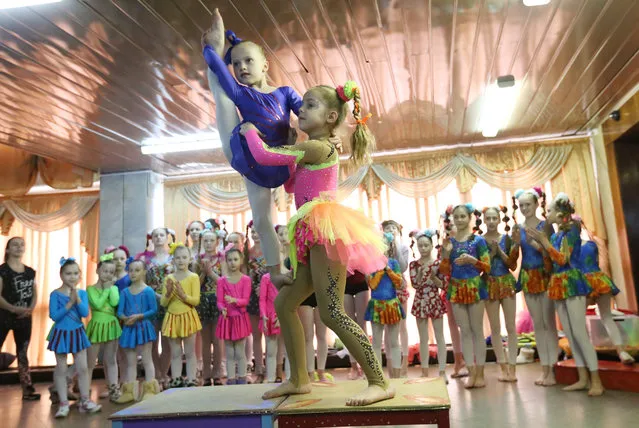
Young artists perform at the presentation of clowns in a hall of the Arts Palace during the first clown festival in Belarus in Bobruisk, some 150 km from Minsk, Belarus, 01 April 2018. About 60 clowns from Belarus and Russia gathered to entertain spectators. For 1 day Bobruisk became a capital of Jokes and Humour. Theaters of clownery, mime-theaters, individual performers of humorous genre, stilts and hospital clowns performed on a stage of the Palace of Arts. (Photo by Tatyana Zenkovich/EPA/EFE)
Details
07 Apr 2018 00:05:00
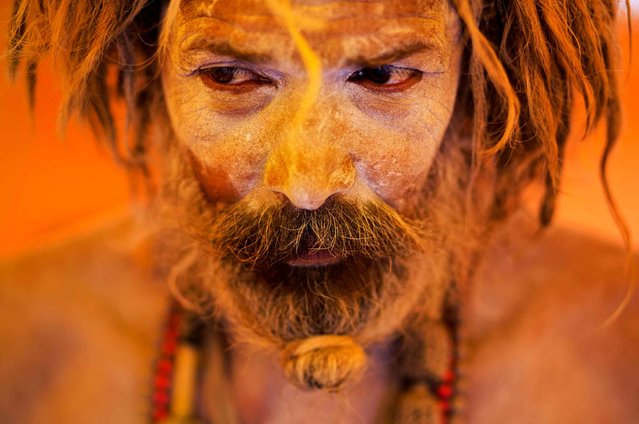
A Naga sadhu, or naked Hindu holy man, pauses inside a tent during Kumbh Mela, or Pitcher festival, at Trimbakeshwar, India, Thursday, August 27, 2015. Hindus believe taking a dip in the waters of a holy river during the festival will cleanse them of their sins. The festival is held four times every 12 years. (Photo by Bernat Armangue/AP Photo)

A Naga sadhu, or naked Hindu holy man, pauses inside a tent during Kumbh Mela, or Pitcher festival, at Trimbakeshwar, India, Thursday, August 27, 2015. Hindus believe taking a dip in the waters of a holy river during the festival will cleanse them of their sins. The festival is held four times every 12 years. (Photo by Bernat Armangue/AP Photo)
Details
27 Aug 2015 11:24:00
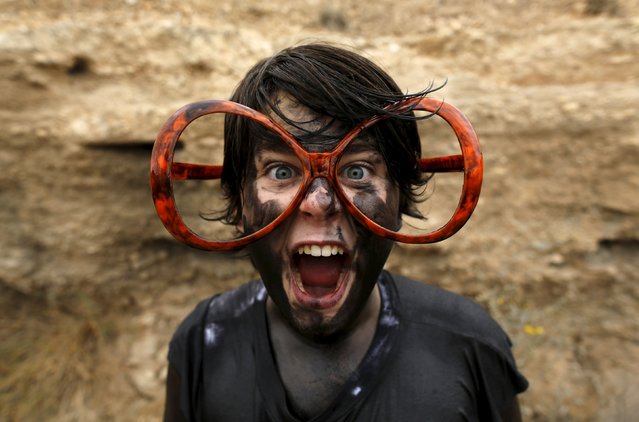
Jose, a reveller covered in grease, poses for a photo as he takes part in the annual Cascamorras festival in Baza, southern Spain September 6, 2015. The festival was inspired by a dispute between the town of Baza and Guadix over the possession of an icon of the Virgin of Piedad. The Cascamorras refers to representatives from Guadix, who were sent to Baza to recover the statue. As the Cascamorras had to stay perfectly clean to gain possession of the statue, Baza residents attempt to make them as “dirty” as possible. (Photo by Marcelo del Pozo/Reuters)

Jose, a reveller covered in grease, poses for a photo as he takes part in the annual Cascamorras festival in Baza, southern Spain September 6, 2015. The festival was inspired by a dispute between the town of Baza and Guadix over the possession of an icon of the Virgin of Piedad. The Cascamorras refers to representatives from Guadix, who were sent to Baza to recover the statue. As the Cascamorras had to stay perfectly clean to gain possession of the statue, Baza residents attempt to make them as “dirty” as possible. (Photo by Marcelo del Pozo/Reuters)
Details
07 Sep 2015 14:11:00
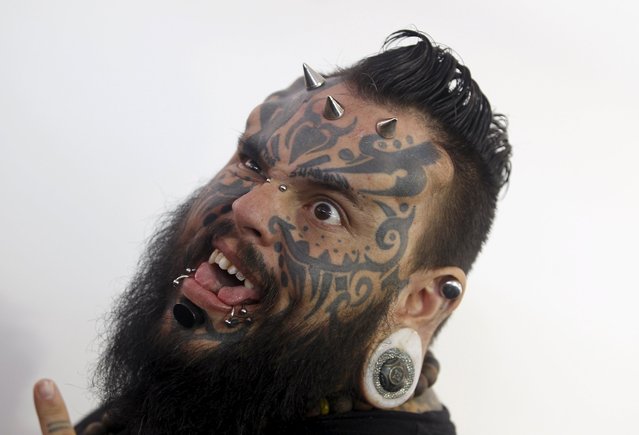
Emilio Gonzalez from Venezuela poses during the Cali Tattoo Festival in Cali, Colombia, September 12, 2015. (Photo by Jaime Saldarriaga/Reuters)

Emilio Gonzalez from Venezuela poses during the Cali Tattoo Festival in Cali, Colombia, September 12, 2015. (Photo by Jaime Saldarriaga/Reuters)
Details
15 Sep 2015 13:52:00
A young devotee of the Nine Emperor Gods has a large needle pushed through his cheek during the annual Phuket Vegetarian Festival in the southern province of Phuket on October 1, 2016. (Photo by Lillian Suwanrumpha/AFP Photo)

A young devotee of the Nine Emperor Gods has a large needle pushed through his cheek during the annual Phuket Vegetarian Festival in the southern province of Phuket on October 1, 2016. (Photo by Lillian Suwanrumpha/AFP Photo)
Details
04 Oct 2016 10:40:00
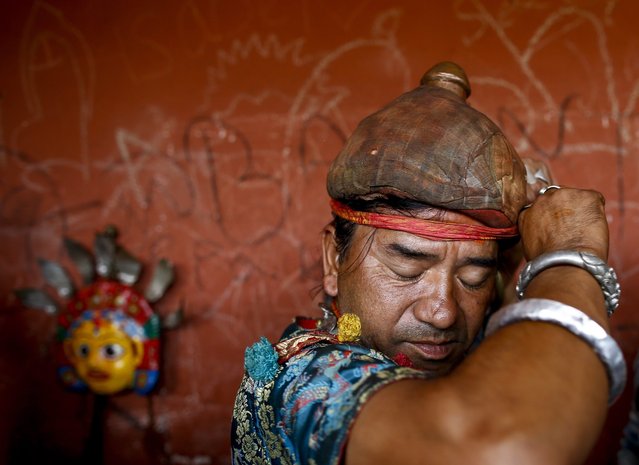
A Nepalese devotee prepares for a religious mask performance during the Seekaali Festival in Khokna village, near Kathmandu, Nepal, 07 October 2016. During the 300-year-old Seekali festival, elderly ethnic Newari devotees wear masks of 14 various goddesses including Lord Ganesha, Lord Shiva, Lord Laxmi, Lord Brahma and Lord Bishnu. The Khokna people celebrate the Seekaali festival as an alternative of the Dashain festival which is biggest festival of Nepalese Hindus that celebrates the victory of the gods over demons. (Photo by Narendra Shrestha/EPA)

A Nepalese devotee prepares for a religious mask performance during the Seekaali Festival in Khokna village, near Kathmandu, Nepal, 07 October 2016. During the 300-year-old Seekali festival, elderly ethnic Newari devotees wear masks of 14 various goddesses including Lord Ganesha, Lord Shiva, Lord Laxmi, Lord Brahma and Lord Bishnu. The Khokna people celebrate the Seekaali festival as an alternative of the Dashain festival which is biggest festival of Nepalese Hindus that celebrates the victory of the gods over demons. (Photo by Narendra Shrestha/EPA)
Details
09 Oct 2016 07:14:00
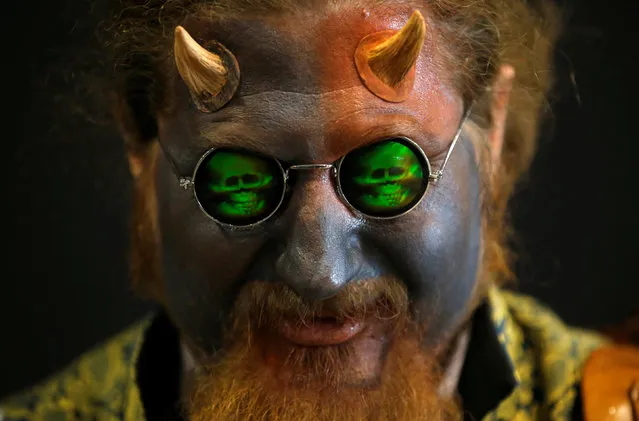
A participant wearing a fantasy costume poses for a picture during the Hero Festival in Marseille, France November 12, 2016. (Photo by Jean-Paul Pelissier/Reuters)

A participant wearing a fantasy costume poses for a picture during the Hero Festival in Marseille, France November 12, 2016. (Photo by Jean-Paul Pelissier/Reuters)
Details
14 Nov 2016 09:53:00
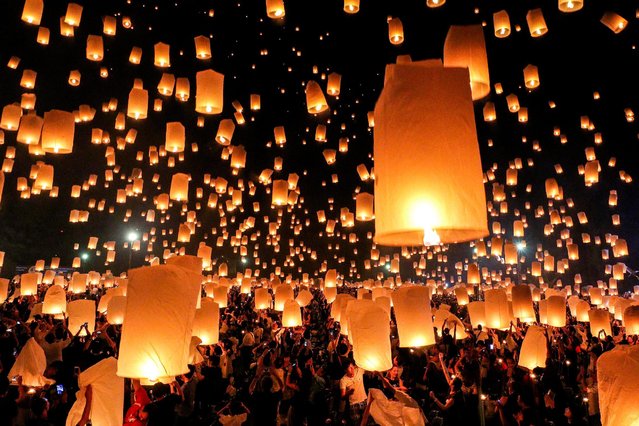
People release floating lanterns during the festival of Yee Peng in the northern capital of Chiang Mai, Thailand November 14, 2016. Yi Peng refers to the full moon day in the second month according to the Lanna lunar calendar (the twelfth month according to the Thai lunar calendar). Swarms of Lanna-style sky lanterns are launched into the air where they resemble large shoals of giant fluorescent jellyfish gracefully floating through the sky. The festival is meant as a time for tham bun, to make merit. Khom loi are made from a thin fabric, such as rice paper, stretched over a bamboo or wire frame, to which a candle or fuel cell is attached. When the fuel cell is lit, the resulting hot air is trapped inside the lantern and creates enough lift for the khom loi to float up into the sky. (Photo by Athit Perawongmetha/Reuters)

People release floating lanterns during the festival of Yee Peng in the northern capital of Chiang Mai, Thailand November 14, 2016. Yi Peng refers to the full moon day in the second month according to the Lanna lunar calendar (the twelfth month according to the Thai lunar calendar). Swarms of Lanna-style sky lanterns are launched into the air where they resemble large shoals of giant fluorescent jellyfish gracefully floating through the sky. The festival is meant as a time for tham bun, to make merit. Khom loi are made from a thin fabric, such as rice paper, stretched over a bamboo or wire frame, to which a candle or fuel cell is attached. When the fuel cell is lit, the resulting hot air is trapped inside the lantern and creates enough lift for the khom loi to float up into the sky. (Photo by Athit Perawongmetha/Reuters)
Details
15 Nov 2016 11:54:00