Loading...
Done
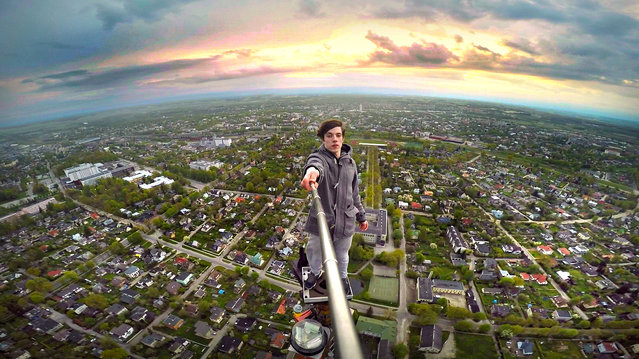
Ervin Punkar using a selfie stick to take a photo from the very top of the 600ft TV tower in Tartu, Estonia. (Photo by Ervin Punkar/Caters News Agency)

The adventurous explorers have snapped themselves in shark-infested waters, at the side of an active volcano, atop a Hong Kong skyscraper surrounded by toxic smog, and even perched on the top of iconic Rio statue of Christ the Redeemer. Here: Ervin Punkar using a selfie stick to take a photo from the very top of the 600ft TV tower in Tartu, Estonia. (Photo by Ervin Punkar/Caters News Agency)
Details
28 Sep 2018 00:05:00
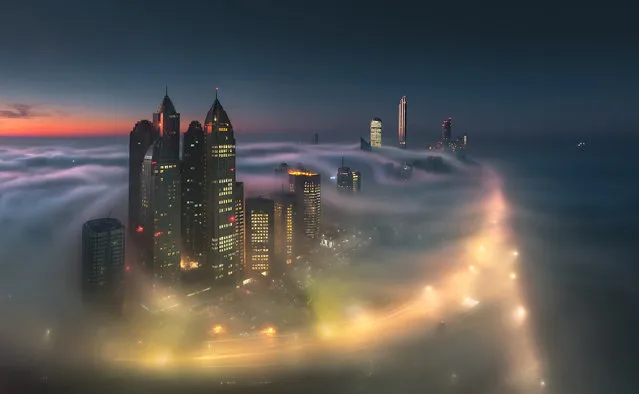
Night view of Abu Dhabi. (Photo by Khalid Alhammadi/Caters News Agency)

Photographer Khalid Alhammadi really has got his head in the clouds as he scales some of the Middle East’s tallest buildings to photograph iconic landmarks high above the rising mist. Khalid’s breathtaking shots over Abu Dhabi look almost otherworldly, with skyscraper tips and mosque towers poking through the eerie fog. Here: Night view of Abu Dhabi. (Photo by Khalid Alhammadi/Caters News Agency)
Details
13 Mar 2018 00:03:00
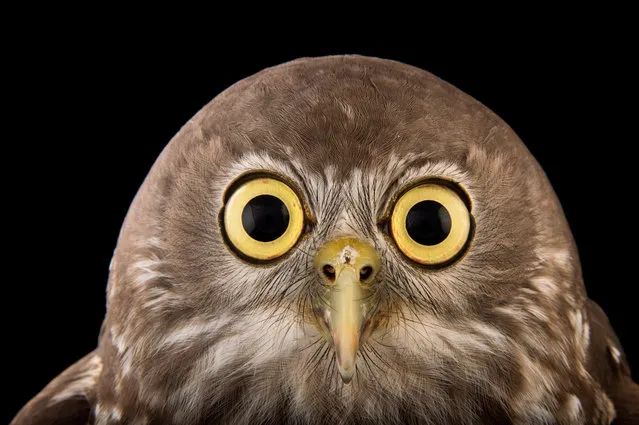
The National Geographic Photo Ark is a travelling exhibition of photographer Joel Sartore’s quest to create a photo archive of biodiversity around the world. So far, Sartore has captured studio portraits of more than 6,000 species – a number that he hopes to double. On 1 July, the ark will open at Melbourne zoo – the first time it has been exhibited in the southern hemisphere. More than 50 portraits will be on display, including many of Australian endangered animals being protected by programs at the zoo itself. These captions have been edited from text supplied by Melbourne zoo. Here: Barking owl. So-named because its call sounds like a barking dog, these birds are native to Australia, Indonesia and Papua New Guinea. In Victoria they are listed as an endangered species, and in 2003 there were estimated to be fewer than 50 breeding pairs. The main threat to the species in Victoria is loss of habitat, especially large trees with hollows in which they can nest and on which many of their prey depend. Apart from a bark, they may utter a chilling scream when they feel threatened. (Photo by Joel Sartore/National Geographic Photo Ark/The Guardian)

The National Geographic Photo Ark is a travelling exhibition of photographer Joel Sartore’s quest to create a photo archive of biodiversity around the world. So far, Sartore has captured studio portraits of more than 6,000 species – a number that he hopes to double. On 1 July, the ark will open at Melbourne zoo – the first time it has been exhibited in the southern hemisphere. More than 50 portraits will be on display, including many of Australian endangered animals being protected by programs at the zoo itself. These captions have been edited from text supplied by Melbourne zoo. Here: Barking owl. (Photo by Joel Sartore/National Geographic Photo Ark/The Guardian)
Details
01 Jul 2017 07:45:00
Photographers: Douglas Fisher

“Douglas Fisher has worked in the photographic industry for more than 25 years, starting out at 19 as an assistant before establishing his own studio, just two years later. Here, Douglas would go on to be among the first to champion the emerging worlds of digital photography and CGI, identifying early the transformative impact they would bring to advertising and high end photography”. – Tim Mitchell

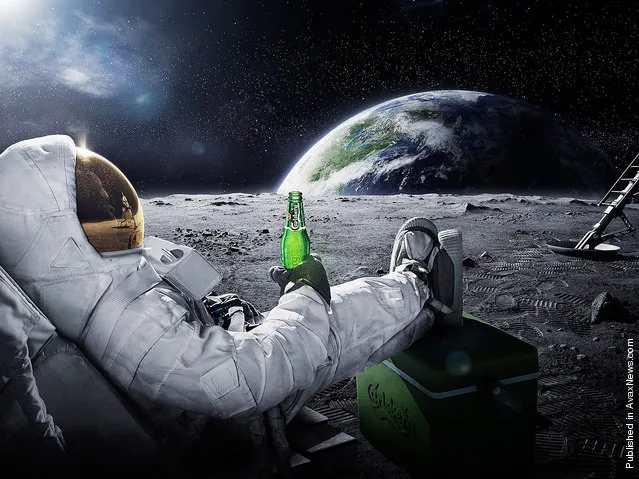
Photo: «Carlsberg Launch». (Photo by Douglas Fisher)
Details
29 Jan 2012 12:34:00
barbarian-art

To produce the images that convey his fatalistic and ironic approach to life, tinged with hope, he needed the environment and knowledge of Mother Russia, oiled with a bit of bribery to certain circus trainers. Enter the Great Russian Bear, the personification of Russia for the last several centuries, onto center stage and into his studio. The bear is recognized as both brutish and cute – Misha was the mascot for the 1980 Olympic Games – and has remained a symbol of Russia since Tsarist times. In 2009 it is the symbol of the United Russia Party.
Details
13 Apr 2015 09:10:00
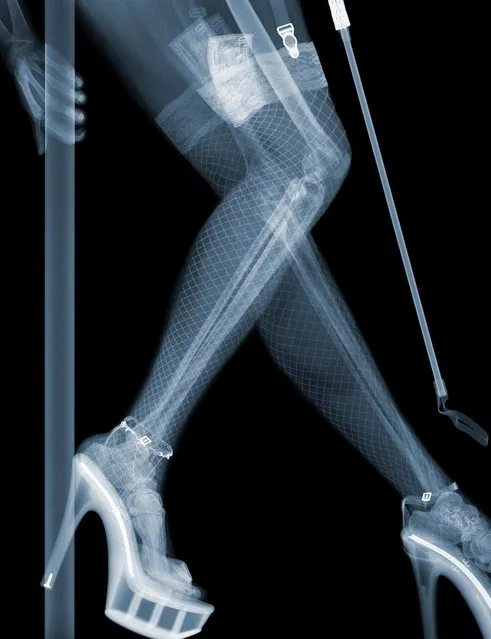
“Stripper”: Has tucked her cash away safely. (Photo by Nick Veasey/Barcroft Media)

British artist Nick Veasey used an X-ray machine to show us exactly what's going on under people's clothes. The equipment took copies of items separately before they were mashed together to create characters and situations. The work is part of Veasey's latest exhibition named “X-ray Voyeurism”. In order to create the work, the 51-year-old has spent the last 20 years exposing himself to harmful radiation in his studio. Photo: “Stripper”: Has tucked her cash away safely. (Photo by Nick Veasey/Barcroft Media)
Details
22 Jun 2014 10:49:00
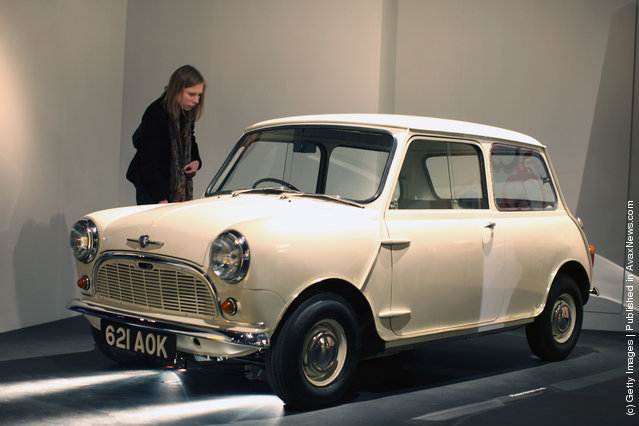
A visitor looks at a Morris Mini-Minor Car on display at the Victoria and Albert museums' new major exhibition

A visitor looks at a Morris Mini-Minor Car on display at the Victoria and Albert museums' new major exhibition, “British Design 1948-2012: Innovation In The Modern Age” on March 28, 2012 in London, England. This car, which was designed by Alec Issigonis, was the first one off the production line. The exhibition showcases some of the most iconic product design, fashion, furniture, graphics, architecture and fine art from the last 60 years, and opens to the public from March 31, 2012. (Photo by Dan Kitwood/Getty Images)
Details
31 Mar 2012 09:56:00
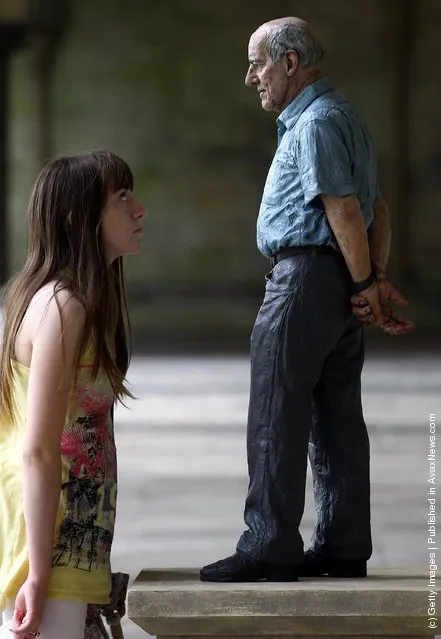
Visitors to Salisbury Cathedral stop to look at Sean Henry's sculpture Standing Man

Visitors to Salisbury Cathedral stop to look at Sean Henry's sculpture Standing Man (2007) currently being exhibited in the Cloisters on August 2, 2011 in Salisbury, United Kingdom. The exhibition, “Conflux: A Union of the Sacred and the Anonymous”, features over 20 contemporary sculptures of dramatically different scales occupying vacant plinths and open spaces on both the inside and exterior of the iconic 13th century building. This exhibition brings to the Cathedral the biggest single group of polychrome sculpture since the Reformation and runs until the end of October. (Photo by Matt Cardy/Getty Images)
Details
03 Aug 2011 11:28:00