Loading...
Done
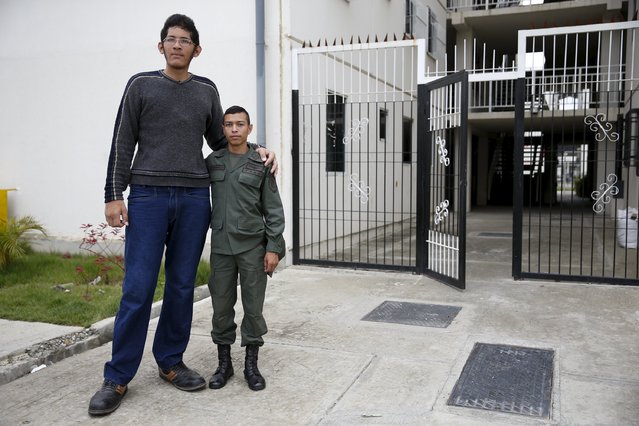
Jeison Rodriguez (L), 19, the living person with the largest feet in the world, poses for a picture with his older brother Wilmer, 24, outside their house in Maracay, Venezuela, October 14, 2015. (Photo by Carlos Garcia Rawlins/Reuters)

Jeison Rodriguez (L), 19, the living person with the largest feet in the world, poses for a picture with his older brother Wilmer, 24, outside their house in Maracay, Venezuela, October 14, 2015. Rodriguez, holds the Guinness World Record for the largest feet, with 40.1 cm (1 ft 3.79 in) on the right foot and 39.6 cm (1 ft 3.59 in) on the left foot. (Photo by Carlos Garcia Rawlins/Reuters)
Details
19 Oct 2015 08:02:00
Employees cover bacon on fried dranik, a potato pancake that is the national dish of Belarus, in the Sula History Park near the village of Sula, Belarus March 7, 2016. (Photo by Vasily Fedosenko/Reuters)

Employees cover bacon on fried dranik, a potato pancake that is the national dish of Belarus, in the Sula History Park near the village of Sula, Belarus March 7, 2016. According to the park's representatives, the two-metre-wide pancake was an attempt to enter the Guinness World Records as the world's largest dranik. (Photo by Vasily Fedosenko/Reuters)
Details
08 Mar 2016 13:41:00
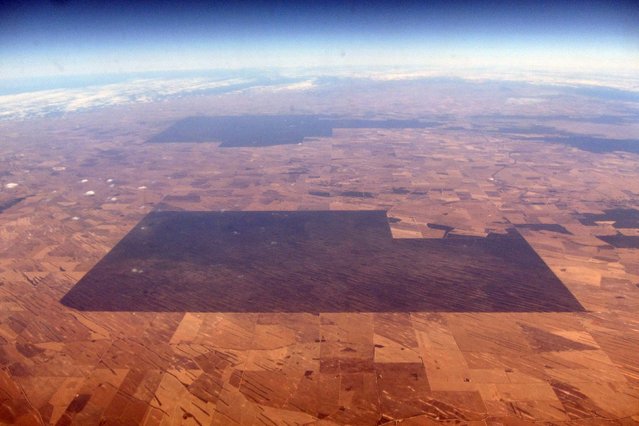
An area of vegetation can be seen amongst drought effected farmland in South Australia, November 12, 2015. (Photo by David Gray/Reuters)

An area of vegetation can be seen amongst drought effected farmland in South Australia, November 12, 2015. A pioneering Australian scheme to improve the management of water in the world's driest inhabited continent is facing its first real test as an intensifying El Nino threatens crops and builds tensions between farmers and environmentalists. An El Nino, a warming of sea-surface temperatures in the Pacific, is already causing drought and other extreme weather, affecting millions of people across parts of the world, and experts warn that the intensifying weather pattern could emerge as one of the strongest on record. (Photo by David Gray/Reuters)
Details
15 Nov 2015 08:01:00
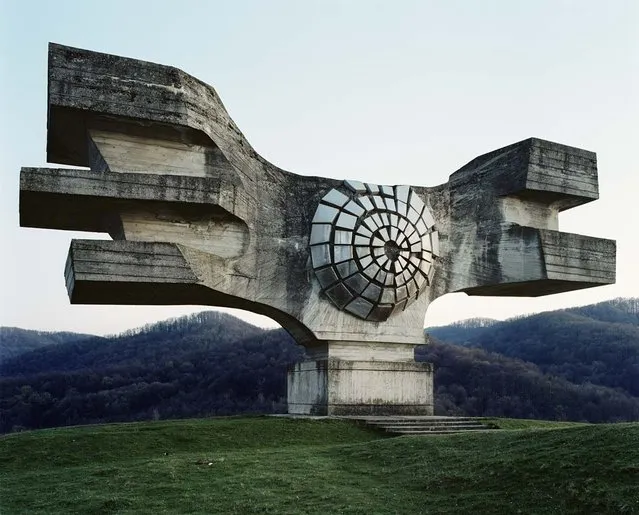
The monument of Ilirska Bistrica was designed by Janez Lenassi and built in 1965. It is dedicated to Slovenian soldiers that fell in World War II. (Photo by Jan Kempenaers)

The brutalist war memorials found throughout the former Yugoslavia were weird enough when they were built in the 1960s and 70s. Today, separated by the end of an architectural movement and the disintegration of the country, they seem almost alien. Belgian photographer Jan Kempenaers treats them purely as artistic objects in his book, “Spomenik”, named for the Serb-Croat word for monument. Known for photographing geographical oddities, Kempenaers was captivated by the spomenik after seeing them in an art encyclopedia. After hearing that many had been destroyed or abandoned, he set out to record what was left. (Photo by Jan Kempenaers)
Details
18 Aug 2014 09:07:00
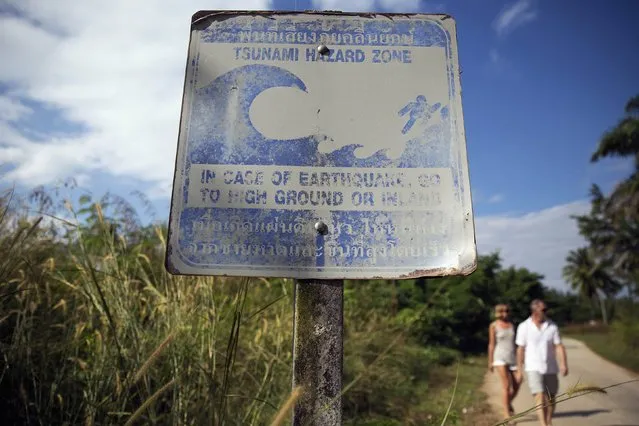
Tourists walk behind a faded sign warning of tsunami hazard in Khao Lak, Phang Nga province December 15, 2014. Ahead of the anniversary of the 2004 tsunami, experts and officials say key weaknesses remain across the region in the system designed to warn people of the next disaster, and get them to safety. (Photo by Damir Sagolj/Reuters)

Tourists walk behind a faded sign warning of tsunami hazard in Khao Lak, Phang Nga province December 15, 2014. Ahead of the anniversary of the 2004 tsunami, experts and officials say key weaknesses remain across the region in the system designed to warn people of the next disaster, and get them to safety. Thailand prepares to mark the tenth anniversary of the 2004 tsunami, the deadliest on the record, that killed at least 226,000 people in 13 Asian and African countries. (Photo by Damir Sagolj/Reuters)
Details
21 Dec 2014 11:01:00
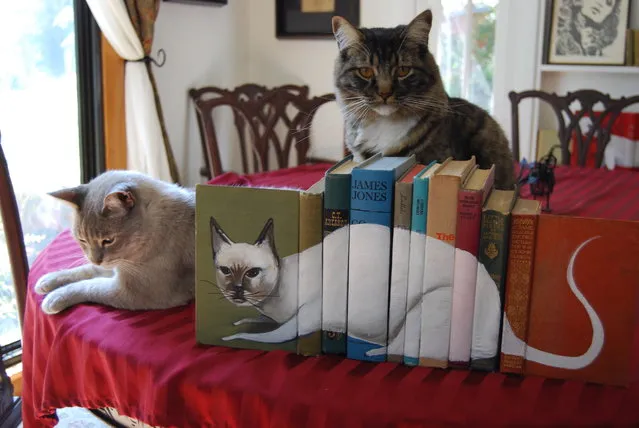
“Cats”. I really love animals and I think they are often overlooked or underestimated.  Sometimes I can see the feelings and emotions in animals when I can’t see them in humans, so it’s easier for me to express the feelings in a lot of my animal characters. (Photo and caption by Mike Stilkey)

Los Angeles native Mike Stilkey has always been attracted to painting and drawing not only on vintage paper, record covers and book pages, but on the books themselves. Using a mix of ink, colored pencil, paint and lacquer, Stilkey depicts a melancholic and at times a whimsical cast of characters inhabiting ambiguous spaces and narratives of fantasy and fairy tales. A lingering sense of loss and longing hints at emotional depth and draws the viewer into their introspective thrall with a mixture of capricious poetry, wit, and mystery. (Photo by Mike Stilkey)
Details
31 Jul 2014 10:17:00
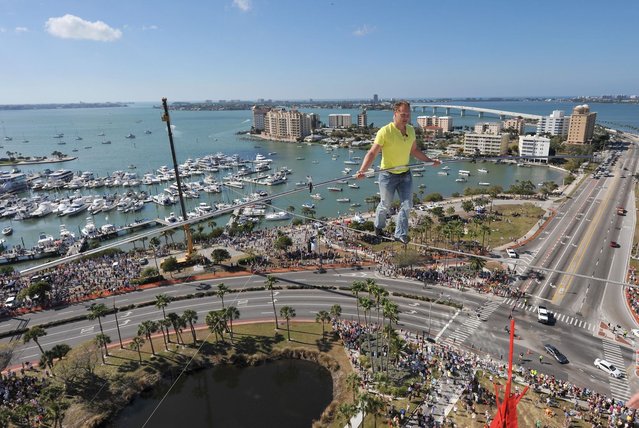
Nik Wallenda walks across a tightrope 200 feet above U.S. 41 on January 29, 2013 in Sarasota, Florida. (Photo by Tim Boyles/Getty Images)

The holder of half a dozen world records will walk across the Grand Canyon on a steel cable with nothing but the Little Colorado River 1,500 feet below on June 23. With no tethers or safety nets, the walk will be the highest tightrope attempt ever for the 34-year-old, at a height taller than the Empire State Building. Last year, Wallenda, a seventh-generation member of the “Flying Wallendas” family of acrobats, became the only person to walk a wire over the brink of Niagara Falls. Photo: Nik Wallenda walks across a tightrope 200 feet above U.S. 41 on January 29, 2013 in Sarasota, Florida. (Photo by Tim Boyles)
Details
18 Jun 2013 08:45:00
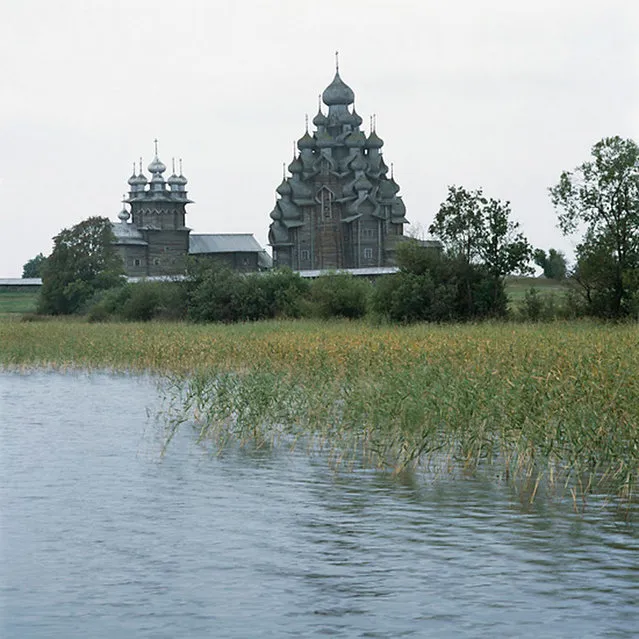
Wooden Churches - Travelling In The Russian North By Richard Davies Part 1

While communism, collectivism, worms, dry rot and casual looting failed to destroy the majestic wooden churches of Russia, it may be ordinary neglect that finally does them in. Dwindled now to several hundred remaining examples, these glories of vernacular architecture lie scattered amid the vastness of the world’s largest country. Just over a decade ago, Richard Davies, a British architectural photographer, struck out on a mission to record the fragile and poetic structures. Austerely beautiful and haunting, “Wooden Churches: Traveling in the Russian North” (White Sea Publishing; $132) is the result. Covering thousands of miles, Mr. Davies described how he and the writer Matilda Moreton tracked down the survivors from among the thousands of onion-domed structures built after Prince Vladimir converted to Christianity in 988.
Details
25 Nov 2013 12:47:00