Loading...
Done
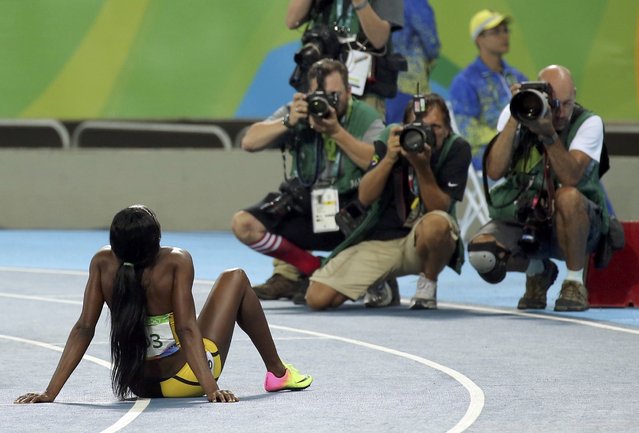
2016 Rio Olympics, Athletics, Final, Women's 200m Final, Olympic Stadium, Rio de Janeiro, Brazil on August 17, 2016. Photographers take pictures of Elaine Thompson (JAM) of Jamaica after she won the gold. (Photo by Gonzalo Fuentes/Reuters)

2016 Rio Olympics, Athletics, Final, Women's 200m Final, Olympic Stadium, Rio de Janeiro, Brazil on August 17, 2016. Photographers take pictures of Elaine Thompson (JAM) of Jamaica after she won the gold. (Photo by Gonzalo Fuentes/Reuters)
Details
19 Aug 2016 12:11:00
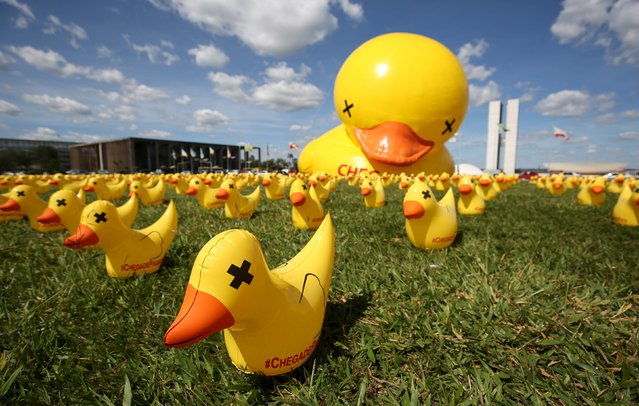
Inflatable dolls in the shape of ducks are seen in front of the National Congress during a protest against tax increases in Brasilia, Brazil, March 29, 2016. The campaign “I will not pay the Duck” is organized by the Federation of Industries of Sao Paulo (FIESP) and uses the duck symbol in reference to industries that pay high taxes. (Photo by Gregg Newton/Reuters)

Inflatable dolls in the shape of ducks are seen in front of the National Congress during a protest against tax increases in Brasilia, Brazil, March 29, 2016. The campaign “I will not pay the Duck” is organized by the Federation of Industries of Sao Paulo (FIESP) and uses the duck symbol in reference to industries that pay high taxes. (Photo by Gregg Newton/Reuters)
Details
30 Mar 2016 11:27:00
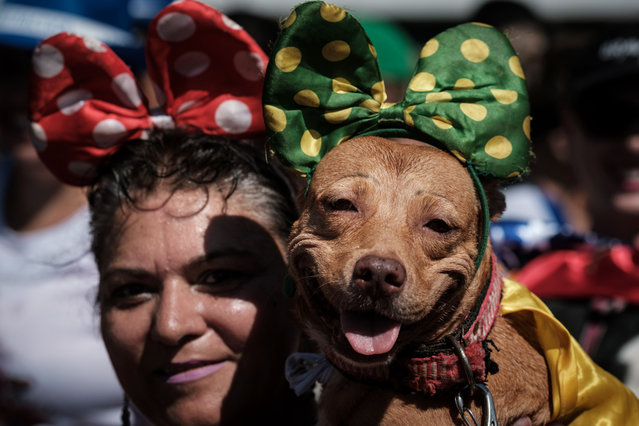
A reveller holds her dog dressed in costume, during the Rio Dog Carnival, known as the Blocao – with “bloco” meaning street party and “cao” dog, during pre- carnival celebrations at Copacabana beach in Rio de Janeiro, Brazil, on February 19, 2017. (Photo by Yasuyoshi Chiba/AFP Photo)

A reveller holds her dog dressed in costume, during the Rio Dog Carnival, known as the Blocao – with “bloco” meaning street party and “cao” dog, during pre- carnival celebrations at Copacabana beach in Rio de Janeiro, Brazil, on February 19, 2017. (Photo by Yasuyoshi Chiba/AFP Photo)
Details
22 Feb 2017 00:05:00
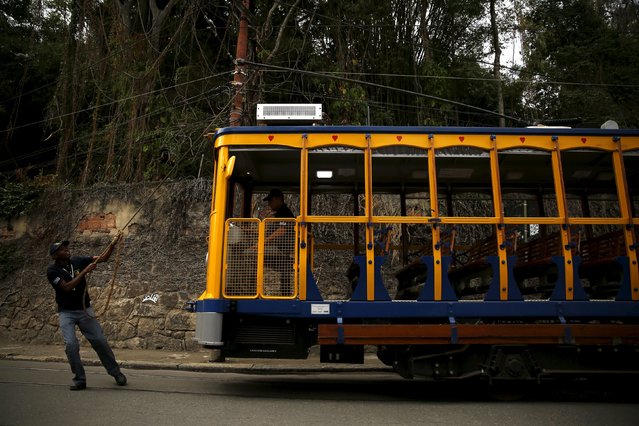
A worker manually changes the direction of the bonde, the typical tram line in Santa Teresa neighborhood, using a rope in Rio de Janeiro, Brazil, September 9, 2015. (Photo by Pilar Olivares/Reuters)

A worker manually changes the direction of the bonde, the typical tram line in Santa Teresa neighborhood, using a rope in Rio de Janeiro, Brazil, September 9, 2015. The Santa Teresa bonde, called “Bondinho” in Portuguese, is running with passengers as a part of a test period, after the service was suspended in 2011 following an accident that killed six people, according to residents. (Photo by Pilar Olivares/Reuters)
Details
11 Sep 2015 12:53:00
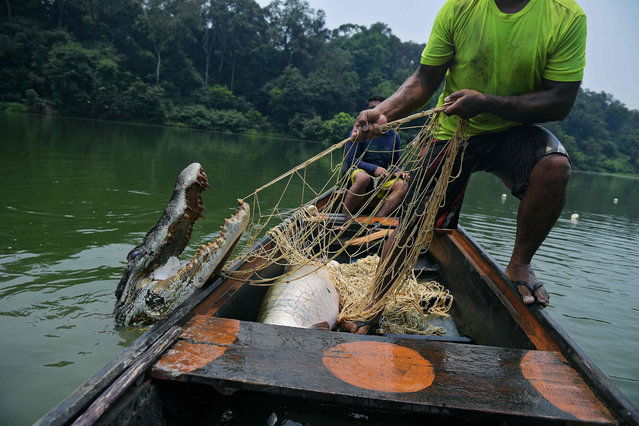
Fishermen pull up a live 2.5 metre crocodile in their net in the Western Amazon region, Brazil on September 20, 2017. The fishermen were fishing for a large river fish called Arapaima but sometimes crocodiles become stuck in the nets as well. (Photo by Carl de Souza/AFP Photo)

Fishermen pull up a live 2.5 metre crocodile in their net in the Western Amazon region, Brazil on September 20, 2017. The fishermen were fishing for a large river fish called Arapaima but sometimes crocodiles become stuck in the nets as well. (Photo by Carl de Souza/AFP Photo)
Details
24 Sep 2017 06:47:00
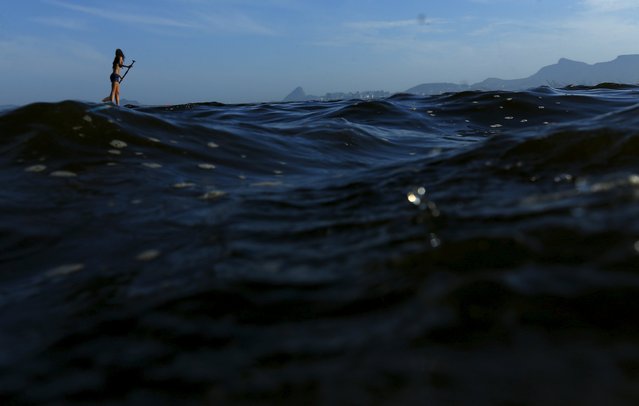
A girl paddles on her stand-up board on the waters of Guanabara bay at Bica beach in Rio de Janeiro Brazil, January 10, 2016. (Photo by Ricardo Moraes/Reuters)

A girl paddles on her stand-up board on the waters of Guanabara bay at Bica beach in Rio de Janeiro Brazil, January 10, 2016. Few features capture the beauty, or the problems, of one of the world's most dramatic urban landscapes like Guanabara Bay - the finger-like inlet that forms the shoreline and harbor for Rio de Janeiro. The bay, which carves into southeast Brazil from the Atlantic Ocean, literally gave Rio its name when Portuguese mariners mistook it for a “rio”, or “river”. Four centuries later, the bay is preparing to welcome another sort of seafarer – Olympic sailors, who will navigate the bay when the 2016 Rio Olympics kick off in August. (Photo by Ricardo Moraes/Reuters)
Details
28 Apr 2016 12:13:00
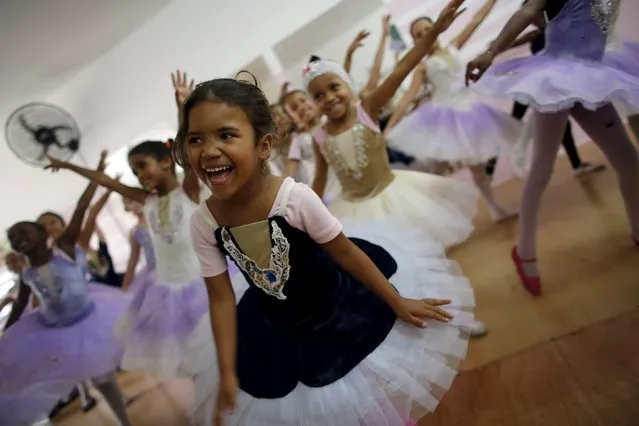
Young girls take ballet lessons at the New Dreams dance studio in the Luz neighborhood known to locals as Cracolandia (Crackland) in Sao Paulo, Brazil, August 14, 2015. (Photo by Nacho Doce/Reuters)

Young girls take ballet lessons at the New Dreams dance studio in the Luz neighborhood known to locals as Cracolandia (Crackland) in Sao Paulo, Brazil, August 14, 2015. For the young girls learning to jump and plie, the dance studio provides a way forward and out of the difficult environment they have grown up in. Brazil is one of the world's highest consuming countries of crack cocaine, and Cracolandia, or “Crack Land”, located in the outskirts of Sao Paulo, is one of the most intense and brutal hubs. (Photo by Nacho Doce/Reuters)
Details
18 Aug 2015 13:59:00
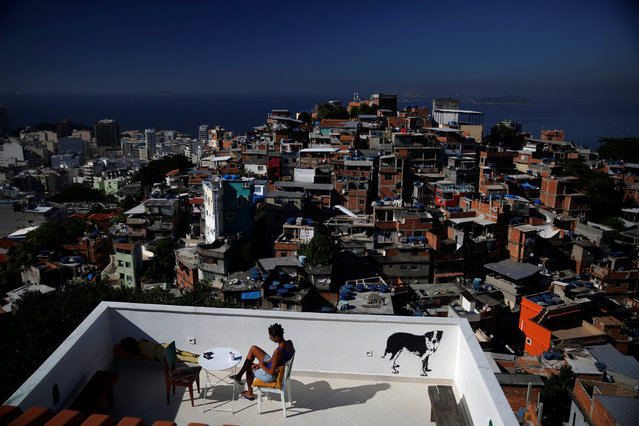
A woman sits on a terrace at Tiki hostel in Cantagalo favela, in Rio de Janeiro, Brazil, April 16, 2016. (Photo by Pilar Olivares/Reuters)

A woman sits on a terrace at Tiki hostel in Cantagalo favela, in Rio de Janeiro, Brazil, April 16, 2016. Hostels in a few of Rio's more than 1,000 slums serve not only as a cheap housing alternative for the more adventurous among the estimated 500,000 foreign tourists expected to arrive for the Olympics in August. The establishments also open up the rich culture of the city's shantytowns for travellers, giving them a glimpse into once “no-go” areas where about one-fifth of Rio's population lives. (Photo by Pilar Olivares/Reuters)
Details
04 May 2016 12:18:00