Loading...
Done
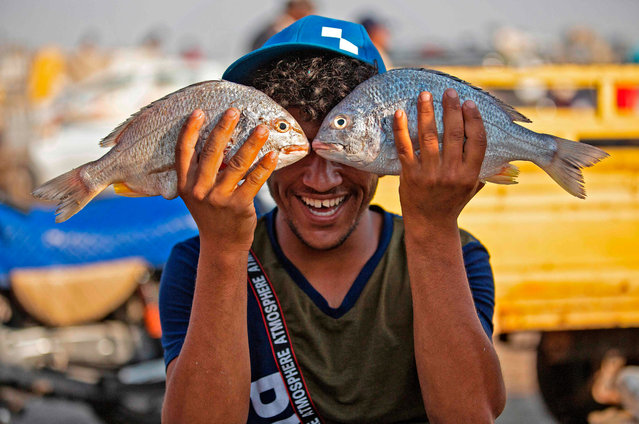
A youth poses while holding two fishes before his face in Iraq's southern port city of al-Faw, 90 kilometres south of Basra near the Shatt al-Arab and the Gulf, on May 18, 2020. In Iraq, a national lockdown to halt the COVID-19 coronavirus pandemic has found some unexpected fans: local businesses who no longer have to compete with Turkish, Iranian or Chinese imports. Those countries, as well as Saudi Arabia, Jordan and Kuwait, typically flood Iraqi markets with inexpensive products at prices local producers can't compete with. (Photo by Hussein Faleh/AFP Photo)

A youth poses while holding two fishes before his face in Iraq's southern port city of al-Faw, 90 kilometres south of Basra near the Shatt al-Arab and the Gulf, on May 18, 2020. In Iraq, a national lockdown to halt the COVID-19 coronavirus pandemic has found some unexpected fans: local businesses who no longer have to compete with Turkish, Iranian or Chinese imports. Those countries, as well as Saudi Arabia, Jordan and Kuwait, typically flood Iraqi markets with inexpensive products at prices local producers can't compete with. (Photo by Hussein Faleh/AFP Photo)
Details
02 Jul 2020 00:01:00
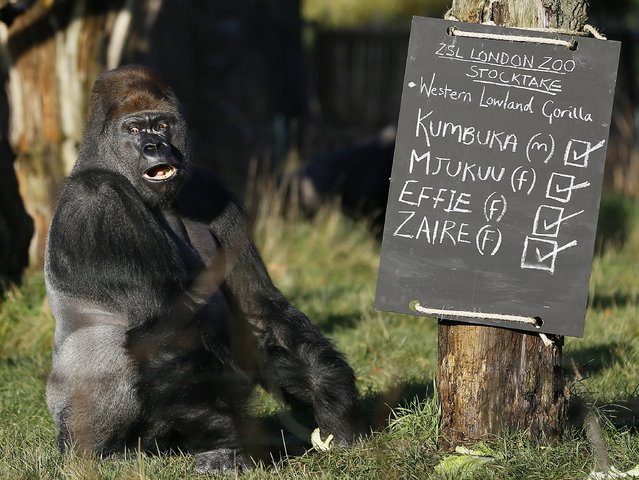
Kumbuka, a male silverback gorilla sits next to the keeper's chalk board in his enclosure at London Zoo, Thursday, January 2, 2014. Home to more than 850 different species, zoo keepers welcomed in the New Year armed with clipboards as they made a note of every single animal. The compulsory annual count is required as part of ZSL London Zoo's zoo license, and every creature, from the tiny leaf cutter ants to the huge silverback gorilla is duly noted and accounted for. (Photo by Kirsty Wigglesworth/AP Photo)

Kumbuka, a male silverback gorilla sits next to the keeper's chalk board in his enclosure at London Zoo, Thursday, January 2, 2014. Home to more than 850 different species, zoo keepers welcomed in the New Year armed with clipboards as they made a note of every single animal. The compulsory annual count is required as part of ZSL London Zoo's zoo license, and every creature, from the tiny leaf cutter ants to the huge silverback gorilla is duly noted and accounted for. (Photo by Kirsty Wigglesworth/AP Photo)
Details
03 Jan 2014 11:03:00
Of all the species affected by river regulation in Australia, the ibis is one of the few that has changed its behaviour and moved to coastal cities. (Photo by Rick Stevens/The Guardian)

Tip turkey, dumpster chook, rubbish raptor – the Australian white ibis goes by many unflattering names. But it is a true urban success story, scavenging to survive in cities across Australia as wetlands have been lost. Wildlife photographer Rick Stevens captured them in Sydney. Here: Of all the species affected by river regulation in Australia, the ibis is one of the few that has changed its behaviour and moved to coastal cities. (Photo by Rick Stevens/The Guardian)
Details
11 Apr 2018 00:03:00
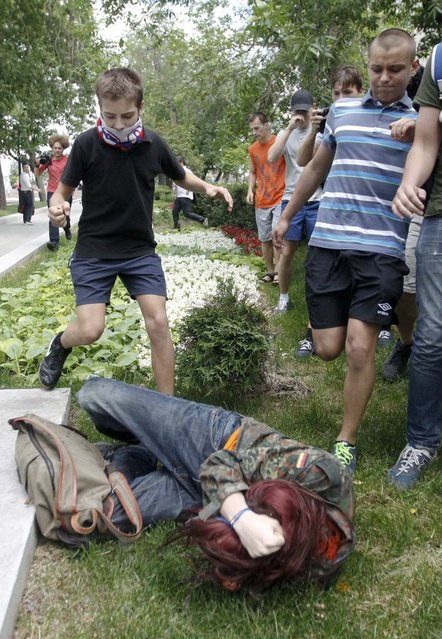
Youths kick a gay rights activist during a protest against a proposed new law termed by the State Duma, the lower house of Parliament, as “against advocating the rejection of traditional family values” in central Moscow June 11, 2013. (Photo by Maxim Shemetov/Reuters)

Youths kick a gay rights activist during a protest against a proposed new law termed by the State Duma, the lower house of Parliament, as “against advocating the rejection of traditional family values” in central Moscow June 11, 2013. (Photo by Maxim Shemetov/Reuters)
Details
12 Jun 2013 08:46:00
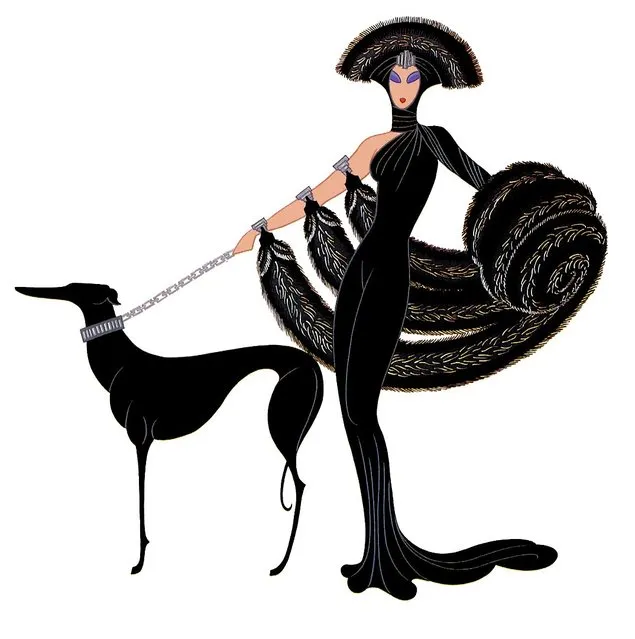
Romain de Tirtoff (Erte) – Symphony In Black

“Romain de Tirtoff (23 November 1892 – 21 April 1990) was a Russian-born French artist and designer known by the pseudonym Erté, the French pronunciation of his initials, R.T. He was a diversely talented 20th-century artist and designer who flourished in an array of fields, including fashion, jewellery, graphic arts, costume and set design for film, theatre, and opera, and interior decor”. – Wikipedia. Photo: Romain de Tirtoff (Erte) – “Symphony In Black” (please click to enlarge).
Details
29 Jan 2014 13:34:00


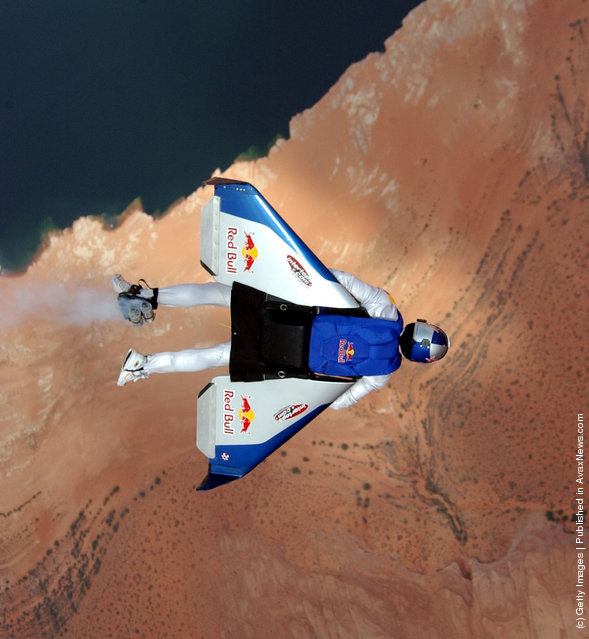
“BASE jumping, also sometimes written as B.A.S.E jumping, is an activity that employs an initially packed parachute to jump from fixed objects. “B.A.S.E.” is an acronym that stands for four categories of fixed objects from which one can jump: buildings, antennas, spans (bridges), and earth (cliffs)”. – Wikipedia

Photo: Felix Baumgartner, world-renowned B.A.S.E jumper, is pictured in this undated handout photo. Baumgartner will attempt the first unpowered crossing of the strait between England and France. (Photo by Red Bull via Getty Images)
Details
30 Jul 2011 13:06:00
In this Sunday, September 18, 2016 photo, participants wait on stage ahead of Miss Trans Star International 2016 show celebrated in Barcelona, Spain. (Photo by Emilio Morenatti/AP Photo)

In this Sunday, September 18, 2016 photo, participants wait on stage ahead of Miss Trans Star International 2016 show celebrated in Barcelona, Spain. (Photo by Emilio Morenatti/AP Photo)
Details
23 Sep 2016 09:15:00
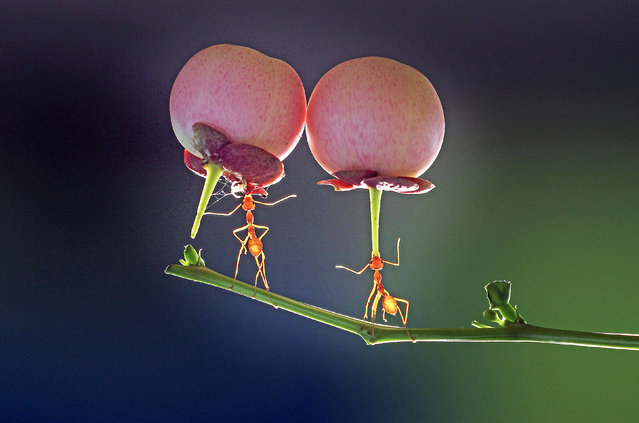
The strength of a weaver ant carrying fruit in Indonesia in the last decade of August 2024 is equivalent to the average man or woman picking up a minibus. (Photo by Ridho Arifuddin/Solent News)

The strength of a weaver ant carrying fruit in Indonesia in the last decade of August 2024 is equivalent to the average man or woman picking up a minibus. (Photo by Ridho Arifuddin/Solent News)
Details
20 Oct 2024 00:25:00