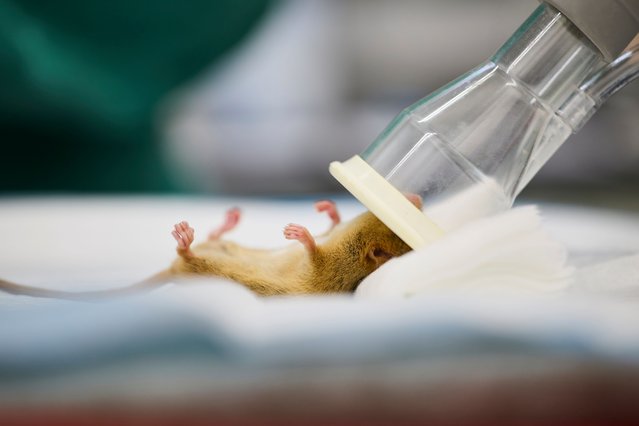
This hazel dormouse is being given a once-over by a disease risk team at ZSL London Zoo, UK in May 2025, as part of reintroduction programme. (Photo by David Levene/The Guardian)
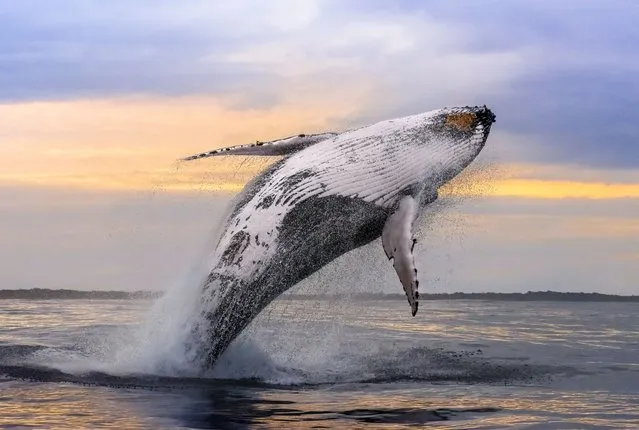
A 40-tonne humpback launching out of the water in an incredible breach in New South Wales, Australia on October 2022 in front of a sunset. The humpback whale can grow up to 56 feet long and typically covers 9,900 miles a year as it travels through the oceans of the world. Humpback whales are a species of Baleen whale, meaning they don't have teeth. Instead, they have baleen which helps them to filter feed. Their main source of food is krill or tiny bait fish. (Photo by Jodie Lowe/Media Drum Images)
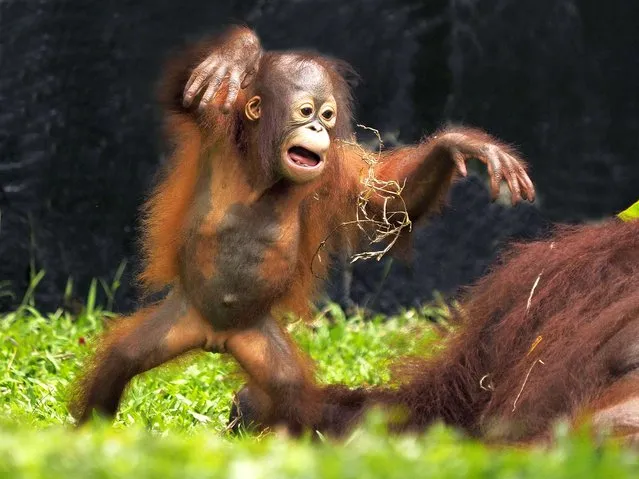
A baby orangutan called Barney shows off his dancing at Ragunan Zoo in Jakarta, Indonesia in the first decade of November 2023. (Photo by Syahrul Ramadan/Media Drum Images)
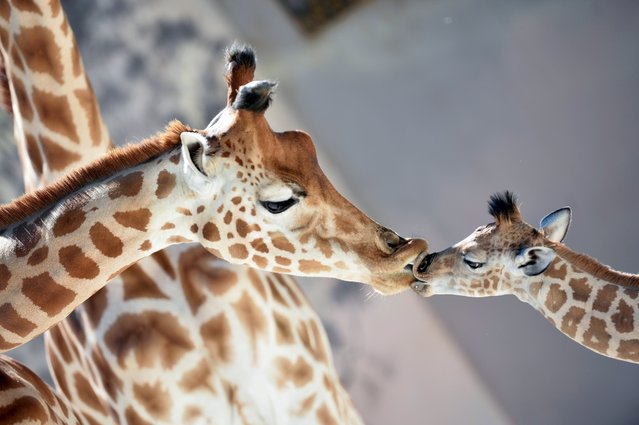
Baby giraffe of Niger (Giraffa Camelopardalis) “Kenai” (R), born on August 25, 2016, kisses his mother “Dioni” on August 31, 2016 at the zoo of La Fleche, northwestern France. (Photo by Jean-Francois Monier/AFP Photo)
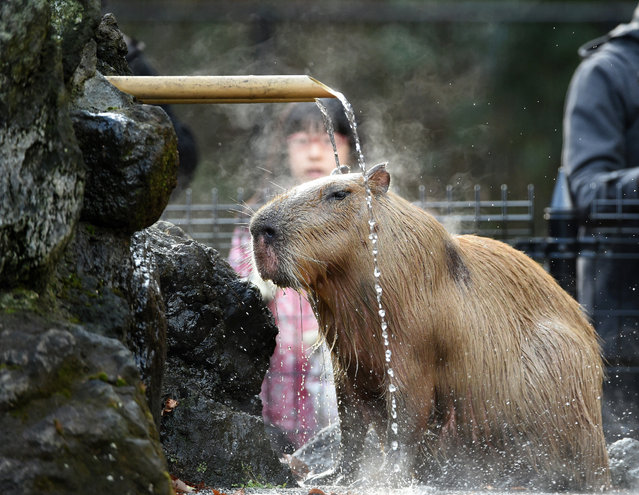
A Capybara bathes in the hot spring water at the Saitama Children's zoo in Higashi Matsuyama city, Saitama prefecture on December 21, 2014. Seven capybaras in the zoo, originally from South America, enjoyed the hot spring water on the chilly winter day in Japan. (Photo by Toshifumi Kitamura/AFP Photo)
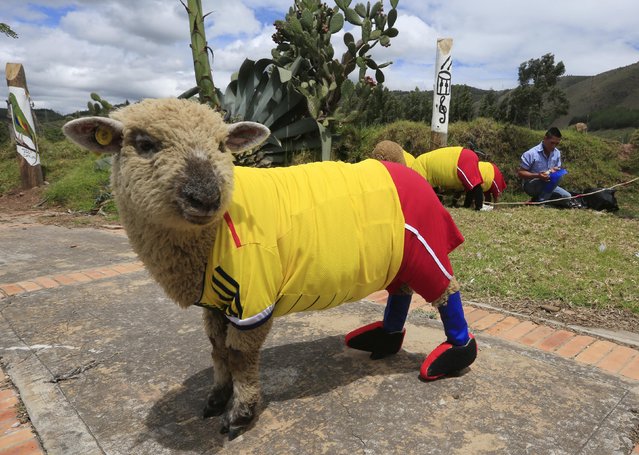
A sheep dressed in a jersey in the colors of the Colombian national soccer team is seen during a exhibition in Nobsa, Colombia June 1, 2014. The sheep is named Falcao, after the Colombian player. REUTERS/Jose Miguel Gomez
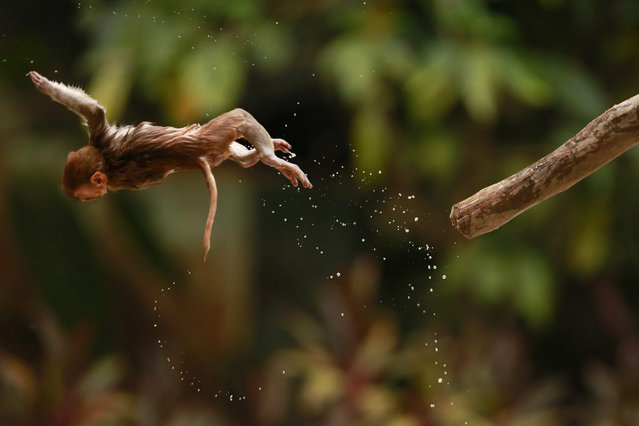
A monkey jumps from a branch at Yangon Zoological Gardens in Yangon, Myanmar, 06 April 2016. Yangon Zoological Gardens (Yangon Zoo) is the oldest and second largest zoo in Myanmar. (Photo by Lynn Bo Bo/EPA)