Loading...
Done
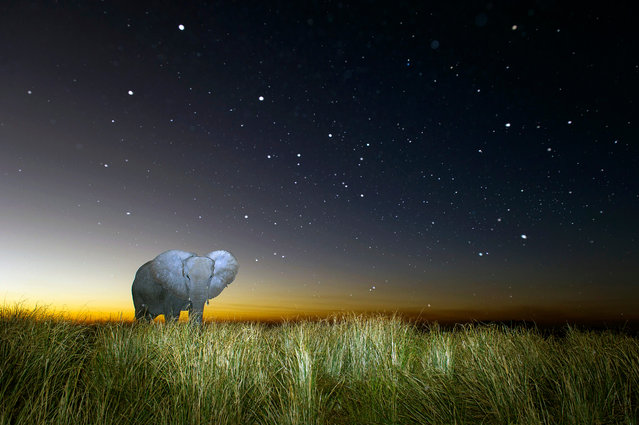
A elepant strolls under the milkyway. (Photo by Brendon Cremer/Caters News)

A midnight safari has been caught on camera as wild animals gather in front of a full moon. Photographer Brendon Cremer, 35, snapped the impressive collection of night sky images while in South Africa, Namibia, and Botswana. It can be challenging for even the best photographers to take full control of their camera while ensuring they don’t become the deadly animals' next meal. But this impressive set of images looks both effortless and fierce. Here: A elepant strolls under the milkyway. (Photo by Brendon Cremer/Caters News)
Details
27 Dec 2016 08:10:00
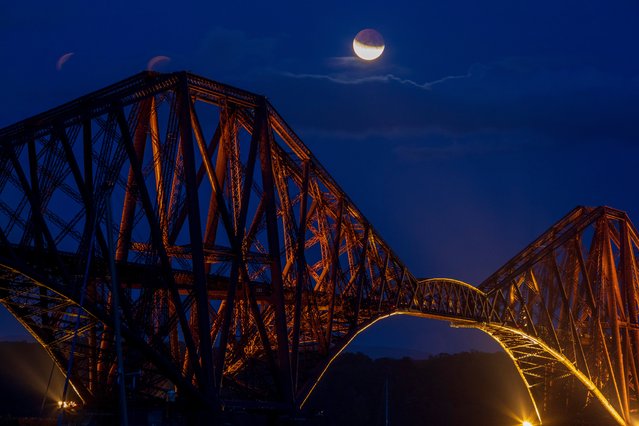
The moon rising above the Forth Rail Bridge in The Firth of Forth from North Queensferry, England on July 16, 2019. (Photo by South West News Service)

The moon rising above the Forth Rail Bridge in The Firth of Forth from North Queensferry, England on July 16, 2019. (Photo by South West News Service)
Details
14 Mar 2020 00:01:00
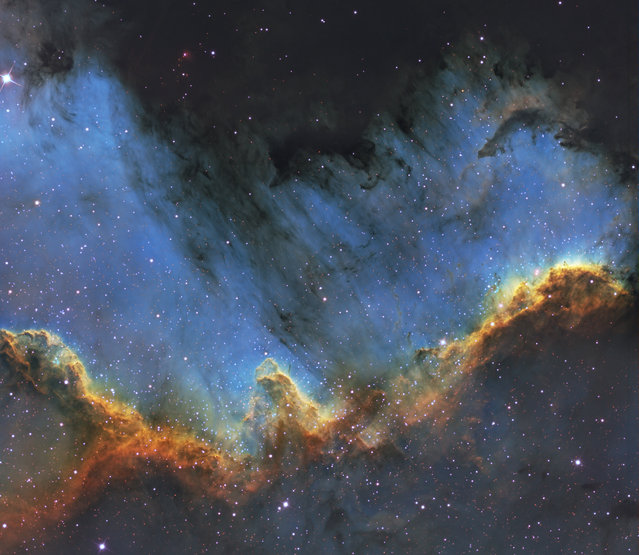
The Cygnus Wall is in the southern  area of NGC7000 also known as the North America Nebula. It is approximately 1800 light years from Earth, and is in the constellation Cygnus. The Wall is an energized shock front and contains the most concentrated star formations in the nebula. The size of the North America Nebula is about 4 full moons. (Bill Snyder)

Amateur astronomer Bill Snyder has been involved with astrophotography since 2007. Photo: The Cygnus Wall is in the southern area of NGC7000 also known as the North America Nebula. It is approximately 1800 light years from Earth, and is in the constellation Cygnus. The Wall is an energized shock front and contains the most concentrated star formations in the nebula. The size of the North America Nebula is about 4 full moons. (Photo and caption by Bill Snyder)
Details
30 Oct 2013 09:15:00
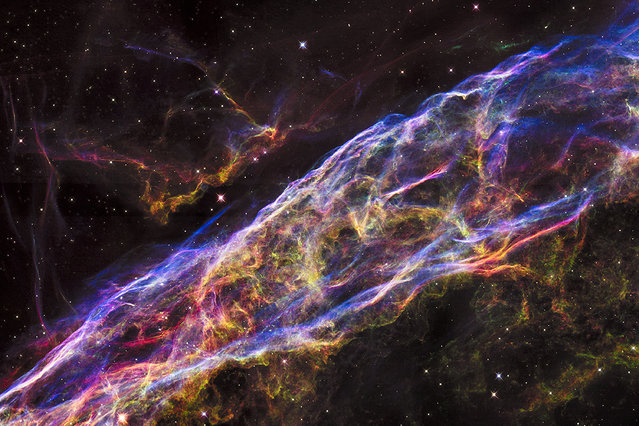
A small section of the expanding remains of the Veil Nebula, a massive star that exploded about 8,000 years ago. The entire nebula is 110 light-years across, covering six full moons on the sky as seen from Earth, and resides about 2,100 light-years away in the constellation Cygnus, the Swan. Image taken by NASA's Hubble Space Telescope. Released September 24, 2015. (Photo by Reuters/NASA/ESA/Hubble Heritage Team)

A small section of the expanding remains of the Veil Nebula, a massive star that exploded about 8,000 years ago. The entire nebula is 110 light-years across, covering six full moons on the sky as seen from Earth, and resides about 2,100 light-years away in the constellation Cygnus, the Swan. Image taken by NASA's Hubble Space Telescope. Released September 24, 2015. (Photo by Reuters/NASA/ESA/Hubble Heritage Team)
Details
10 Dec 2015 08:01:00
Women blow coloured power during Holi celebrations in Chennai, India, March 10, 2020. (Photo by P. Ravikumar/Reuters)

Women blow coloured power during Holi celebrations in Chennai, India, March 10, 2020. Holi is observed in India at the end of the winter season on the last full moon of the lunar month. (Photo by P. Ravikumar/Reuters)
Details
12 Mar 2020 00:01:00
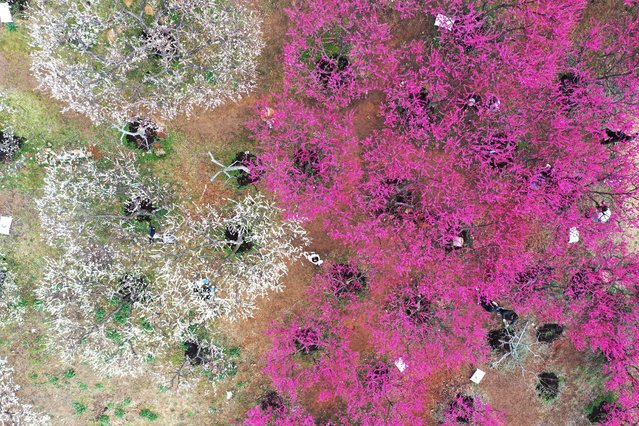
Citizens are making memories under plum trees in full bloom at Gijang Plum Orchard in Gijang-gun, Busan on March 16, 2025. (Photo by Kim Dong-hwan)

Citizens are making memories under plum trees in full bloom at Gijang Plum Orchard in Gijang-gun, Busan on March 16, 2025. (Photo by Kim Dong-hwan)
Details
01 Apr 2025 03:23:00
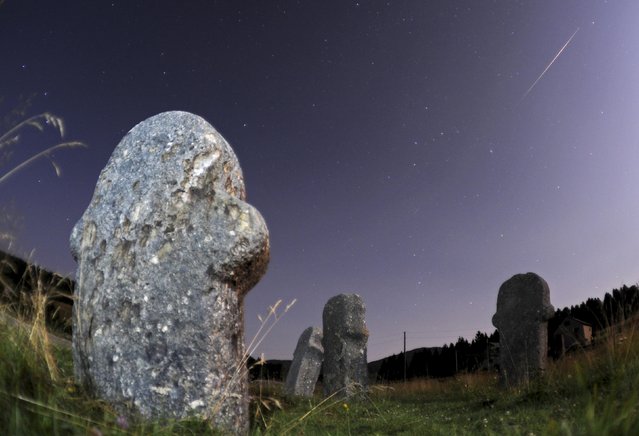
A meteor streaks over the sky during the Perseid meteor shower at the Maculje archaeological site near Novi Travnik August 12, 2014. According to NASA, the annual Perseid meteor shower reaches its peak on August 12 and 13 in Europe. The fireballs from the meteorites are fast and plentiful, although a nearly full moon (Supermoon) makes it difficult to view them this year, the agency adds. (Photo by Dado Ruvic/Reuters)

A meteor streaks over the sky during the Perseid meteor shower at the Maculje archaeological site near Novi Travnik August 12, 2014. According to NASA, the annual Perseid meteor shower reaches its peak on August 12 and 13 in Europe. The fireballs from the meteorites are fast and plentiful, although a nearly full moon (Supermoon) makes it difficult to view them this year, the agency adds. (Photo by Dado Ruvic/Reuters)
Details
14 Aug 2014 10:45:00
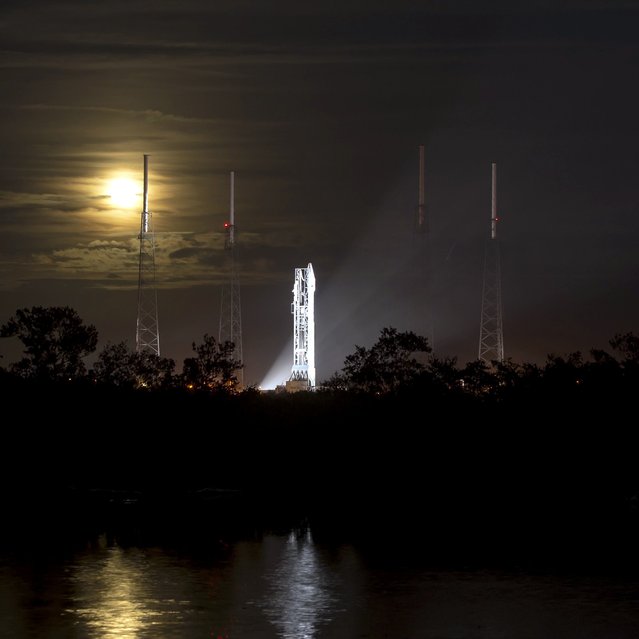
This photo provided by NASA shows a full moon rising behind the United Launch Alliance Atlas V rocket with NASA's Mars Atmosphere and Volatile Evolution (MAVEN) spacecraft onboard at the Cape Canaveral Air Force Station Space Launch Complex 41, Sunday, Nov. 17, 2013, Cape Canaveral, Florida. NASA's next Mars-bound spacecraft, the Mars Atmosphere and Volatile Evolution, or MAVEN, is the first spacecraft devoted to exploring and understanding the Martian upper atmosphere. (AP Photo/NASA, Bill Ingalls)

This photo provided by NASA shows a full moon rising behind the United Launch Alliance Atlas V rocket with NASA's Mars Atmosphere and Volatile Evolution (MAVEN) spacecraft onboard at the Cape Canaveral Air Force Station Space Launch Complex 41, Sunday, November 17, 2013, Cape Canaveral, Florida. NASA's next Mars-bound spacecraft, the Mars Atmosphere and Volatile Evolution, or MAVEN, is the first spacecraft devoted to exploring and understanding the Martian upper atmosphere. (Photo by Bill Ingalls/AP Photo/NASA)
Details
19 Nov 2013 06:42:00