Loading...
Done
In this June 20, 2015 photo, Niberta Galvez uses the bottom half of his shirt to collect coca leaves in Samugari, Peru. Coca farmers were among the locals who, in 1984, formed citizen militias to help the military beat back Shining Path rebels, reducing them to a small group of fewer than 500 who now are deeply involved in drug trafficking. (Photo by Rodrigo Abd/AP Photo)

In this June 20, 2015 photo, Niberta Galvez uses the bottom half of his shirt to collect coca leaves in Samugari, Peru. Coca farmers were among the locals who, in 1984, formed citizen militias to help the military beat back Shining Path rebels, reducing them to a small group of fewer than 500 who now are deeply involved in drug trafficking. (Photo by Rodrigo Abd/AP Photo)
Details
01 Jul 2015 13:11:00
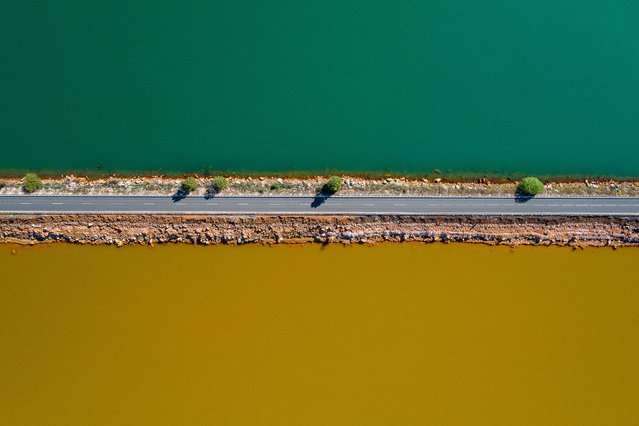
Shortlisted: The Life: A narrow strip, Río Tinto, Huelva, Spain. A narrow strip of road divides ochre-coloured and fresh waters. Trees wait on the fresh side of the road opposite the toxic waters of a nearby mine reservoir. (Photo by Roberto Bueno/CIWEM Environmental Photographer of the Year 2021)

Shortlisted: The Life: A narrow strip, Río Tinto, Huelva, Spain. A narrow strip of road divides ochre-coloured and fresh waters. Trees wait on the fresh side of the road opposite the toxic waters of a nearby mine reservoir. (Photo by Roberto Bueno/CIWEM Environmental Photographer of the Year 2021)
Details
10 Nov 2021 08:04:00
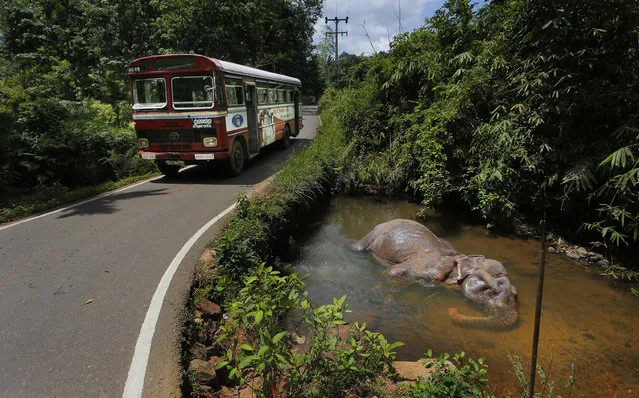
In this July 5, 2016 photo, a tamed elephant rests in a pool of water by a road in Baduraliya, a village outside Colombo, Sri Lanka. Even as the country cracks down on illegal ownership, the enduring demand for elephants has the government planning to set up its own pool of captive animals to be hired out to temples for ceremonies and maintained with budget funds. For Buddhists, who make up 70 percent of the island's 20 million population, elephants are believed to have been a servant of the Buddha and even a previous incarnation of the holy man himself. (Photo by Eranga Jayawardena/AP Photo)

In this July 5, 2016 photo, a tamed elephant rests in a pool of water by a road in Baduraliya, a village outside Colombo, Sri Lanka. Even as the country cracks down on illegal ownership, the enduring demand for elephants has the government planning to set up its own pool of captive animals to be hired out to temples for ceremonies and maintained with budget funds. (Photo by Eranga Jayawardena/AP Photo)
Details
04 Jan 2017 08:10:00
File photo dated 21/04/66 of Pattie Boyd in London's West End wearing a mini skirt, as the British designer Mary Quant, widely credited with popularising the mini skirt has recalled its “feeling of freedom and liberation” 50 years after she took the fashion world by storm. (Photo by PA Wire)

File photo dated 21/04/66 of Pattie Boyd in London's West End wearing a mini skirt, as the British designer Mary Quant, widely credited with popularising the mini skirt has recalled its “feeling of freedom and liberation” 50 years after she took the fashion world by storm. Quant, who named the skirt after her favourite make of car, said she “couldn't have imagined” in 1964 that it would become a staple of women's clothing, but added: “It seemed then to be obvious, and so right”. (Photo by PA Wire)
Details
29 Jan 2015 11:33:00
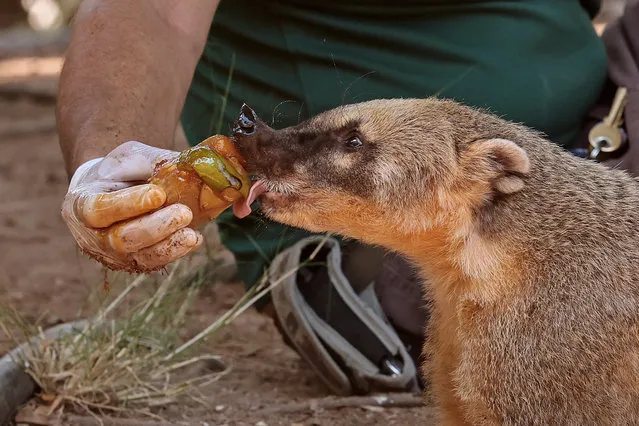
A South American Coati licks a block of frozen fruits at Israel's Safari Zoo in Ramat Gan, north of the Mediterranean coastal city of Tel Aviv, as temperatures reach 35 degrees Celsius on July 13, 2023. (Photo by Jack Guez/AFP Photo)

A South American Coati licks a block of frozen fruits at Israel's Safari Zoo in Ramat Gan, north of the Mediterranean coastal city of Tel Aviv, as temperatures reach 35 degrees Celsius on July 13, 2023. (Photo by Jack Guez/AFP Photo)
Details
30 Jul 2023 03:46:00
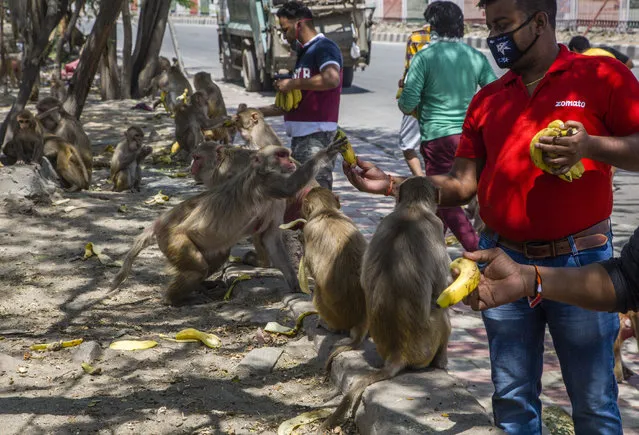
Men give bananas to monkeys gathered on the side of the road as India remains under an unprecedented lockdown over the highly contagious coronavirus (COVID-19) on April 08, 2020 in New Delhi, India. Wild animals, including monkeys, are roaming human settlements in India as people are staying indoors due to the 21-day lockdown. With India's 1.3 billion population and tens of millions of cars off the roads, wildlife is moving towards areas inhabited by humans. Wild animals in many countries have been seen roaming streets. A study says some 60 percent of the new diseases found around the globe every year are zoonotic, meaning they originate in animals and are passed on to humans. COVID-19 is a zoonotic disease that is suspected to have come from the wet markets of Wuhan, China. (Photo by Yawar Nazir/Getty Images)

Men give bananas to monkeys gathered on the side of the road as India remains under an unprecedented lockdown over the highly contagious coronavirus (COVID-19) on April 08, 2020 in New Delhi, India. Wild animals, including monkeys, are roaming human settlements in India as people are staying indoors due to the 21-day lockdown. (Photo by Yawar Nazir/Getty Images)
Details
12 Apr 2020 00:05:00
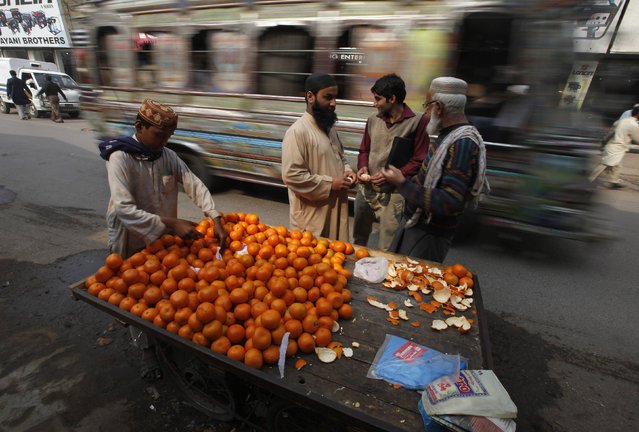
Men eat oranges from a push cart along a road as a vehicle travels past them in Karachi January 22, 2015. (Photo by Akhtar Soomro/Reuters)

Men eat oranges from a push cart along a road as a vehicle travels past them in Karachi January 22, 2015. (Photo by Akhtar Soomro/Reuters)
Details
26 Jan 2015 12:17:00
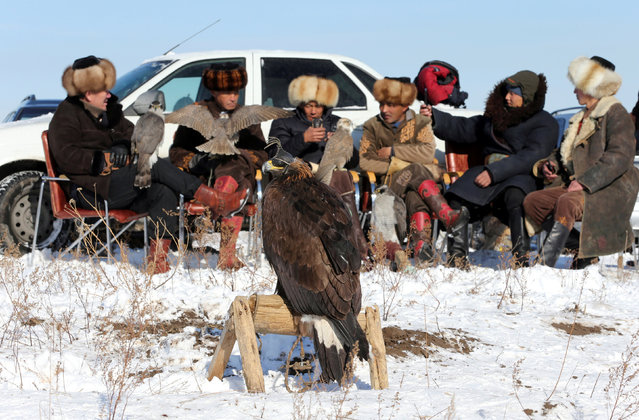
Participants gather during a traditional hunting contest, involving tamed golden eagles and hawks, in Almaty, Kazakhstan on December 1, 2018. (Photo by Pavel Mikheyev/Reuters)

Participants gather during a traditional hunting contest, involving tamed golden eagles and hawks, in Almaty, Kazakhstan on December 1, 2018. (Photo by Pavel Mikheyev/Reuters)
Details
04 Dec 2018 00:16:00