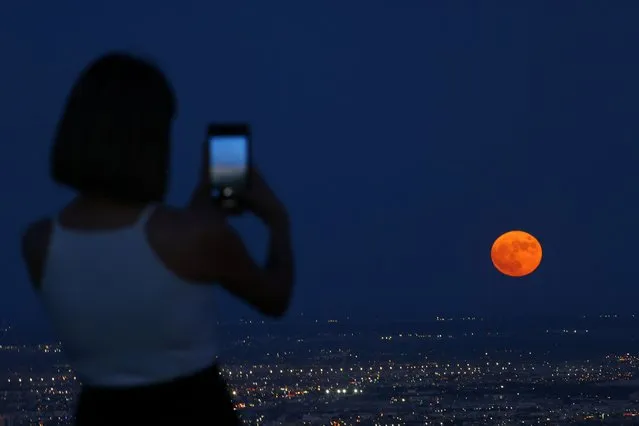
A woman takes a picture as a super moon, known as the Blue Moon, rises above Ciudad Juarez, Mexico on August 30, 2023. (Photo by Jose Luis Gonzalez/Reuters)
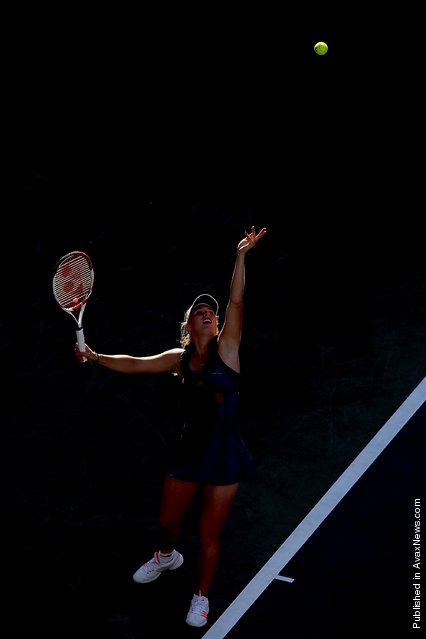
Caroline Wozniacki of Denmark serves to Alisa Kleybanova of Russia during the BNP Paribas Open at the Indian Wells Tennis Garden on March 15, 2011 in Indian Wells, California. (Photo by Matthew Stockman/Getty Images)
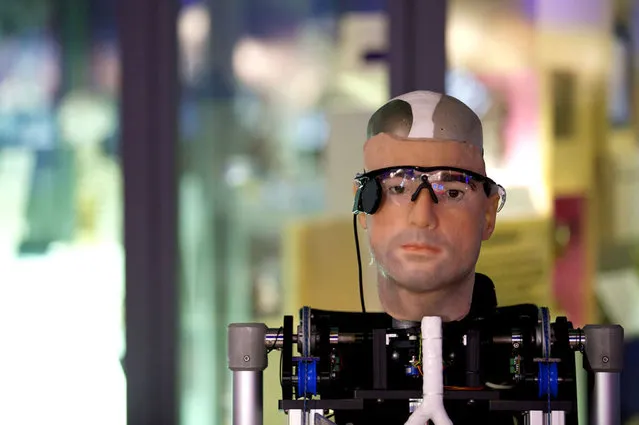
With working organs and a realistic face, the world’s most high-tech humanoid made his debut in London yesterday and will be a one-man show at the city’s London Science Museum starting tomorrow.
People crowd onto 42nd Street as they take photos of the “Manhattanhenge” phenomenon in the Manhattan borough of New York July 11, 2014. Manhattanhenge, coined by astrophysicist Neil deGrasse Tyson, occurs twice a year, when the setting sun aligns itself with the east-west grid of streets in Manhattan. (Photo by Carlo Allegri/Reuters)
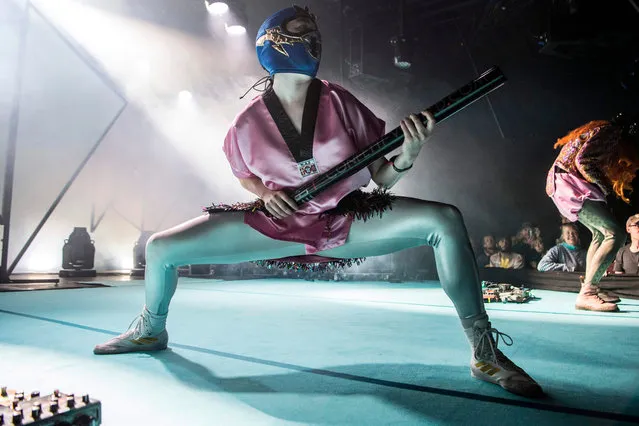
The band “Baby In Vain” and the dancegroup Corpus perform at the Gloria Stage at Roskilde Festival on July 3, 2019. (Photo by Helle Arensbak/Ritzau Scanpix/AFP Photo)
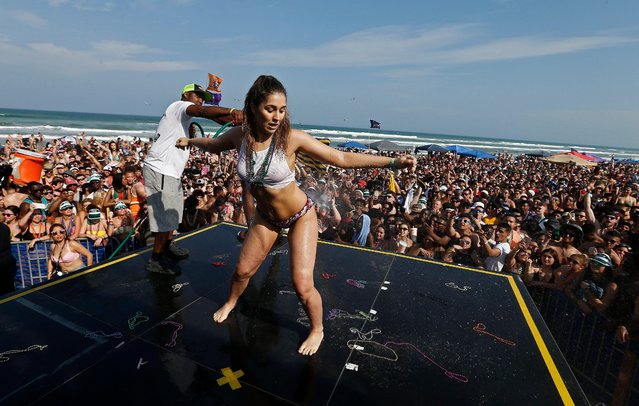
People participate in a wet t-shirt contest on a stage while people party and celebrate on the beach at Clayton's Beach Bar and Grill in South Padre Island, Texas, USA, 11 March 2018. Spring break draws thousands of kids from all over the country to many different locations to celebrate each year. (Photo by Larry W. Smith/EPA/EFE)
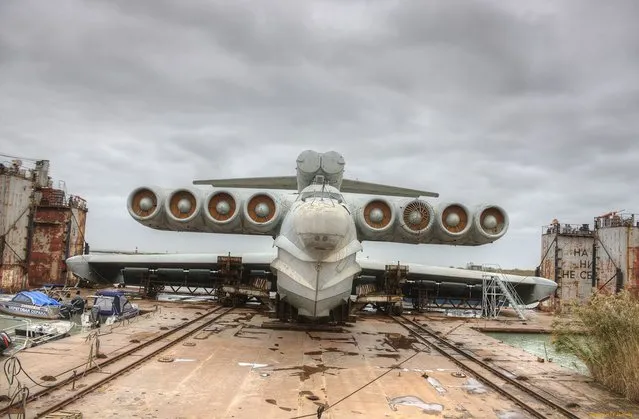
“The Lun-class ekranoplan (NATO reporting name Duck) was a ground effect vehicle (GEV) designed by Rostislav Evgenievich Alexeev and used by the Soviet and Russian navies from 1987 until sometime in the late 1990s. It “flew” using the lift generated by the ground effect of its large wings when close to the surface of the water – about four metres or less. Although they might look similar and/or have related technical characteristics, ekranoplans like the Lun are not aircraft, seaplanes, hovercraft, or hydrofoils – ground effect is a separate technology altogether. The International Maritime Organization classifies these vehicles as maritime ships. The name Lun comes from the Russian for harrier”. – Wikipedia (Photo by Igor113)