Loading...
Done
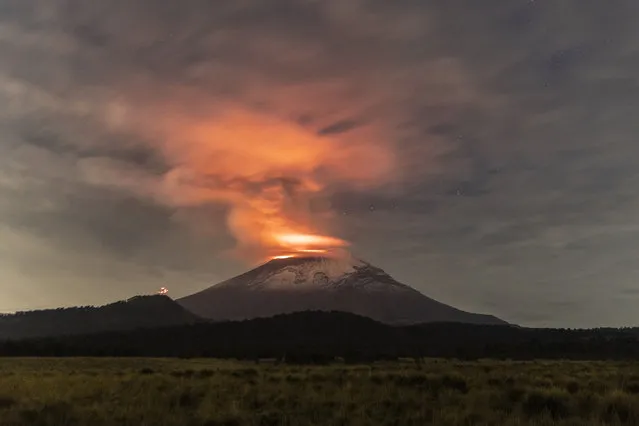
Popocatepetl volcano spews incandescent material as seen from Paso de Cortés on May 23, 2023 in Amecameca, Mexico. The second highest volcano in the country increased its activity while Mexican authorities raised the alert to yellow phase 3. Popocatepetl volcano caused the fall of ashes in different municipalities in Puebla, Estado de Mexico and Mexico City. Mexican army has spread forces as a preventive measure while the 3 levels of government are in coordination to observe the activity of the volcano and the situation in the surroundings. (Photo by Cristopher Rogel Blanquet/Getty Images)

Popocatepetl volcano spews incandescent material as seen from Paso de Cortés on May 23, 2023 in Amecameca, Mexico. The second highest volcano in the country increased its activity while Mexican authorities raised the alert to yellow phase 3. Popocatepetl volcano caused the fall of ashes in different municipalities in Puebla, Estado de Mexico and Mexico City. Mexican army has spread forces as a preventive measure while the 3 levels of government are in coordination to observe the activity of the volcano and the situation in the surroundings. (Photo by Cristopher Rogel Blanquet/Getty Images)
Details
11 Jun 2023 05:02:00
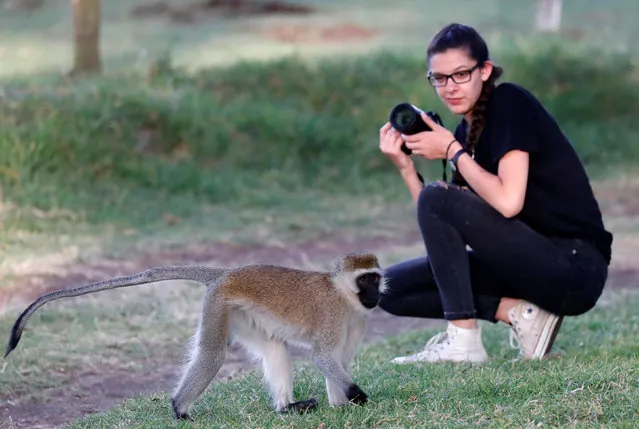
A vervet monkey passes in front of a woman on the shores of lake Naivasha, Kenya January 24, 2017. (Photo by Goran Tomasevic/Reuters)

A vervet monkey passes in front of a woman on the shores of lake Naivasha, Kenya January 24, 2017. (Photo by Goran Tomasevic/Reuters)
Details
25 Jan 2017 11:45:00
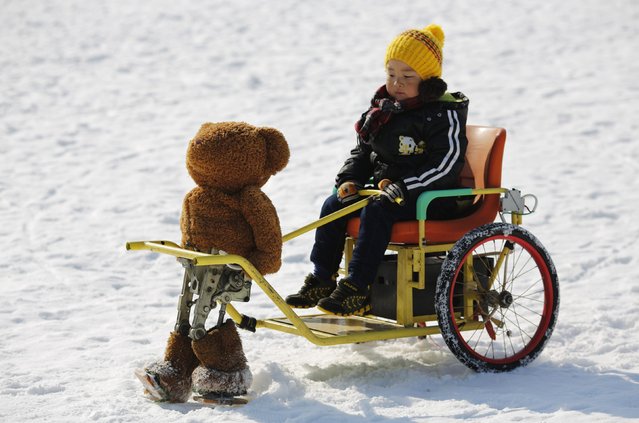
A boy rides on a snow wagon towed by a robot dressed as a Teddy bear, which only moves forward by moving its legs, during the Ice and snow carnival at Taoranting park in Beijing February 9, 2015. (Photo by Kim Kyung-Hoon/Reuters)

A boy rides on a snow wagon towed by a robot dressed as a Teddy bear, which only moves forward by moving its legs, during the Ice and snow carnival at Taoranting park in Beijing February 9, 2015. (Photo by Kim Kyung-Hoon/Reuters)
Details
10 Feb 2015 11:31:00
A gypsy man doing their traditional performance with a Cobra snack during the outbreak of coronavirus disease (COVID-19) at Savar the outskirts of Capital Dhaka, Bangladesh on April 24, 2021. The river gypsies in Bangladesh locally known as “Bede” community. (Photo by Fatima-Tuj Johora/ZUMA Wire/Rex Features/Shutterstock)

A gypsy man doing their traditional performance with a Cobra snack during the outbreak of coronavirus disease (COVID-19) at Savar the outskirts of Capital Dhaka, Bangladesh on April 24, 2021. The river gypsies in Bangladesh locally known as “Bede” community. (Photo by Fatima-Tuj Johora/ZUMA Wire/Rex Features/Shutterstock)
Details
20 May 2021 08:52:00
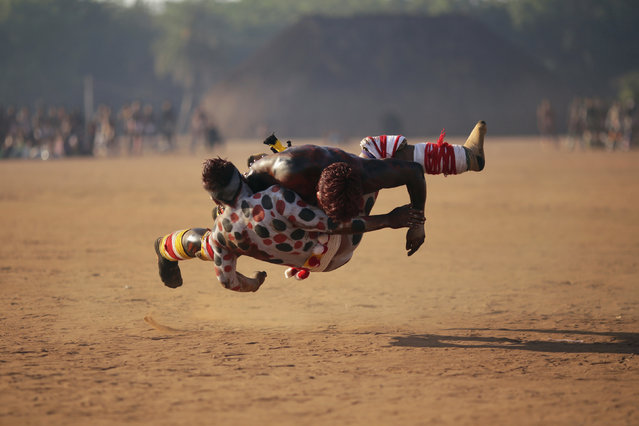
Waura Indians wrestle during this year's “quarup”, a ritual held over several days to honour in death a person of great importance to them, in Xingu National Park, Mato Grosso State, Brazil August 25, 2013. (Photo by Ueslei Marcelino/Reuters)

Waura Indians wrestle during this year's “quarup”, a ritual held over several days to honour in death a person of great importance to them, in Xingu National Park, Mato Grosso State, Brazil August 25, 2013. (Photo by Ueslei Marcelino/Reuters)
Details
09 Aug 2015 10:26:00
An injured soccer fan is carried to safety by a friend after a wall collapsed during violence between fans before the European Cup final between Juventus and Liverpool at the Heysel stadium in Brussels, May 29, 1985. 39 people died, and a further 600 were injured. (Photo by Nick Didlick/Reuters)

Reuters multi-award winning photographers are celebrated here in a three part retrospective on the 30th anniversary of the service's launch. They have captured dramatic images illustrating the human tragedy of natural disaster and war as well as the fallout of economic events across the continents, creating iconic images, recognised around the world. Here: an injured soccer fan is carried to safety by a friend after a wall collapsed during violence between fans before the European Cup final between Juventus and Liverpool at the Heysel stadium in Brussels, May 29, 1985. 39 people died, and a further 600 were injured. (Photo by Nick Didlick/Reuters)
Details
15 Feb 2015 13:43:00
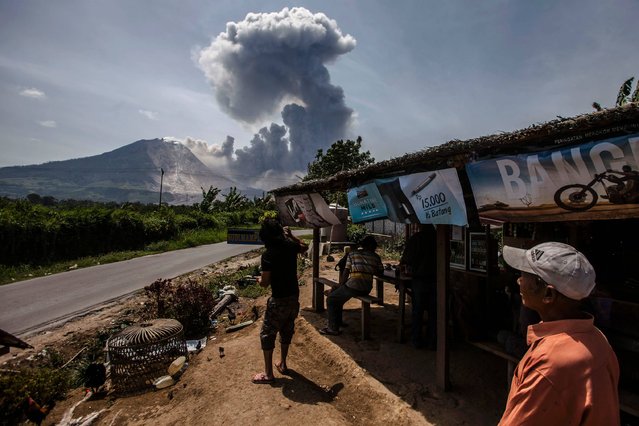
Indonesian residents look at the Mount Sinabung volcano as it spews volcanic ash near the Tiga Pancur village in Karo, North Sumatra on August 3, 2016. Volcanic eruptions in Indonesia in recent days have forced the closure of two airports and disrupted some flights to the holiday island of Bali, officials said August 3. Mount Sinabung, a volcano on the western island of Sumatra which has been rumbling for some time, also erupted violently on August 2, although its ash clouds did not disrupt any flights. (Photo by Y.T. Haryono/AFP Photo)

Indonesian residents look at the Mount Sinabung volcano as it spews volcanic ash near the Tiga Pancur village in Karo, North Sumatra on August 3, 2016. Volcanic eruptions in Indonesia in recent days have forced the closure of two airports and disrupted some flights to the holiday island of Bali, officials said August 3. Mount Sinabung, a volcano on the western island of Sumatra which has been rumbling for some time, also erupted violently on August 2, although its ash clouds did not disrupt any flights. (Photo by Y.T. Haryono/AFP Photo)
Details
04 Aug 2016 12:48:00
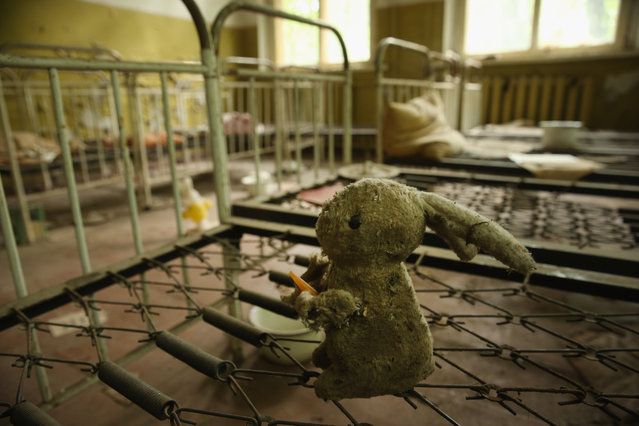
A stuffed rabbit doll sits among children's beds standing in the abandoned kindergarten of Kopachi village located inside the Chernobyl Exclusion Zone on September 29, 2015 near Chornobyl, Ukraine. Kopachi, a village that before 1986 had a population of 1,114, lies only a few kilometers south of the former Chernobyl nuclear power plant, where in 1986 workers inadvertantly caused reactor number four to explode, creating the worst nuclear accident in history. Radiation fallout was so high that authorities bulldozed and buried all of Kopachi's structures except for the kindergarten. (Photo by Sean Gallup/Getty Images)

A stuffed rabbit doll sits among children's beds standing in the abandoned kindergarten of Kopachi village located inside the Chernobyl Exclusion Zone on September 29, 2015 near Chornobyl, Ukraine. Kopachi, a village that before 1986 had a population of 1,114, lies only a few kilometers south of the former Chernobyl nuclear power plant, where in 1986 workers inadvertantly caused reactor number four to explode, creating the worst nuclear accident in history. (Photo by Sean Gallup/Getty Images)
Details
27 Apr 2016 09:28:00