Loading...
Done
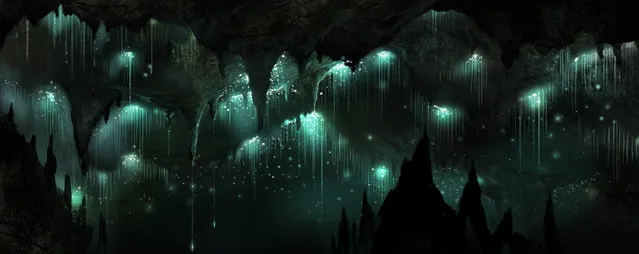
Waitomo Glowworm Caves New Zealand

The Waitomo Glowworm Caves attraction is a cave at Waitomo on the North Island of New Zealand, known for its population of glowworms, Arachnocampa luminosa. This species is found exclusively in New Zealand. They are around the size of an average mosquito. This cave is part of the Waitomo Caves system that includes the Ruakuri Cave and the Aranui Cave.
Details
12 May 2014 09:55:00
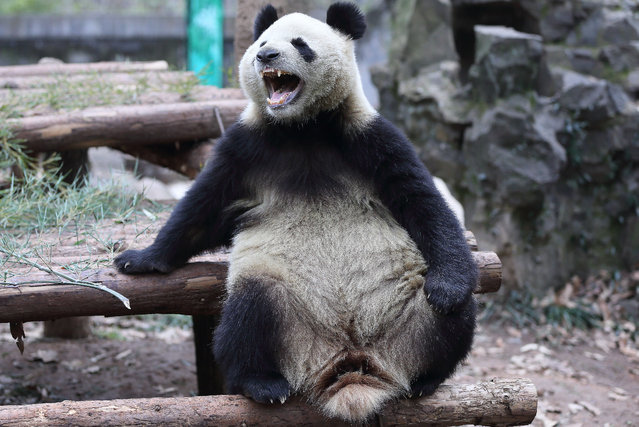
A panda bear sits on a logs in a zoo on January 15, 2015 in Hangzhou, China. (Photo by Feature China/Barcroft Media)

A panda bear sits on a logs in a zoo on January 15, 2015 in Hangzhou, China. (Photo by Feature China/Barcroft Media)
Details
17 Jan 2015 12:56:00
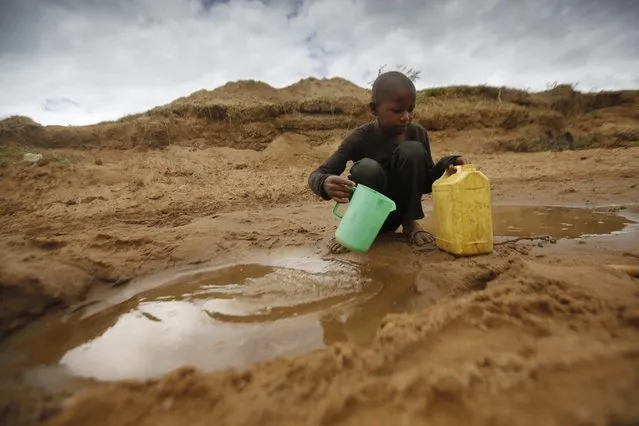
A young boy scoops water from a hand-dug well in the dry riverbed near Matinyani, in the semi-arid Kitui County in southeastern Kenya, 22 March 2015, the World Water Day. Residents of Kitui County and other arid and semi-arid areas of the country have been hard-hit by extremely poor rainfall this year while the government said in previous month that some 1.6 million people countrywide are facing acute starvation due to the drought and will need relief food over the next six months. (Photo by Dai Kurokawa/EPA)

A young boy scoops water from a hand-dug well in the dry riverbed near Matinyani, in the semi-arid Kitui County in southeastern Kenya, 22 March 2015, the World Water Day. Residents of Kitui County and other arid and semi-arid areas of the country have been hard-hit by extremely poor rainfall this year while the government said in previous month that some 1.6 million people countrywide are facing acute starvation due to the drought and will need relief food over the next six months. Residents of Matinyani say they haven't seen a drop of rain in nearly four months. Thousands of Kenyans in rural areas walk tens of kilometers just to fetch water to drink and to be used in their homes. According to an estimate by UNESCO (United Nations Educational, Scientific and Cultural Organization), 17 million people lack access to safe water in Kenya, where the drought is a perennial problem. (Photo by Dai Kurokawa/EPA)

Details
23 Mar 2015 11:01:00
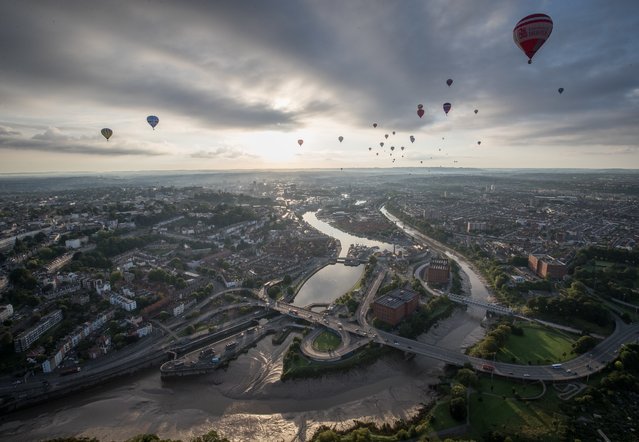
Hot air balloons take to the skies as they participate in the mass assent at sunrise on the second day of the Bristol International Balloon Fiesta on August 11, 2017 in Bristol, England. More than 130 balloons have gathered for the four day event, now in its 39th year and now one of Europe's largest annual hot air balloon events, being hosted in the city that is seen by many as the home of modern ballooning. (Photo by Matt Cardy/Getty Images)

Hot air balloons take to the skies as they participate in the mass assent at sunrise on the second day of the Bristol International Balloon Fiesta on August 11, 2017 in Bristol, England. More than 130 balloons have gathered for the four day event, now in its 39th year and now one of Europe's largest annual hot air balloon events, being hosted in the city that is seen by many as the home of modern ballooning. (Photo by Matt Cardy/Getty Images)
Details
14 Aug 2017 07:02:00
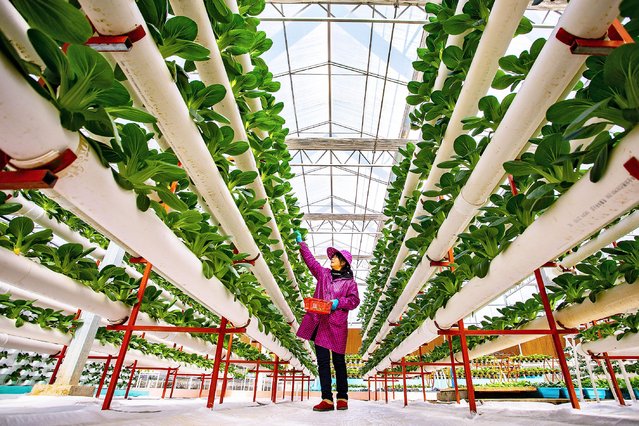
A farmer arranges vegetable at a greenhouse on January 29, 2021 in Hukou County, Jiangxi Province of China. (Photo by Zhang Yu/VCG via Getty Images)

A farmer arranges vegetable at a greenhouse on January 29, 2021 in Hukou County, Jiangxi Province of China. (Photo by Zhang Yu/VCG via Getty Images)
Details
08 Feb 2021 09:21:00
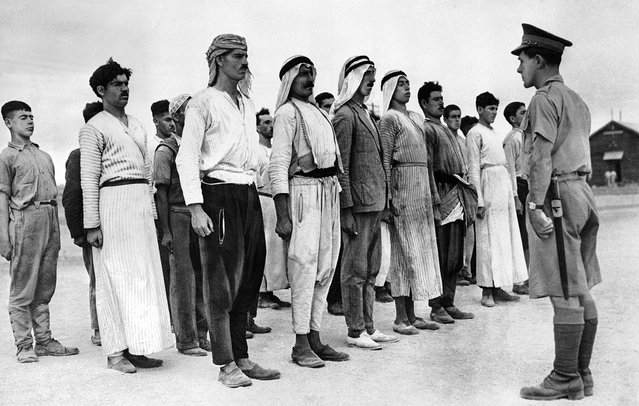
These Arab recruits line up in a barracks square in the British Mandate of Palestine, on December 28, 1940, for their first drill under a British solider. Some 6,000 Palestinian Arabs signed up with the British Army during the course of World War II

These Arab recruits line up in a barracks square in the British Mandate of Palestine, on December 28, 1940, for their first drill under a British solider. Some 6,000 Palestinian Arabs signed up with the British Army during the course of World War II. (AP Photo)
Details
06 May 2012 11:15:00
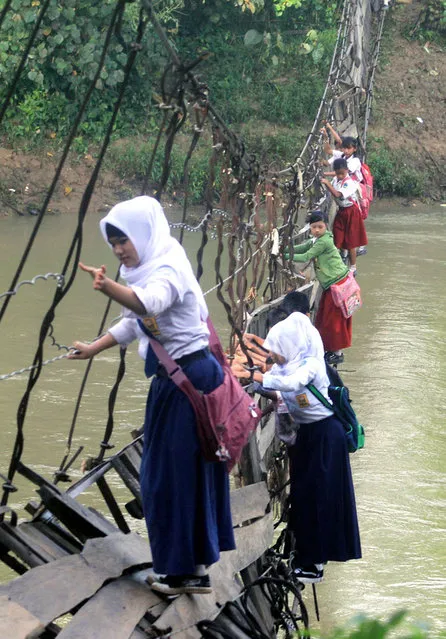
In this photograph taken on January 19, 2012, Indonesian schoolchildren hold on to iron cables as they cross a nearly-collapsed suspension bridge at Sanghiang Tanjung village in Indonesia's Banten province to reach their school. (Photo by Kris Aria/AFP Photo)

In this photograph taken on January 19, 2012, Indonesian schoolchildren hold on to iron cables as they cross a nearly-collapsed suspension bridge at Sanghiang Tanjung village in Indonesia's Banten province to reach their school. (Photo by Kris Aria/AFP Photo)
Details
07 Sep 2014 12:37:00
The National Geographic Photo Ark is a travelling exhibition of photographer Joel Sartore’s quest to create a photo archive of biodiversity around the world. So far, Sartore has captured studio portraits of more than 6,000 species – a number that he hopes to double. On 1 July, the ark will open at Melbourne zoo – the first time it has been exhibited in the southern hemisphere. More than 50 portraits will be on display, including many of Australian endangered animals being protected by programs at the zoo itself. These captions have been edited from text supplied by Melbourne zoo. Here: Barking owl. So-named because its call sounds like a barking dog, these birds are native to Australia, Indonesia and Papua New Guinea. In Victoria they are listed as an endangered species, and in 2003 there were estimated to be fewer than 50 breeding pairs. The main threat to the species in Victoria is loss of habitat, especially large trees with hollows in which they can nest and on which many of their prey depend. Apart from a bark, they may utter a chilling scream when they feel threatened. (Photo by Joel Sartore/National Geographic Photo Ark/The Guardian)

The National Geographic Photo Ark is a travelling exhibition of photographer Joel Sartore’s quest to create a photo archive of biodiversity around the world. So far, Sartore has captured studio portraits of more than 6,000 species – a number that he hopes to double. On 1 July, the ark will open at Melbourne zoo – the first time it has been exhibited in the southern hemisphere. More than 50 portraits will be on display, including many of Australian endangered animals being protected by programs at the zoo itself. These captions have been edited from text supplied by Melbourne zoo. Here: Barking owl. (Photo by Joel Sartore/National Geographic Photo Ark/The Guardian)
Details
01 Jul 2017 07:45:00