Swimmers in fancy dress splash as they participate in the New Year's Day Loony Dook swim at South Queensferry, Scotland January 1, 2015. (Photo by Russell Cheyne/Reuters)
A woman holds a champagne bottle during New Year's celebrations in Bucharest, Romania, Wednesday, January 1, 2014. Tens of thousands of Romanians took to the streets of the Romanian capital to join parties and watch fireworks. (Photo by Vadim Ghirda/AP Photo)
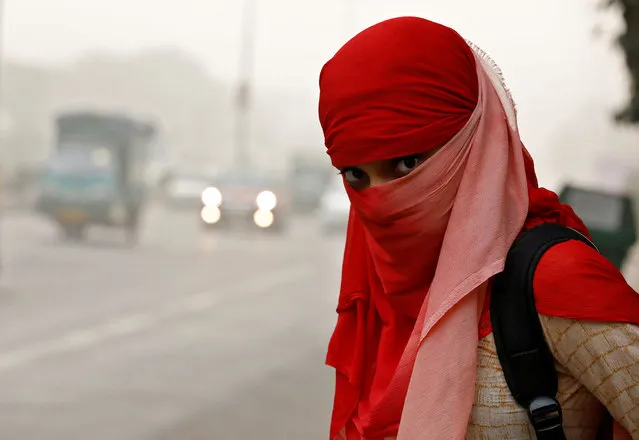
A woman wearing a scarf to cover her face looks on as she waits for a passenger bus on a smoggy morning in New Delhi, India, November 8, 2017. The Great Smog of Delhi is an ongoing severe air-pollution event in New Delhi and adjoining areas in the National Capital Territory of India, in November 2017. Air pollution at this time peaked on both PM 2.5 and PM 10 levels. It has been reported as one of the worst levels of air quality in Delhi since 1999. (Photo by Saumya Khandelwal/Reuters)
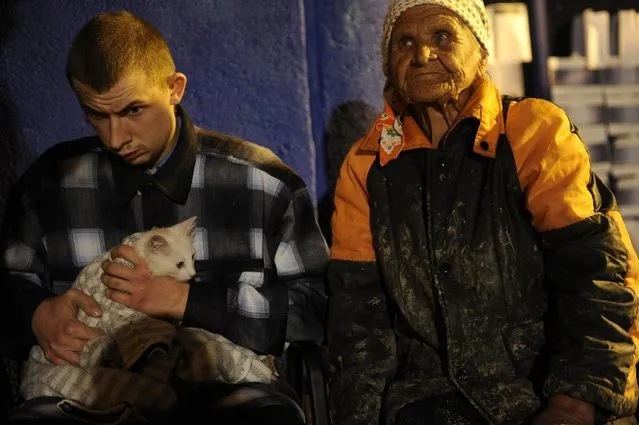
“Russia's emergencies minister accused local officials on Monday of not doing enough to prevent 171 deaths in weekend floods that raised new doubts about the country's readiness for natural disasters under President Vladimir Putin”. – Andrey Kuzmin via Reuters
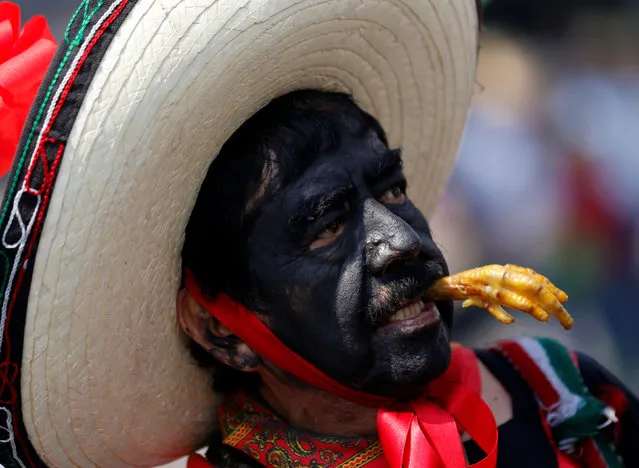
A Mexican wearing a period costume re-enacts the battle of Puebla, in the Penon de los Banos neighbourhood of Mexico City, Mexico May 5, 2016. The battle marked the defeat of French forces by Mexican troops and local Indians in the central state of Puebla in 1862. During the re-enactment, participants fired homemade shotguns loaded with gunpowder and hundreds of men dressed as Indian peasants fought mock battles against others dressed as French invaders. (Photo by Henry Romero/Reuters)
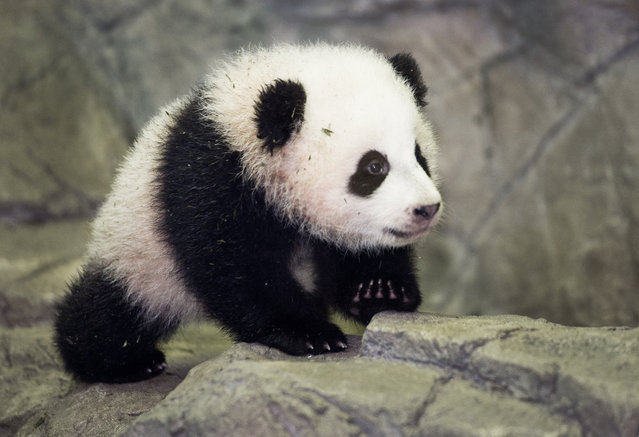
Bao Bao, the Giant Panda cub is seen by the media for the first time January 6, 2014 inside his glass enclosure at the Smithsonian's National Zoo in Washington, DC, a few days before going on display to the general public. Bao Bao was born at the Smithsonian's National Zoo August 2, 2013. (Photo by Paul J. Richards/AFP Photo)
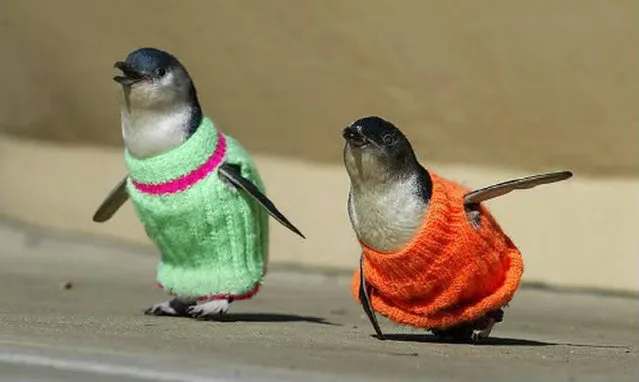
Penguin sweaters, also known as penguin jumpers, are sweaters which are knitted for penguins that have been caught in oil slicks. When an oil spill affects penguins, they are dressed in knitted sweaters to stop them preening their feathers and to keep them warm, since the spilled oil destroys their natural oils. This also prevents them from poisoning themselves by ingesting the oil. The sweaters are removed and discarded as soon as the penguins can be washed. The original project has been completed, but the knitting pattern is still available on-line, as subsequent oil spills make it necessary. The extra sweaters are kept on behalf of the Wildlife Rescue Team.