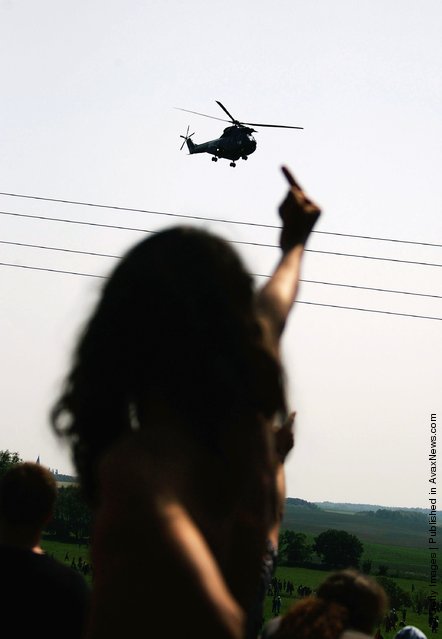
An activist of the anti-G8 forum “Block G8” shows his middle finger to a police helicopter passing overhead June 07, 2007 at Bollhagen, near Heiligendamm, Germany. (Photo by Carsten Koall/Getty Images)
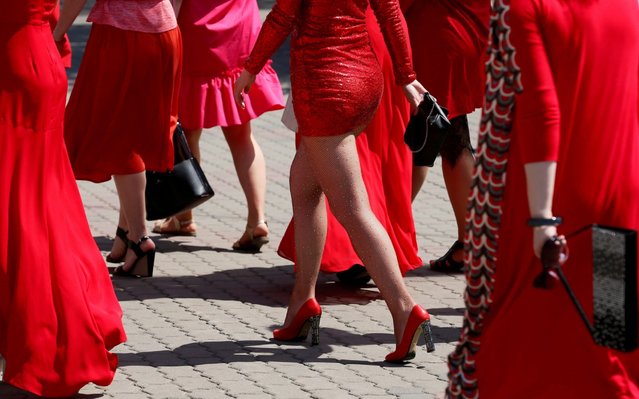
Participants of the “Lady in red“ procession, marking the day of the Summer Solstice, walk on a promenade of the Yenisei River in Krasnoyarsk, Russia on June 22, 2019. (Photo by Ilya Naymushin/Reuters)
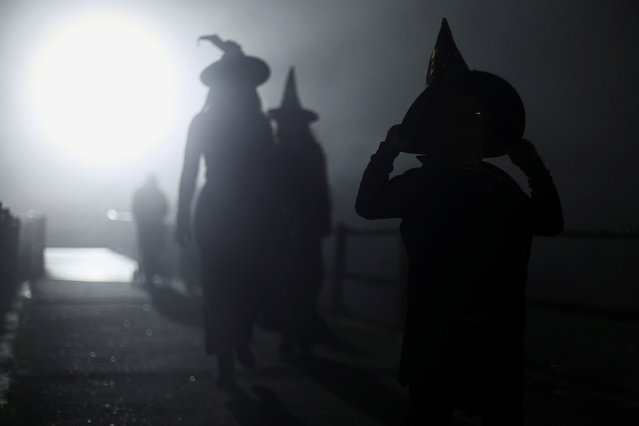
People walk on the street before the opening ceremony of the Witches and Wizards Convention, in the Paranapiacaba village, in Santo Andre, Brazil on May 16, 2025. (Photo by Jean Carniel/Reuters)
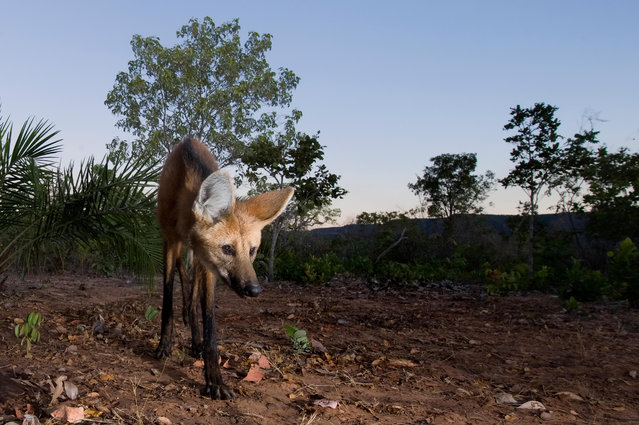
Global wildlife populations will decline by 67% by 2020 unless urgent action is taken to reduce human impact on species and ecosystems, warns the biennial Living Planet Index report from WWF (World Wide Fund for Nature) and ZSL (Zoological Society of London). From elephants to eels, here are some of the wildlife populations most affected by human activity. Here: The maned wolf is among the large mammals in the Brazilian Cerrado that are threatened by the increasing conversion of grasslands into farmland for grazing and growing crops. (Photo by Ben Cranke/Nature Picture Library/Alamy Stock Photo)
An Indian journalist poses with the wax statue of American actress Kim Kardashian (L) and American actor Will Smith (R) during the launch of Madame Tussauds Delhi in New Delhi on November 30, 2017. The wax museum will be open for the visitors from 01 December on. Madame Tussauds New Delhi features 50 wax figures of personalities from the fields of sports, music, film, history and politics. (Photo by Sajjad Hussain/AFP Photo)
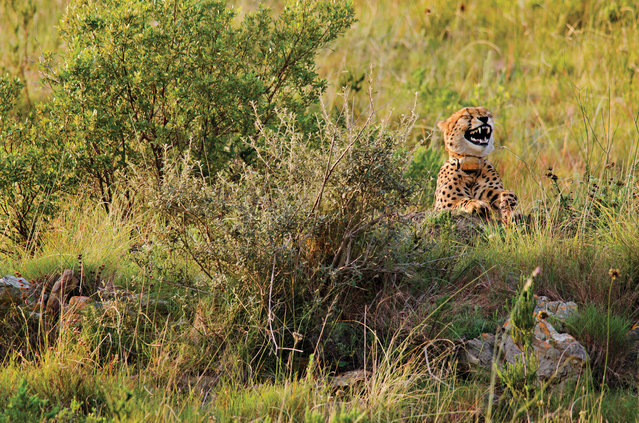
A comedic photo of a cheetah appearing to find something hilarious by Dutton Robert for the Comedy Wildlife Photo Awards 2016, South Africa, April, 2012. (Photo by Dutton Robert/Barcroft Images/Comedy Wildlife Photo Awards)