Loading...
Done
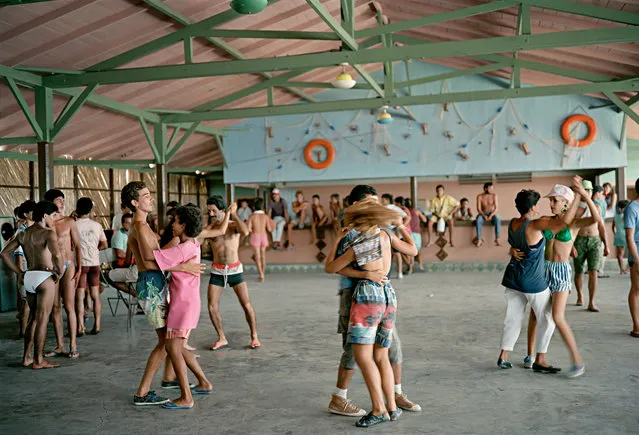
Giovan set out to capture the people’s resilience, during what Fidel Castro, with typical hyperbole, called the “special period”. (Photo by Tria Giovan/The Guardian)

As an American in 1990s Cuba, Tria Giovan risked being branded a traitor. But the photographer continued to visit and, from the dance hall to the hair salon, she captured the resilient spirit of the Cuban people. The 120 images in Tria Giovan’s “The Cuba Archive” are from the period in the 90s when, as an American, travel to Cuba could have seen her branded a traitor, as the country was subject to a US trade embargo. Her trip required lots of planning – and patience. (Photo by Tria Giovan/The Guardian)
Details
21 Sep 2017 09:04:00
Kritchaya “Lolita” Boonhor (R) curls her eyelashes in ladyboy Candy's (L) room while she chats her about her boyfriend, in Bangkok, Thailand, 27 November 2017. (Photo by Lola Levan/EPA/EFE)

Kritchaya “Lolita” Boonhor (R) curls her eyelashes in ladyboy Candy's (L) room while she chats her about her boyfriend, in Bangkok, Thailand, 27 November 2017. Most things in life are a question of negotiation. Lolita is a woman, that was not to be negotiated. What needed to be negotiated was how she was perceived by those around her. And that negotiation was one that took time and effort. (Photo by Lola Levan/EPA/EFE)
Details
19 Jan 2018 07:39:00
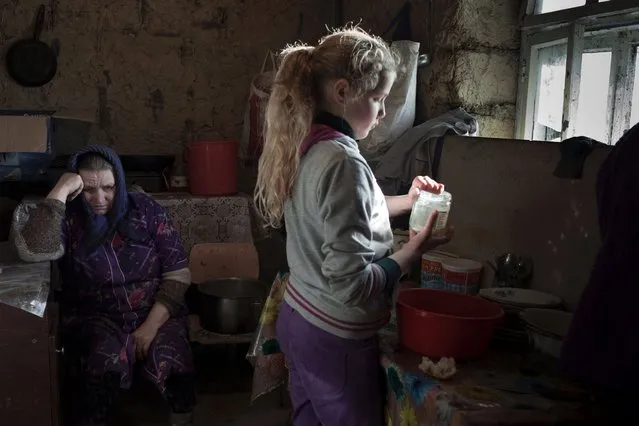
According to the U.S. government, Moldova, one of the poorest countries in Europe, depends on about $1.6 billion annually sent back from the roughly one million Moldovans who left for work in in Europe, Russia, and other former Soviet Bloc countries. Photographer Myriam Meloni went to Moldova to document what she refers to as “social orphans” – children whose parents have emigrated to another country in search of a job and a better future for their families. Here: Lulia is seen washing dishes in her grandmother's house, where she lives. (Photo by Myriam Meloni)

According to the U.S. government, Moldova, one of the poorest countries in Europe, depends on about $1.6 billion annually sent back from the roughly one million Moldovans who left for work in in Europe, Russia, and other former Soviet Bloc countries. Photographer Myriam Meloni went to Moldova to document what she refers to as “social orphans” – children whose parents have emigrated to another country in search of a job and a better future for their families. Here: Lulia is seen washing dishes in her grandmother's house, where she lives. (Photo by Myriam Meloni)
Details
12 Mar 2016 14:57:00
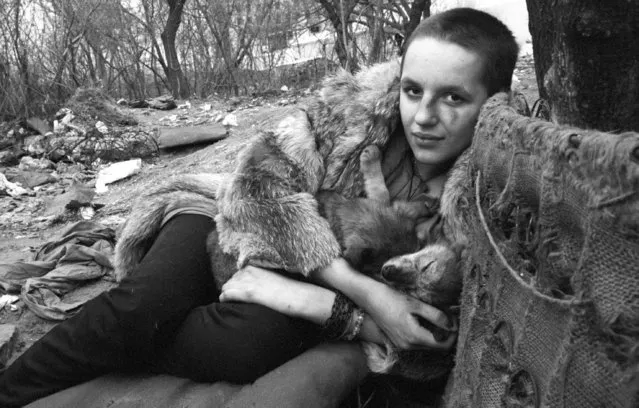
Suffering from a broken nose and bruised ribs Natasha Dzhuley, 16, relaxes after inhaling glue for the first time – something she swore she would never do, 2002. She was beaten by her pimps men in what Ruslana believes was a warning to other prostitutes to stay in line. Though another child believes her pimp had her beaten because she was pregnant. Less than a week after this picture of Natasha was taken she was dragged away by six men. She has not been heard or seen since. (Photo by Kurt Vinion /Getty Images)

Suffering from a broken nose and bruised ribs Natasha Dzhuley, 16, relaxes after inhaling glue for the first time – something she swore she would never do, 2002. She was beaten by her pimps men in what Ruslana believes was a warning to other prostitutes to stay in line. Though another child believes her pimp had her beaten because she was pregnant. Less than a week after this picture of Natasha was taken she was dragged away by six men. She has not been heard or seen since. (Photo by Kurt Vinion /Getty Images)
Details
18 Feb 2017 00:05:00


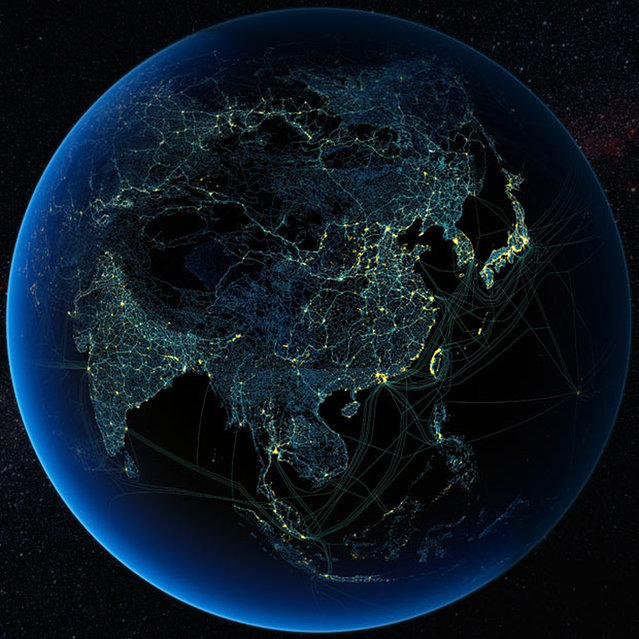
Defined according to wikipedia it is “a recent and informal geologic chronological term that serves to mark the evidence and extent of human activities that have had a significant global impact on the Earth’s ecosystems. The term was coined by ecologist Eugene Stoermer but has been widely popularized by the Nobel Prize-winning atmospheric chemist Paul Crutzen.”

The images here where created by Felix Pharand-Deschenes depicting how various human influences, from road and rail, to internet cables and airlines create significant patterns covering the Earth. What can we learn from these patterns in how they are influencing the environment
Details
19 Aug 2012 10:40:00
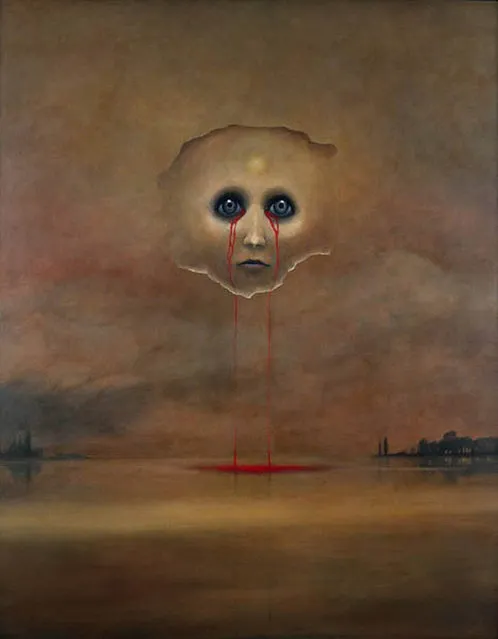
Art by  Zdzisław Beksiński

Zdzisław Beksiński, 24 February 1929 – 21 February 2005) was a renowned Polish painter, photographer, and sculptor. Beksiński executed his paintings and drawings either in what he called a 'Baroque' or a 'Gothic' manner. The first style is dominated by representation, with the best-known examples coming from his fantastic realism period when he painted disturbing images of a surrealistic, nightmarish environment. The second style is more abstract, being dominated by form, and is typified by Beksiński's later paintings.

Beksiński was murdered in 2005.
Details
31 Jul 2012 08:45:00
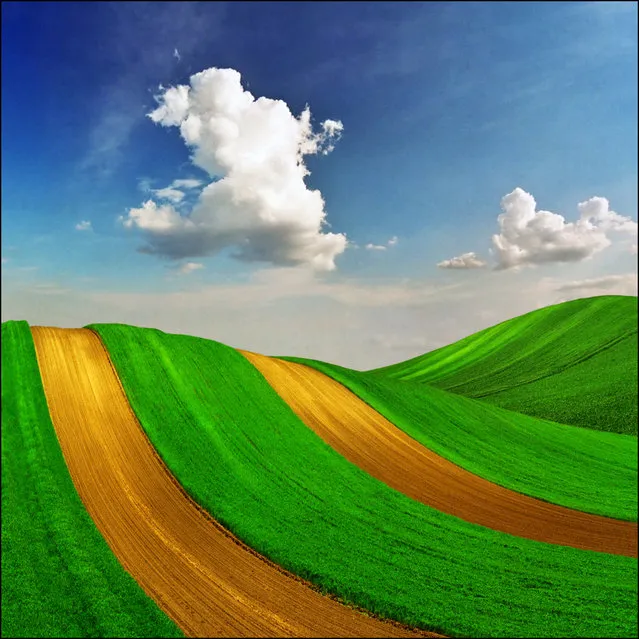
Happy dog (..?) – Pannonian spring fantasy

“I am not a photo reporter, so I don’t feel obligated to honour every detail. What I’m trying to achieve is to emphasize the whole potential of a shot, creating a sight that I'd like if existed.. And since it’s impossible in real life, I do it in virtual :) My work is maybe more similar to ‘photo-painting’ than photography”. – Katarina Stefanović

Photo: Pannonian spring fantasy. (Photo by by Katarina Stefanović)
Details
17 Aug 2012 10:17:00
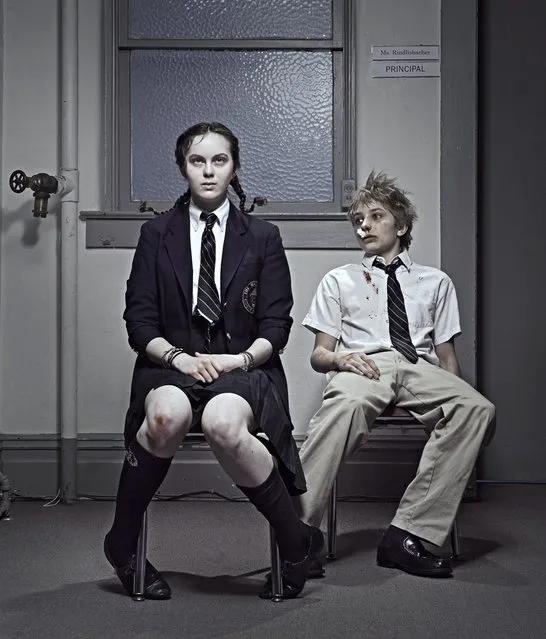
Catholic School Characters By David Stoker

“David Stoker creates images that tell a story. Rich and atmospheric, his images stop a moment in time letting the viewer decide, or wonder, just what each character is doing. David's work has been recognized in the 2011 Communication Arts Photo Annual, Communication Arts Fresh online, Graphis 100 Best in Photography 2012, PDN’s Photo Annual (2009, 2011), Luezer's Archive, and the International Photography Awards (IPA's – 2009, 2010)”.
Details
30 Apr 2012 10:54:00