Loading...
Done
A black bear cub performs for its mum at the Pocosin Lakes National Wildlife park in North Carolina, US in January 2022. (Photo by Jennifer Hadley/Animal News Agency)

A black bear cub performs for its mum at the Pocosin Lakes National Wildlife park in North Carolina, US in January 2022. (Photo by Jennifer Hadley/Animal News Agency)
Details
23 Jan 2022 04:31:00
A woman with disability communicates with sign language as they sit and demonstrate with Disability Activists Forum demanding their rights from the Bengal Government, during the International Day of Persons with Disabilities in Kolkata, Eastern India, 03 December 2021. The International Day of Persons with Disabilities is annually observed on 03 December with an objective to promote an awareness of disability issues, the fundamental rights of persons with disabilities and integration of persons with disabilities in the mainstream of each aspect of the social, political, economic and cultural status of their communities. (Photo by Piyal Adhikary/EPA/EFE)

A woman with disability communicates with sign language as they sit and demonstrate with Disability Activists Forum demanding their rights from the Bengal Government, during the International Day of Persons with Disabilities in Kolkata, Eastern India, 03 December 2021. The International Day of Persons with Disabilities is annually observed on 03 December with an objective to promote an awareness of disability issues, the fundamental rights of persons with disabilities and integration of persons with disabilities in the mainstream of each aspect of the social, political, economic and cultural status of their communities. (Photo by Piyal Adhikary/EPA/EFE)
Details
07 Dec 2021 09:49:00
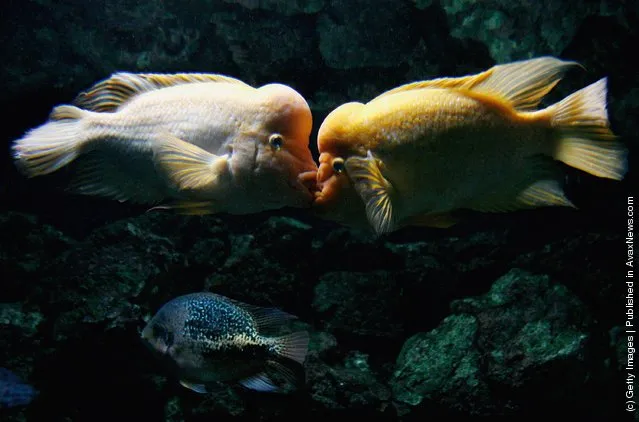
Midas Cichlid a.k.a. Amphilophus Citrinellus

“Amphilophus citrinellus is a large cichlid fish endemic to the San Juan River and adjacent watersheds in Costa Rica and Nicaragua. In the aquarium trade A. citrinellus is often sold under the trade name of Midas cichlid. A. citrinellus are omnivorous and their diet consists of plant material, molluscs and smaller fish”. – Wikipedia

Photo: Two Midas Cichlid (lat: amphilophus citrinellus) fish are seen in an aquarium at Hellabrunn zoo on December 23, 2009 in Munich, Germany. (Photo by Alexandra Beier/Getty Images)
Details
17 Aug 2011 11:29:00
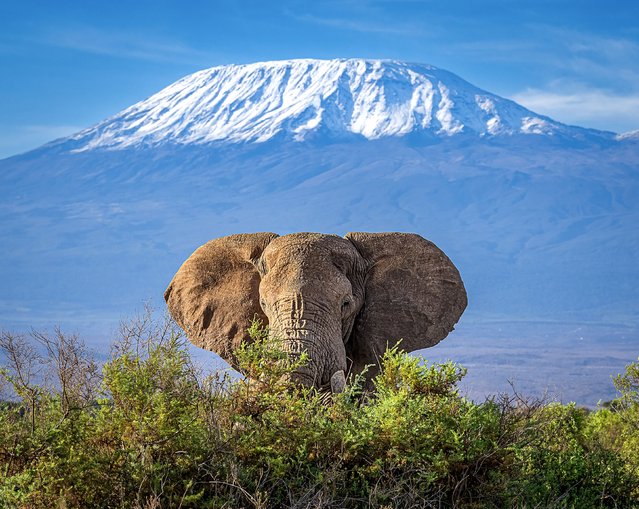
Mount Kilimanjaro looms behind an elephant at Amboseli National Park in southern Kenya, 2024. (Photo byYaron Schmid/YS Wildlife Photography/Solent News)

Mount Kilimanjaro looms behind an elephant at Amboseli National Park in southern Kenya, 2024. (Photo byYaron Schmid/YS Wildlife Photography/Solent News)
Details
03 Feb 2025 03:08:00
Nigel Cox and Kevin Jay paint with light using fibre optic whips on the beach at Clacton-on-Sea in Essex, United Kingdom on July 25, 2023 with a superhero fighting theme. (Photo by Kevin Jay/Picture Exclusive)

Nigel Cox and Kevin Jay paint with light using fibre optic whips on the beach at Clacton-on-Sea in Essex, United Kingdom on July 25, 2023 with a superhero fighting theme. (Photo by Kevin Jay/Picture Exclusive)
Details
30 Aug 2023 03:48:00
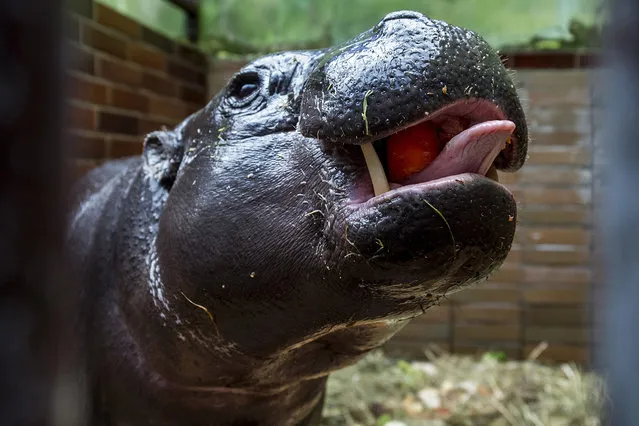
Female of pygmy hippopotamus called Malaya from Netherlands in zoo in Dvur Kralove nad Labem, Czech Republic, February 22, 2016. (Photo by David Tanecek/CTK via ZUMA Press)

Female of pygmy hippopotamus called Malaya from Netherlands in zoo in Dvur Kralove nad Labem, Czech Republic, February 22, 2016. (Photo by David Tanecek/CTK via ZUMA Press)
Details
28 Feb 2016 10:44:00


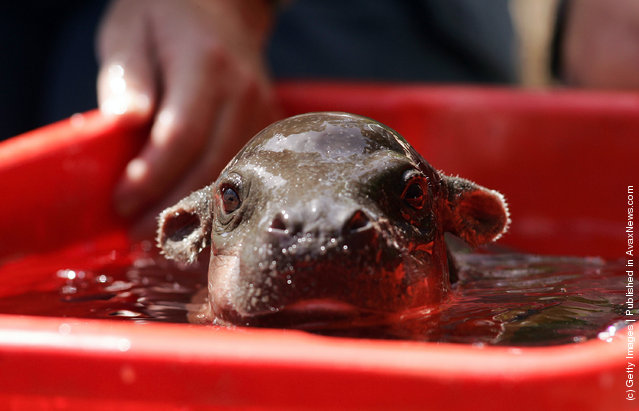
“The pygmy hippopotamus (Choeropsis liberiensis or Hexaprotodon liberiensis) is a large mammal native to the forests and swamps of western Africa (the specific name liberiensis means “of Liberia”, as this is where the vast majority live). The pygmy hippo is reclusive and nocturnal. It is one of only two extant species in the Hippopotamidae family, the other being its much larger cousin the common hippopotamus”. – Wikipedia

Photo: Monifa, a one month old baby Pygmy Hippopotamus takes a morning bath at Taronga Zoo on November 7, 2008 in Sydney, Australia. Monifa is the first Pygmy Hippopotamus to be born at Taronga Zoo in the past twenty three years. (Photo by Sergio Dionisio/Getty Images)
Details
11 Apr 2011 08:11:00


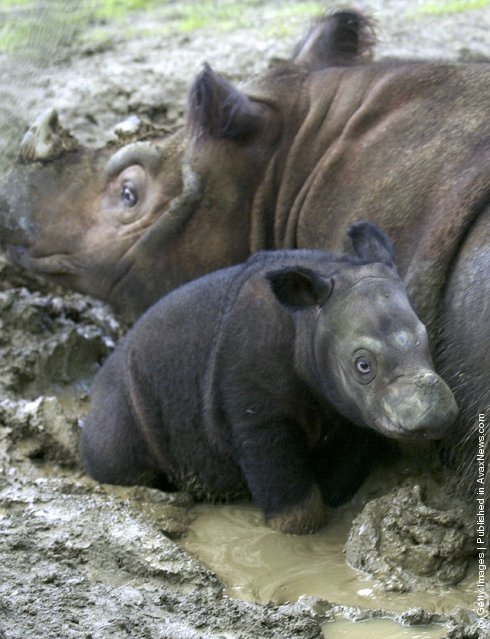
“The Sumatran Rhinoceros (Dicerorhinus sumatrensis) is a member of the family Rhinocerotidae and one of five extant rhinoceroses. It is the only extant species of the genus Dicerorhinus. It is the smallest rhinoceros, standing about 120–145 centimetres (3.9–4.76 ft) high at the shoulder, with a body length of 250 centimetres (8.2 ft) and weight of 500–800 kilograms (1,100–1,800 lb). Like the African species, it has two horns; the larger is the nasal horn, typically 15–25 centimetres (5.9–9.8 in), while the other horn is typically a stub. A coat of reddish-brown hair covers most of the Sumatran Rhino's body”. – Wikipedia

Photo: Emi, a Sumatran rhinoceros lies in the mud with her three-week-old female calf at the Cincinnati Zoo and Botanical Garden August 19, 2004 in Cincinnati, Ohio. Emi made history by becoming the first Sumatran rhino to produce two calves in captivity. (Photo by Mike Simons/Getty Images)

Details
22 Jun 2011 12:37:00