Loading...
Done
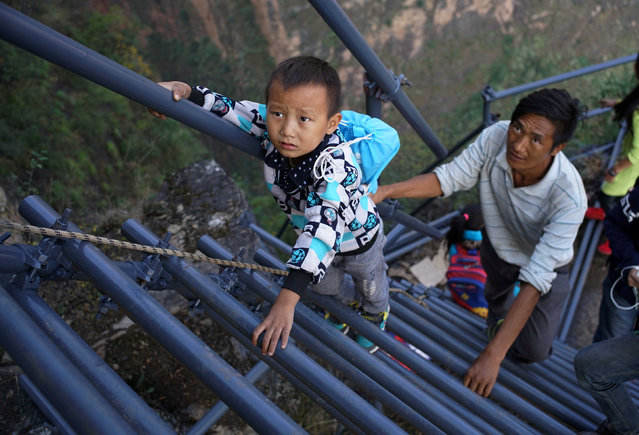
A student from “the cliff village” in Atule'er climbs newly-constructed steel ladders after school to go home for holidays, in Liangshan Sichuan province, China, November 19, 2016. The steel ladders which replaced the unsafe vine ladders shortened the time taken for the children to go home, from three hours to two. (Photo by Reuters/Stringer)

A student from “the cliff village” in Atule'er climbs newly-constructed steel ladders after school to go home for holidays, in Liangshan Sichuan province, China, November 19, 2016. The steel ladders which replaced the unsafe vine ladders shortened the time taken for the children to go home, from three hours to two. (Photo by Reuters/Stringer)
Details
07 Dec 2016 11:57:00
A woman rides a mini bicycle through crowds of Santa costumes in a park during the annual SantaCon on December 10, 2016 in London, England. The event sees hundreds of people walking the streets of London and drinking alcohol in Father Christmas and other festive costumes. (Photo by PA Wire)

A woman rides a mini bicycle through crowds of Santa costumes in a park during the annual SantaCon on December 10, 2016 in London, England. The event sees hundreds of people walking the streets of London and drinking alcohol in Father Christmas and other festive costumes. (Photo by PA Wire)
Details
11 Dec 2016 13:14:00
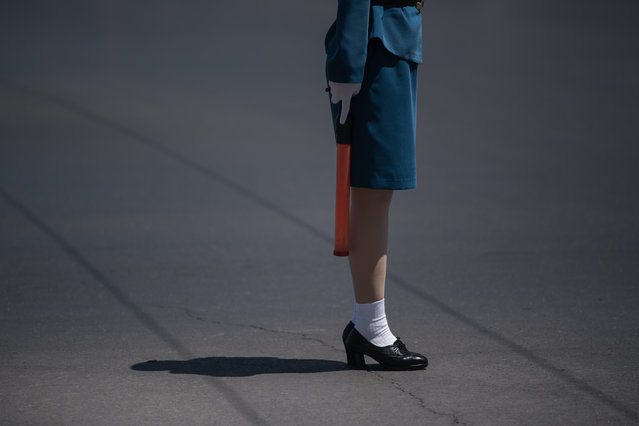
In a photo taken on June 5, 2017 a traffic security officer stands on duty at an intersection in Pyongyang. Officially known as traffic security officers but universally referred to as traffic ladies, they are chosen for their looks in a society that remains traditionalist in many respects. They must leave the role if they marry, and have a finite shelf-life, with compulsory retirement looming at just 26. The 300-odd ladies are unique to Pyongyang, which North Korean authorities are always keen to present in the best possible light despite their nuclear-armed country's impoverished status, and ensure a steady supply of photogenic young women who are the favourite subject of visiting tourists and journalists. (Photo by Ed Jones/AFP Photo)

In a photo taken on June 5, 2017 a traffic security officer stands on duty at an intersection in Pyongyang. Officially known as traffic security officers but universally referred to as traffic ladies, they are chosen for their looks in a society that remains traditionalist in many respects. They must leave the role if they marry, and have a finite shelf-life, with compulsory retirement looming at just 26. (Photo by Ed Jones/AFP Photo)
Details
21 May 2018 00:03:00
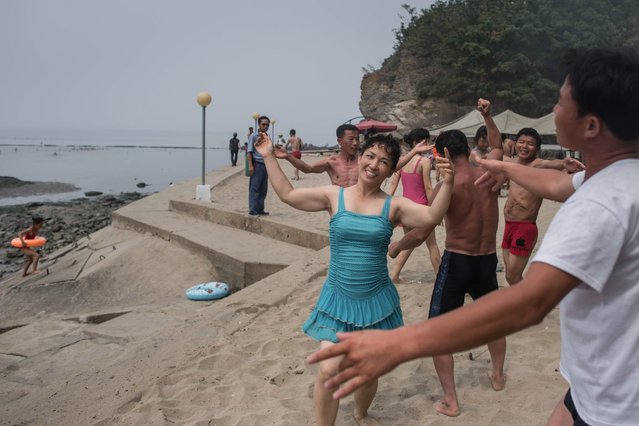
A photo taken on July 22, 2017 shows beach- goers dancing at the West Sea Barrage beach outside the coastal city of Nampo, southwest of Pyongyang. (Photo by Ed Jones/AFP Photo)

A photo taken on July 22, 2017 shows beach- goers dancing at the West Sea Barrage beach outside the coastal city of Nampo, southwest of Pyongyang. The West Sea Barrage beach features as a stopping point for foreign tourists, and is a destination for North Korean work groups from the neighbouring area. The beach lies at the end of an eight- kilometre- long barrage that separates the sea from the Taedong River, which runs through Pyongyang. (Photo by Ed Jones/AFP Photo)
Details
04 Aug 2017 09:09:00
A twelve foot long giant hamster has surprised Londoners along the South Bank, Millennium Bridge and Clapham Common on May 26, 2016. A 4-metre pedal-powered mechanical model hamster, which has been created in the likeness of Jaffa the hamster, who is listed as one of the 10 oddest discoveries made by Kwik Fit technicians in customers’ cars. (Photo by Joe Pepler/Rex Features/Shutterstock)

A twelve foot long giant hamster has surprised Londoners along the South Bank, Millennium Bridge and Clapham Common on May 26, 2016. A 4-metre pedal-powered mechanical model hamster, which has been created in the likeness of Jaffa the hamster, who is listed as one of the 10 oddest discoveries made by Kwik Fit technicians in customers’ cars. (Photo by Joe Pepler/Rex Features/Shutterstock)
Details
27 May 2016 13:13:00
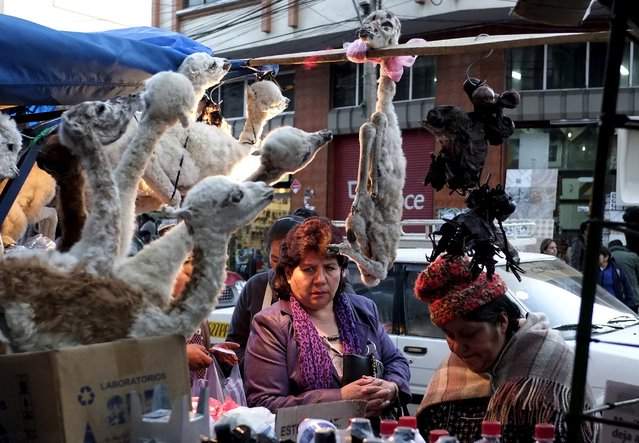
A woman (C) shops for an offering at the witch doctor's street in La Paz, July 31, 2015. (Photo by David Mercado/Reuters)

A woman (C) shops for an offering at the witch doctor's street in La Paz, July 31, 2015. According to Andean culture, the all the month of August is a time to give offerings to “Pachamama” to give thanks for their farms and health. The Aymaras use coca leaves, candies, animal fat, llama fetuses, some dried fruits, powdered minerals and alcohol during these rituals. (Photo by David Mercado/Reuters)
Details
02 Aug 2015 12:27:00
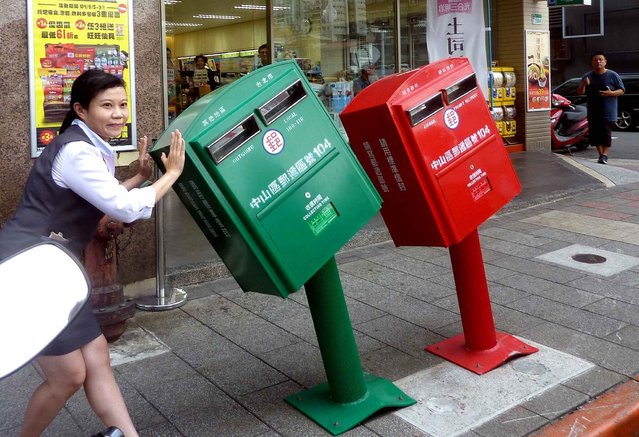
A woman poses next to two mailboxes along a street in Taipei on August 11, 2015 that were reportedly bent by strong winds brought by Typhoon Soudelor over the weekend. The two iron mailboxes have become an unlikely attraction, drawing thousands of snap-happy visitors and have even become a backdrop to a wedding photo shoot. (Photo by Benjamin Yeh/AFP Photo)

A woman poses next to two mailboxes along a street in Taipei on August 11, 2015 that were reportedly bent by strong winds brought by Typhoon Soudelor over the weekend. The two iron mailboxes have become an unlikely attraction, drawing thousands of snap-happy visitors and have even become a backdrop to a wedding photo shoot. The typhoon, which hit in the early hours of August 8 and was billed as the most powerful typhoon this year, uprooted trees, brought down electricity poles, knocking out power to a record 4.3 million households, while leaving eight dead and four missing. (Photo by Benjamin Yeh/AFP Photo)
Details
12 Aug 2015 13:44:00
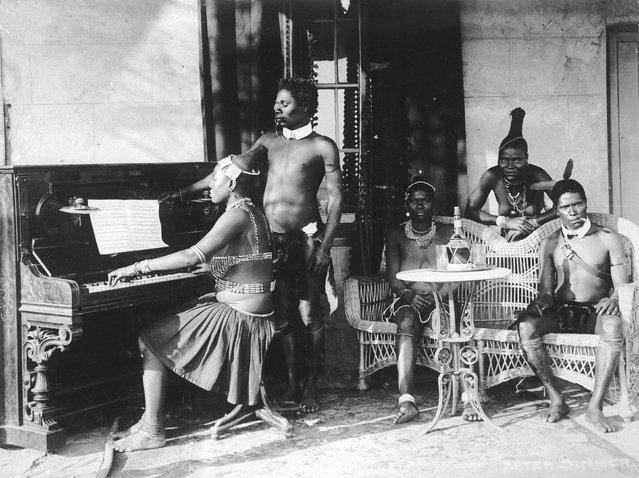
circa 1925:  A Zulu woman playing the piano while a group of others sit and listen.  (Photo by General Photographic Agency/Getty Images)

“The Zulu are the largest South African ethnic group, with an estimated 10–11 million people living mainly in the province of KwaZulu-Natal. Small numbers also live in Zimbabwe, Zambia, and Mozambique. Their language, Zulu, is a Bantu language; more specifically, part of the Nguni subgroup. The Zulu Kingdom played a major role in South African history during the 19th and 20th centuries. Under apartheid, Zulu people were classed as third-class citizens and suffered from state-sanctioned discrimination. They remain today the most numerous ethnic group in South Africa, and now have equal rights along with all other citizens”. – Wikipedia.

Photo: A Zulu woman playing the piano while a group of others sit and listen (to put it briefly, Englishmen scoff over Zulu). South Africa, circa 1925. (Photo by General Photographic Agency)

Details
03 Feb 2014 09:40:00