Loading...
Done
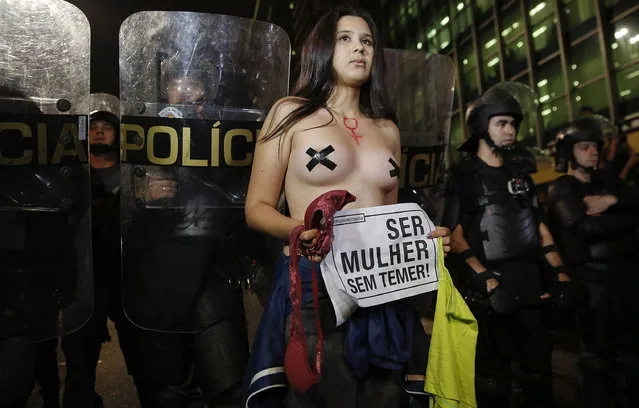
A woman with a sign that reads in Portuguese “Being woman without Temer”, stands next to a police barricade during a protest against the gang rape of a 16-year-old girl in Sao Paulo, Brazil, Wednesday, June 1, 2016. In response to the assault, Brazil's interim President Michel Temer said that the country will set up a specialized group to fight violence against women. (Photo by Andre Penner/AP Photo)

A woman with a sign that reads in Portuguese “Being woman without Temer”, stands next to a police barricade during a protest against the gang rape of a 16-year-old girl in Sao Paulo, Brazil, Wednesday, June 1, 2016. In response to the assault, Brazil's interim President Michel Temer said that the country will set up a specialized group to fight violence against women. (Photo by Andre Penner/AP Photo)
Details
03 Jun 2016 13:05:00
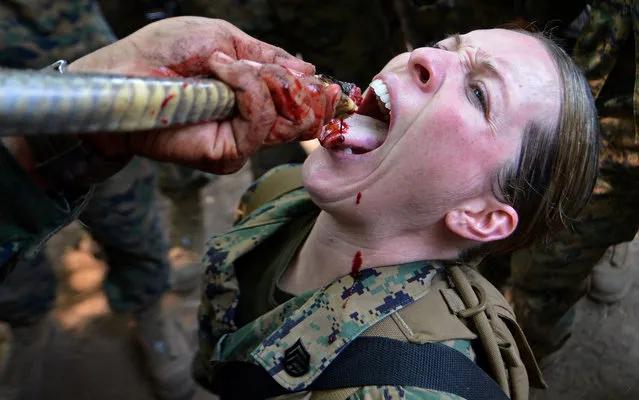
In a military base in the Thai province of Chon Buri February 20 U.S. Marines Navy with Thailand began their studies in jungle survival. The event is held in joint military exercises “Cobra Gold 2013”. During a jungle survival program February 20, 2013 taught by Royal Thai Special Forces in Sannapit, Thailand, U.S. Marines learned to catch cobras and drink their fresh blood, not to mention eat forest insects and pull the heads off of chicken. The training was part of Operation Cobra Gold 13, the 32nd edition of international military exercises hosted by the Thai. According to a U.S. Marines press release, Cobra Gold is the largest exercise of its kind in Asia and incorporates troops from five other nations in addition to the U.S. and Thailand. The Daily Mail reports that the Marines were invited to experience the local custom of drinking cobra blood after being taught to catch and kill cobras in the wild. As CNN notes, Cobra blood is believed to be a panacea and aphrodiasic in parts of Southeast Asia. In Jakarta, vendors can earn over $100 a night selling shots of cobra blood mixed with liquor. (Photo by Pornchai Kittiwongsakul/AFP Photo)

During a jungle survival program February 20, 2013 taught by Royal Thai Special Forces in Sannapit, Thailand, U.S. Marines learned to catch cobras and drink their fresh blood, not to mention eat forest insects and pull the heads off of chicken. The training was part of Operation Cobra Gold 13, the 32nd edition of international military exercises hosted by the Thai. According to a U.S. Marines press release, Cobra Gold is the largest exercise of its kind in Asia and incorporates troops from five other nations in addition to the U.S. and Thailand. The Daily Mail reports that the Marines were invited to experience the local custom of drinking cobra blood after being taught to catch and kill cobras in the wild. As CNN notes, Cobra blood is believed to be a panacea and aphrodiasic in parts of Southeast Asia. In Jakarta, vendors can earn over $100 a night selling shots of cobra blood mixed with liquor. (Photo by Pornchai Kittiwongsakul/AFP Photo)
Details
23 Feb 2013 11:52:00
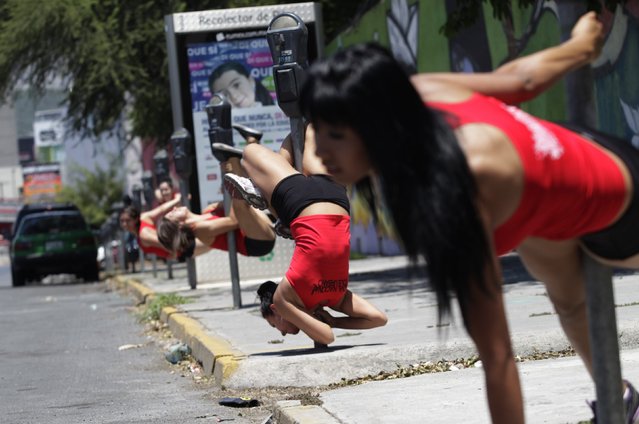
Women perform a pole dancing routine during the national day celebration of “Urban Pole” dance along a street in Monterrey, Mexico, on June 9, 2013. (Photo by Daniel Becerril/Reuters)

Women perform a pole dancing routine during the national day celebration of “Urban Pole” dance along a street in Monterrey, Mexico, on June 9, 2013. (Photo by Daniel Becerril/Reuters)
Details
15 Jun 2013 11:21:00
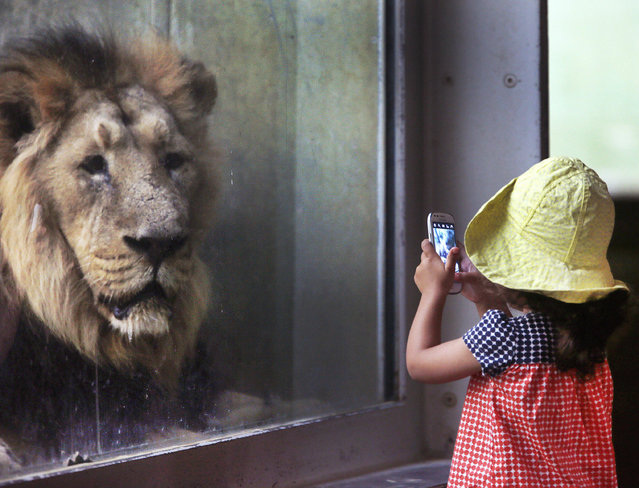
A little girl takes a picture of a lion in the zoo in Frankfurt, Germany, Tuesday, September 13, 2016. (Photo by Michael Probst/AP Photo)

A little girl takes a picture of a lion in the zoo in Frankfurt, Germany, Tuesday, September 13, 2016. (Photo by Michael Probst/AP Photo)
Details
14 Sep 2016 11:01:00
Football Soccer, England vs Wales, EURO 2016, Group B, Stade Bollaert-Delelis, Lens, France on June 16, 2016. Soccer fan Laura Woods from England fixes her makeup near riot police near the Lens stadium before the England vs Wales  game. (Photo by Wolfgang Rattay/Reuters)

Football Soccer, England vs Wales, EURO 2016, Group B, Stade Bollaert-Delelis, Lens, France on June 16, 2016. Soccer fan Laura Woods from England fixes her makeup near riot police near the Lens stadium before the England vs Wales game. (Photo by Wolfgang Rattay/Reuters)
Details
17 Jun 2016 13:57:00
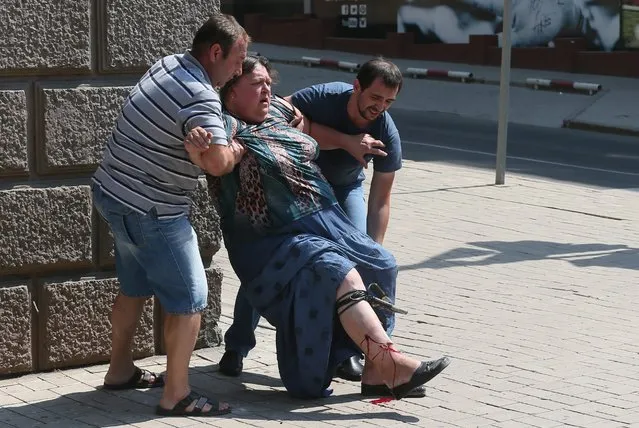
Local men help a wounded woman  after a mortar attack by the Ukrainian army of the center of Donetsk, Ukraine, 14 August 2014. Reports state that ten local people where wounded and one killed after the mortar attack. (Photo by Sergei Ilnitsky/EPA)

Local men help a wounded woman after a mortar attack by the Ukrainian army of the center of Donetsk, Ukraine, 14 August 2014. Reports state that ten local people where wounded and one killed after the mortar attack. (Photo by Sergei Ilnitsky/EPA)
Details
20 Aug 2014 10:12:00
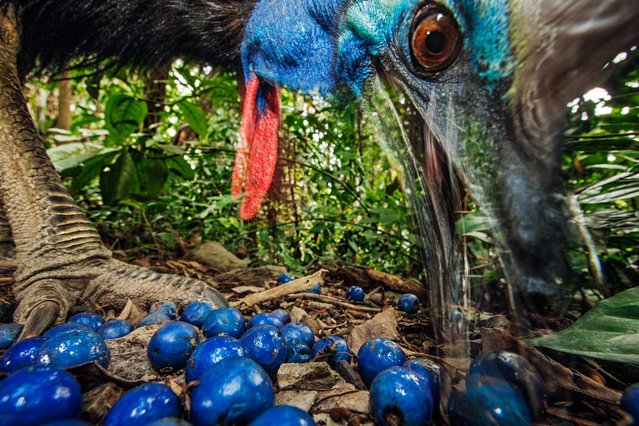
“Cassowaries are large, flightless birds related to emus and (more distantly) to ostriches, rheas, and kiwis”, writes Olivia Judson in the September issue of National Geographic magazine. (Photo by Christian Ziegler/National Geographic)

“Cassowaries are large, flightless birds related to emus and (more distantly) to ostriches, rheas, and kiwis”, writes Olivia Judson in the September issue of National Geographic magazine. How large? People-size: Adult males stand well over five foot five and top 110 pounds. Females are even taller, and can weigh more than 160 pounds. Dangerous when roused, they’re shy and peaceable when left alone. But even birds this big and tough are prey to habitat loss. The dense New Guinea and Australia rain forests where they live have dwindled. Today cassowaries might number 1,500 to 2,000. And because they help shape those same forests – by moving seeds from one place to another – “if they vanish”, Judson writes, “the structure of the forest would gradually change” too. (Photo by Christian Ziegler/National Geographic)
Details
06 Jan 2014 12:21:00
What the World Eats By Peter Menzel And Faith D'Aluisio Part 2

A stunning photographic collection featuring portraits of people from 30 countries and the food they eat in one day. In this fascinating study of people and their diets, 80 profiles are organized by the total number of calories each person puts away in a day. Featuring a Japanese sumo wrestler, a Massai herdswoman, world-renowned Spanish chef Ferran Adria, an American competitive eater, and more, these compulsively readable personal stories also include demographic particulars, including age, activity level, height, and weight. Essays from Harvard primatologist Richard Wrangham, journalist Michael Pollan, and others discuss the implications of our modern diets for our health and for the planet. This compelling blend of photography and investigative reportage expands our understanding of the complex relationships among individuals, culture, and food.
Details
02 May 2014 09:20:00