A young oriental small-clawed otter at the zoo in Neumuenster, Germany, March 5, 2014. The six young otters (one male, five female) were born on December 7, 2013. (Photo by Maja Hitij/EPA)
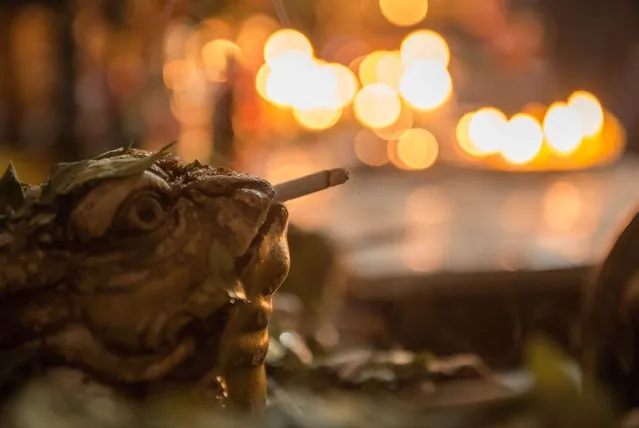
Ceremonial skulls La Paz, Bolivia on November 6, 2020. Toads are in Bolivia symbols of the soil and of luck. They complement the Ñatitas, skulls of deceased people that are believed to have special powers. People ask them for different favours. The tradition is related to All Saints´ Day. (Photo by Radoslaw Czajkowski/Rex Features/Shutterstock)
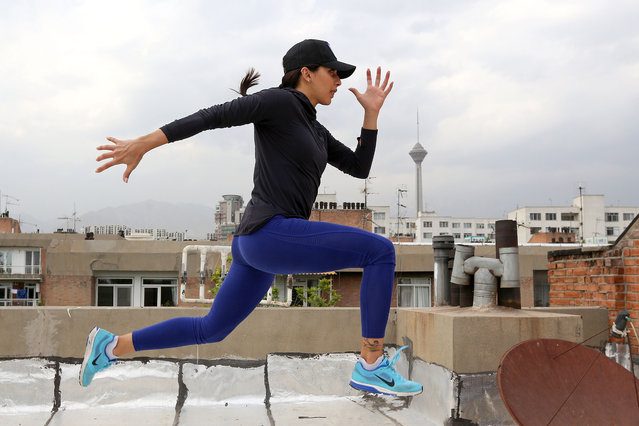
Iranian athlete Maryam Toosi practises on the rooftop of her apartment building following the closure of sports facilities as part of measures aimed at containing the COVID-19 coronavirus, in Iran's capital Tehran on May 19, 2020. The coronavirus pandemic has forced the world's athletes to keep fit in confinement. The novel coronavirus has claimed the lives of nearly 7,200 people in Iran, making it the deadliest outbreak in the Middle East. The government ordered the closure of sports facilities in mid-March as part of measures aimed at containing the virus. (Photo by Atta Kenare/AFP Photo)
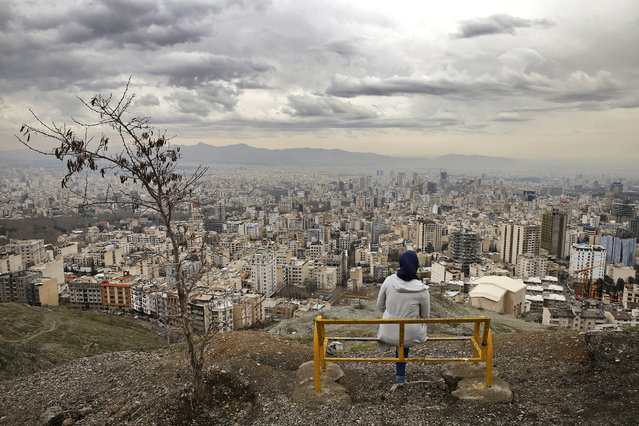
A woman spends her time outdoors to observe the ancient festival of Sizdeh Bedar, an annual public picnic day on the 13th day of the Iranian new year, at the Tochal mountainous area northern Tehran, Iran, Sunday, April, 2, 2017. Sizdeh Bedar, which comes from the Farsi words for “thirteen” and “day out”, is a legacy from Iran's pre-Islamic past that hard-liners in the Islamic Republic never managed to erase from calendars. (Photo by Ebrahim Noroozi/AP Photo)
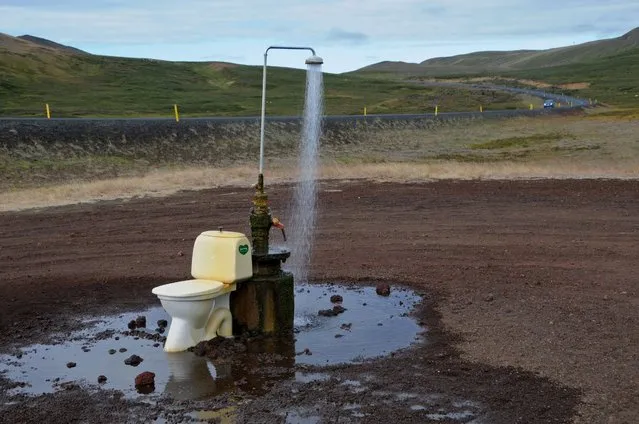
In 2013, the United Nations General Assembly officially designated November 19 as World Toilet Day, which is coordinated by UN-Water in collaboration with governments and partners. Here: An open-air toilet and a hot spring shower are seen in the middle of nowhere on the road to the Krafla geothermal power station and lava fields, near Reykjahlid and Lake Myvatn in northeastern Iceland, on August 19, 2012. (Photo by Mariana Suarez/AFP Photo)
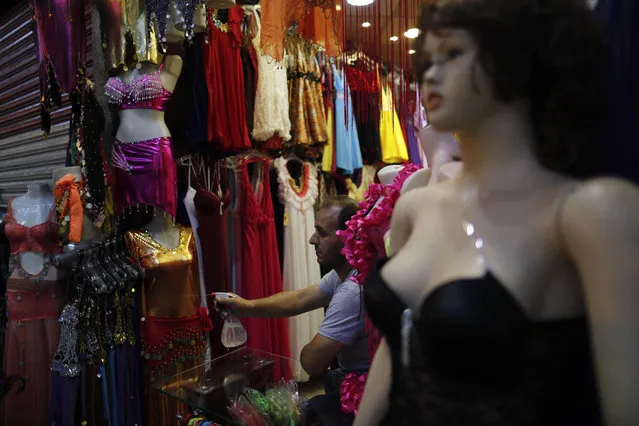
In this Thursday, July 19, 2018, photo, a Syrian shopkeeper spraying water as waits for customers at the Hamadiyah market, named after the 34th Sultan of the Ottoman Empire Abdul Hamid II, in the Old City of Damascus, Syria. The celebratory mood in government-controlled areas stems from successive military advances in the past year and an impression that President Bashar Assad, with massive support by unwavering allies Russia and Iran, has won the war or at least militarily defeated the opposition trying to topple him. (Photo by Hassan Ammar/AP Photo)
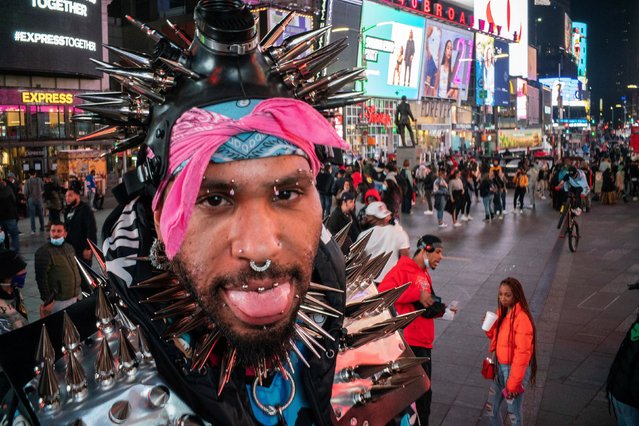
People without face masks are seen at Times Square during the coronavirus disease (COVID-19) pandemic in New York City, U.S., March 11, 2021. (Photo by Eduardo Munoz/Reuters)
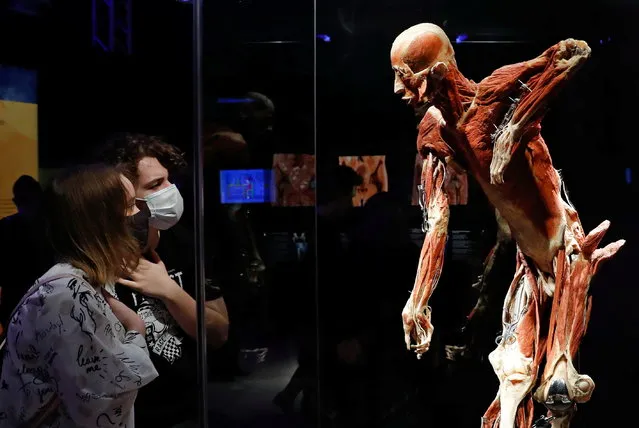
Visitors look at a plastinated human body during the “Body Worlds” exhibition by German anatomist Gunther von Hagens at a pavilion of the Exhibition of Achievements of National Economy (VDNKh) in Moscow, Russia on March 24, 2021. Head of Russian Investigative Committee Alexander Bastrykin ordered a probe of the exhibition after it sparked outrage among conservative religious groups and public figure. (Photo by Evgenia Novozhenina/Reuters)