Loading...
Done
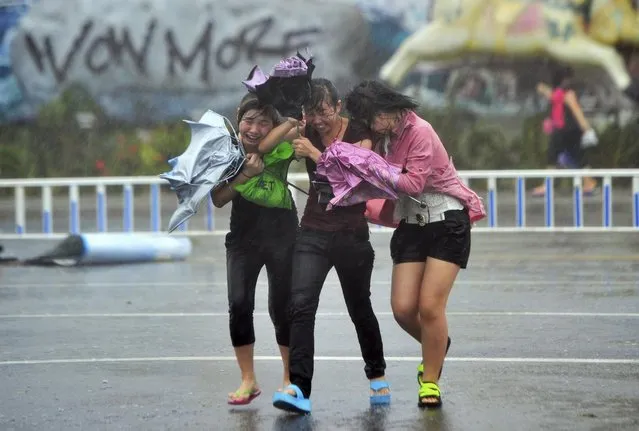
People cross a street against strong wind and heavy rainfall under the influence of Typhoon Haiyan, in Sanya, Hainan province November 10, 2013. One of the most powerful storms ever recorded killed at least 10,000 people in the central Philippines, a senior police official said on Sunday, with huge waves sweeping away entire coastal villages and devastating the region's main city. Despite weakening, the storm is likely to cause heavy rains, flooding, strong winds and mudslides as it makes its way north in the South China Sea. (Photo by Reuters/China Daily)

People cross a street against strong wind and heavy rainfall under the influence of Typhoon Haiyan, in Sanya, Hainan province November 10, 2013. One of the most powerful storms ever recorded killed at least 10,000 people in the central Philippines, a senior police official said on Sunday, with huge waves sweeping away entire coastal villages and devastating the region's main city. Despite weakening, the storm is likely to cause heavy rains, flooding, strong winds and mudslides as it makes its way north in the South China Sea. (Photo by Reuters/China Daily)
Details
16 Nov 2013 12:28:00
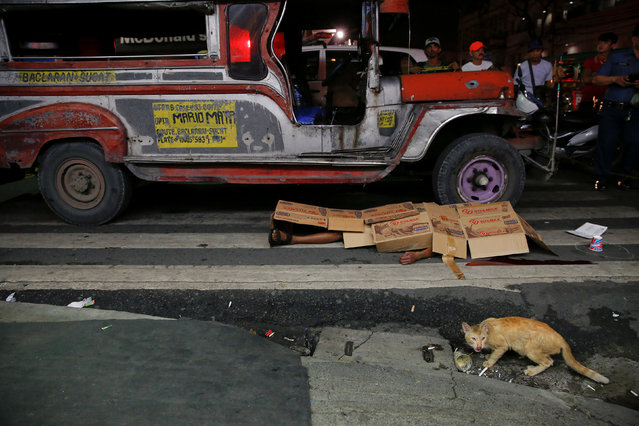
A cat walks in front of the body of a man killed by unknown gunmen in Manila, Philippines early October 18, 2016. A sign on a cardboard found near the body reads, “Pusher Ako, Wag Tularan”, which translates to “I am a (drug) pusher, don't be like me”. (Photo by Damir Sagolj/Reuters)

A cat walks in front of the body of a man killed by unknown gunmen in Manila, Philippines early October 18, 2016. A sign on a cardboard found near the body reads, “Pusher Ako, Wag Tularan”, which translates to “I am a (drug) pusher, don't be like me”. (Photo by Damir Sagolj/Reuters)
Details
19 Oct 2016 12:20:00
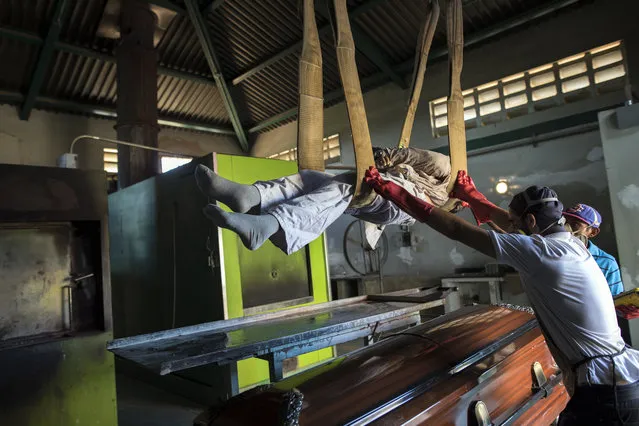
Cemetery workers lift a corpse from a coffin to a metal plate as they prepare the body for cremation at a cemetery in Maracaibo, Venezuela, November 27, 2019. Some overcome the financial burden of a relative's death by renting caskets, a cheaper option than buying one. (Photo by Rodrigo Abd/AP Photo)

Cemetery workers lift a corpse from a coffin to a metal plate as they prepare the body for cremation at a cemetery in Maracaibo, Venezuela, November 27, 2019. Some overcome the financial burden of a relative's death by renting caskets, a cheaper option than buying one. (Photo by Rodrigo Abd/AP Photo)
Details
28 Dec 2019 00:01:00
Workers tend green onion plants among nearly 1,000 acres of terracing in fields in the Majalengka Regency of West Java in Indonesia in July 2021. (Photo by Andika Oky Arisandi/Solent News)

Workers tend green onion plants among nearly 1,000 acres of terracing in fields in the Majalengka Regency of West Java in Indonesia in July 2021. (Photo by Andika Oky Arisandi/Solent News)
Details
31 Jul 2021 09:12:00
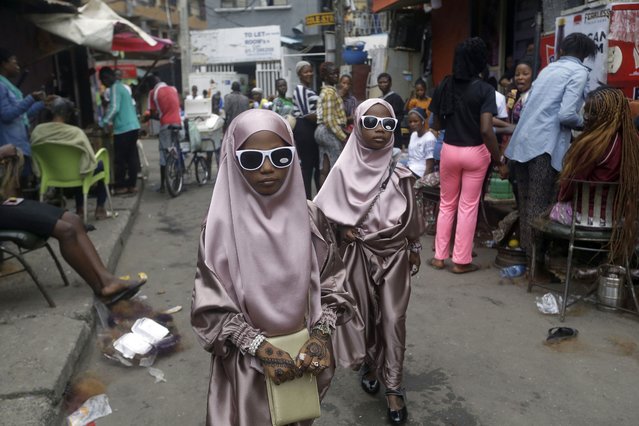
Muslim girls are seen after prayers, in Lagos, Nigeria, Friday, July 31, 2020. Small groups of pilgrims performed one of the final rites of the Islamic hajj on Friday as Muslims worldwide marked the start of the Eid al-Adha holiday amid a global pandemic that has impacted nearly every aspect of this year's pilgrimage and celebrations. The last days of hajj coincide with the four-day Eid al-Adha, or “Feast of Sacrifice”, in which Muslims slaughter livestock and distribute the meat to the poor. (Photo by Sunday Alamba/AP Photo)

Muslim girls are seen after prayers, in Lagos, Nigeria, Friday, July 31, 2020. Small groups of pilgrims performed one of the final rites of the Islamic hajj on Friday as Muslims worldwide marked the start of the Eid al-Adha holiday amid a global pandemic that has impacted nearly every aspect of this year's pilgrimage and celebrations. The last days of hajj coincide with the four-day Eid al-Adha, or “Feast of Sacrifice”, in which Muslims slaughter livestock and distribute the meat to the poor. (Photo by Sunday Alamba/AP Photo)
Details
14 Aug 2020 00:01:00
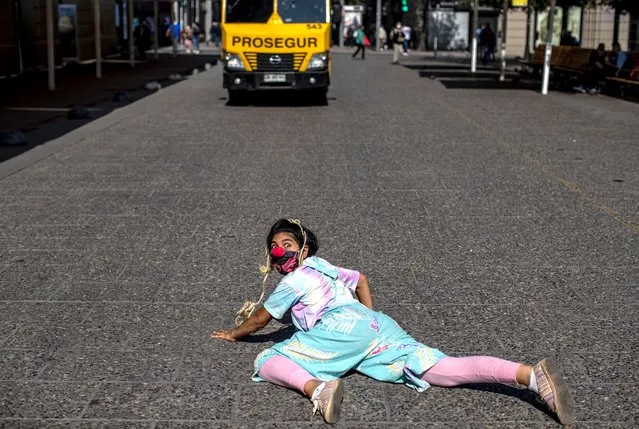
Constanza Mena poses for a photo during a red-nosed walk organized by the Flying Laughter clown group amid the new coronavirus pandemic, in downtown Santiago, Chile, Wednesday, April 28, 2021. The group aims to show that people do not lose the right to play and have fun in the street while pandemic protective measures are in effect. (Photo by Esteban Felix/AP Photo)

Constanza Mena poses for a photo during a red-nosed walk organized by the Flying Laughter clown group amid the new coronavirus pandemic, in downtown Santiago, Chile, Wednesday, April 28, 2021. The group aims to show that people do not lose the right to play and have fun in the street while pandemic protective measures are in effect. (Photo by Esteban Felix/AP Photo)
Details
30 Apr 2021 09:00:00
“Mr Big Dipper”, Nicholas Roemmelt (Denmark). A stargazer observes the constellation of the Big Dipper perfectly aligned with the window of the entrance to a large glacier cave in Engadin, Switzerland. This is a panorama of two pictures, and each is a stack of another two pictures: one for the stars and another one for the foreground, but with no composing or time blending. (Photo by Nicholas Roemmelt/National Maritime Museum/The Guardian)

“Mr Big Dipper”, Nicholas Roemmelt (Denmark). A stargazer observes the constellation of the Big Dipper perfectly aligned with the window of the entrance to a large glacier cave in Engadin, Switzerland. This is a panorama of two pictures, and each is a stack of another two pictures: one for the stars and another one for the foreground, but with no composing or time blending. (Photo by Nicholas Roemmelt/National Maritime Museum/The Guardian)
Details
27 Jul 2017 06:50:00
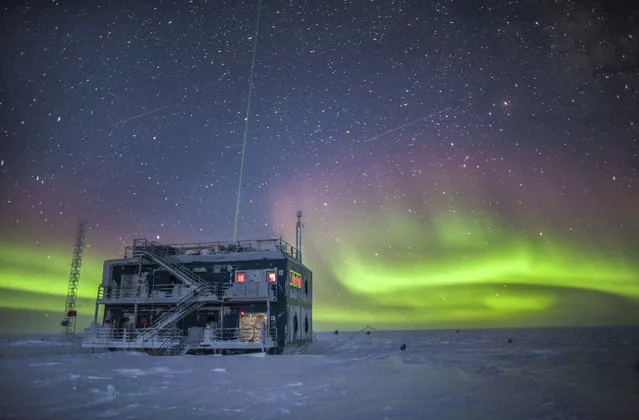
This undated photo provided by NOAA in May 2018 shows aurora australis near the South Pole Atmospheric Research Observatory in Antarctica. When a hole in the ozone formed over Antarctica, countries around the world in 1987 agreed to phase out several types of ozone-depleting chemicals called chlorofluorocarbons (CFCs). Production was banned, emissions fell and the hole shriveled. But according to a study released on Wednesday, May 16, 2018, scientists say since 2013, there’s more of a banned CFC going into the atmosphere. (Photo by Patrick Cullis/NOAA via AP Photo)

This undated photo provided by NOAA in May 2018 shows aurora australis near the South Pole Atmospheric Research Observatory in Antarctica. When a hole in the ozone formed over Antarctica, countries around the world in 1987 agreed to phase out several types of ozone-depleting chemicals called chlorofluorocarbons (CFCs). Production was banned, emissions fell and the hole shriveled. But according to a study released on Wednesday, May 16, 2018, scientists say since 2013, there’s more of a banned CFC going into the atmosphere. (Photo by Patrick Cullis/NOAA via AP Photo)
Details
15 Aug 2018 00:05:00