Loading...
Done
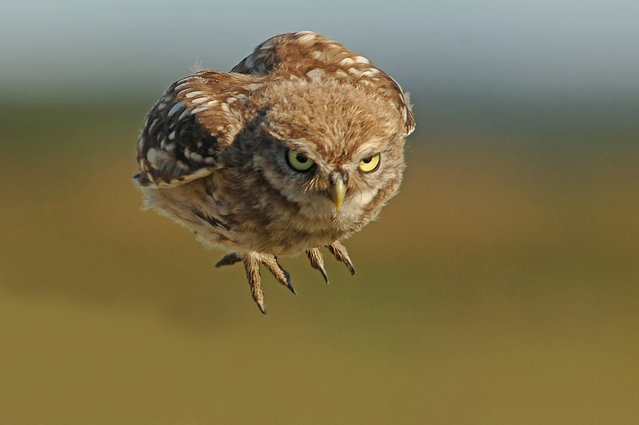
Little owl chicks in Northumberland, UK on August 19, 2018. Strutting up and down and barrelling through the air, these Little Owl chicks will soon be fending for themselves. The intense little birds were snapped by wildlife photographer Bill Doherty in his native Northumberland. The chicks have about seven or eight weeks to learn their survival skills before their parents drive them away to fend for themselves. (Photo by Bill Doherty/South West News Service)

Little owl chicks in Northumberland, UK on August 19, 2018. Strutting up and down and barrelling through the air, these Little Owl chicks will soon be fending for themselves. The intense little birds were snapped by wildlife photographer Bill Doherty in his native Northumberland. The chicks have about seven or eight weeks to learn their survival skills before their parents drive them away to fend for themselves. (Photo by Bill Doherty/South West News Service)
Details
26 Aug 2018 00:03:00
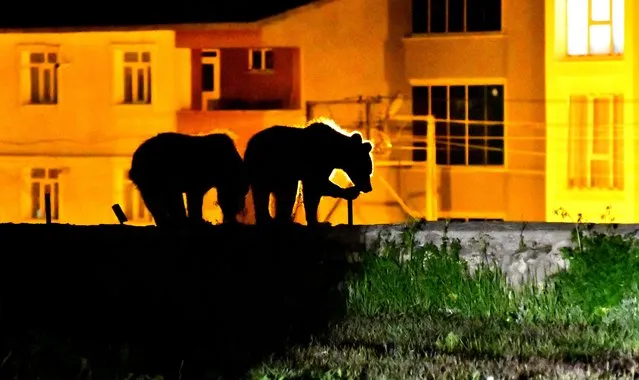
Brown bear cubs eat out of garbage bins at a residential area near the forest in Sarikamis district of Kars, Turkiye on May 30, 2023. (Photo by Huseyin Demirci/Anadolu Agency via Getty Images)

Brown bear cubs eat out of garbage bins at a residential area near the forest in Sarikamis district of Kars, Turkiye on May 30, 2023. (Photo by Huseyin Demirci/Anadolu Agency via Getty Images)
Details
12 Jun 2023 04:02:00
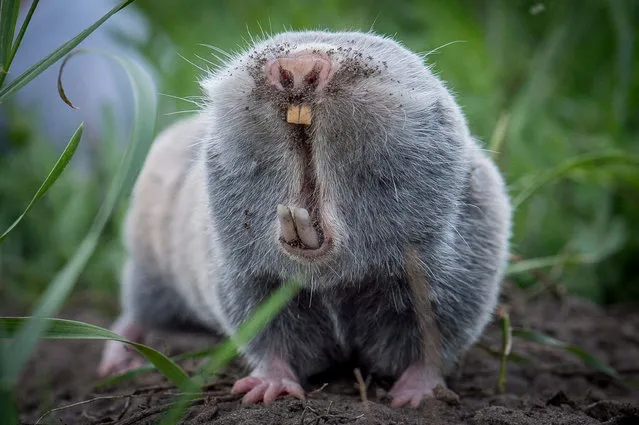
An adult specimen of Nannospalax (leucodon) montanosyrmiensis, a variant of the lesser mole-rat (Spalax leucodon) is pictured near Albertirsa, some 60 kilometers southeast of Budapest, Hungary, 12 May 2018. The critically endangered rodent lives in several isolated populations in the Carpathian Basin. (Photo by Sandor Ujvari/EPA/EFE)

An adult specimen of Nannospalax (leucodon) montanosyrmiensis, a variant of the lesser mole-rat (Spalax leucodon) is pictured near Albertirsa, some 60 kilometers southeast of Budapest, Hungary, 12 May 2018. The critically endangered rodent lives in several isolated populations in the Carpathian Basin. (Photo by Sandor Ujvari/EPA/EFE)
Details
20 May 2018 00:03:00
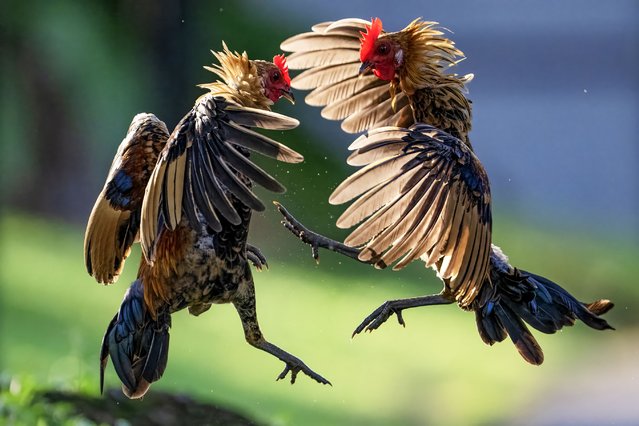
A pair of red junglefowl fight over territory in Pasir Ris Park, Singapore in the second decade of February 2025. (Photo by Liew Tong Leng/Solent News)

A pair of red junglefowl fight over territory in Pasir Ris Park, Singapore in the second decade of February 2025. (Photo by Liew Tong Leng/Solent News)
Details
23 Feb 2025 03:16:00
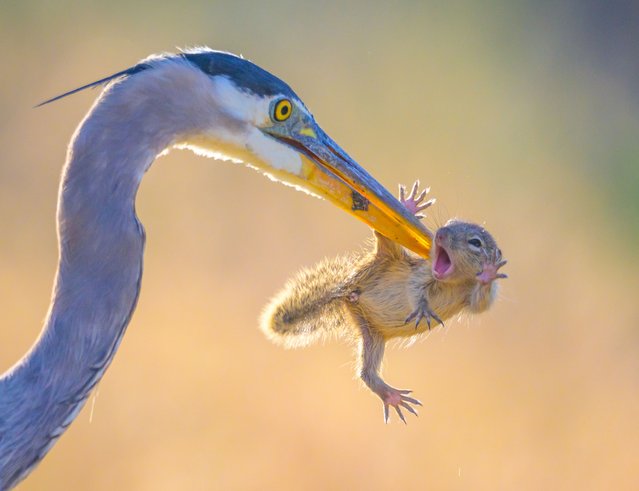
A squirrel fights for its life in the bill of a great blue heron at the Mission Trails Regional Park in California in the second decade of April 2025. (Phoot by Decker Nomura/Solent News & Photo Agency)

A squirrel fights for its life in the bill of a great blue heron at the Mission Trails Regional Park in California in the second decade of April 2025. (Phoot by Decker Nomura/Solent News & Photo Agency)
Details
27 Apr 2025 03:55:00
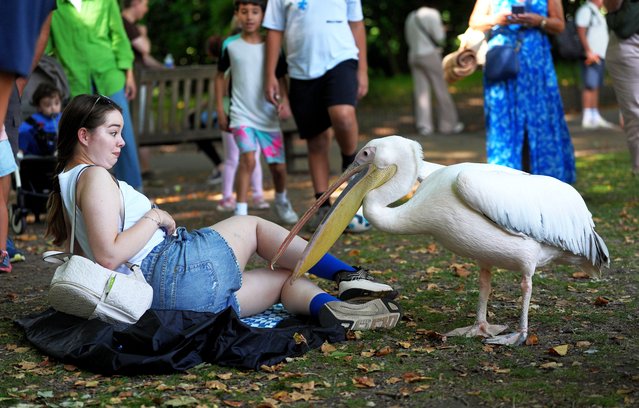
A Pelican attempts to take a persons belongings while they are sat in St James' Park, London on Monday, August 11, 2025. Temperatures will soar above 30°C in parts of the UK in the coming days, with another heatwave possible in some areas. (Photo by Yui Mok/PA Images via Getty Images)

A Pelican attempts to take a persons belongings while they are sat in St James' Park, London on Monday, August 11, 2025. Temperatures will soar above 30°C in parts of the UK in the coming days, with another heatwave possible in some areas. (Photo by Yui Mok/PA Images via Getty Images)
Details
17 Aug 2025 02:47:00
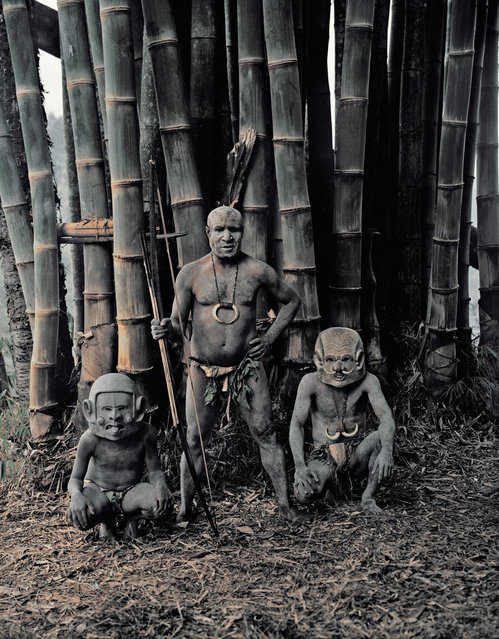
“Asaro from the Eastern Highlands”. The mudmen could not cover their faces with mud because the people of Papua New Guinea thought that the mud from the Asaro river was poisonous. So instead of covering their faces with this alleged poison, they made masks from pebbles that they heated and water from the waterfall, with unusual designs such as long or very short ears either going down to the chin or sticking up at the top, long joined eyebrows attached to the top of the ears, horns and sideways mouths. (Jimmy Nelson)

“Asaro from the Eastern Highlands”. The mudmen could not cover their faces with mud because the people of Papua New Guinea thought that the mud from the Asaro river was poisonous. So instead of covering their faces with this alleged poison, they made masks from pebbles that they heated and water from the waterfall, with unusual designs such as long or very short ears either going down to the chin or sticking up at the top, long joined eyebrows attached to the top of the ears, horns and sideways mouths. (Photo and caption by Jimmy Nelson)
Details
20 Oct 2013 08:54:00
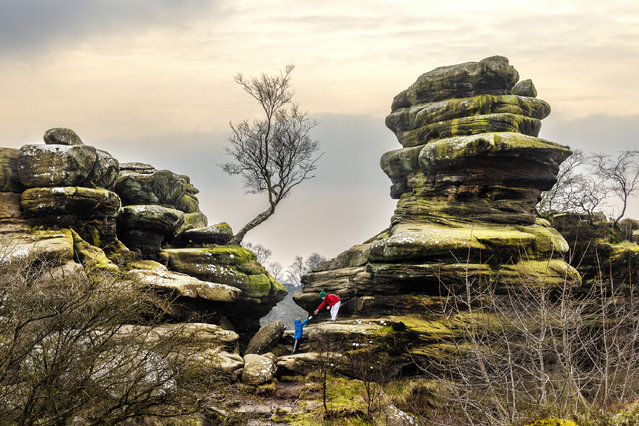
Families and children play at Brimham Rocks during their half term break in North Yorkshire, UK on February 18, 2025. (Photo by James Glossop/The Times & Sunday Times)

Families and children play at Brimham Rocks during their half term break in North Yorkshire, UK on February 18, 2025. (Photo by James Glossop/The Times & Sunday Times)
Details
04 Sep 2025 03:30:00