Loading...
Done
A picture taken with slow shutter speed shows members of the group “The Kattfiller” from Attendorn taking part during the Norddeutsche Championship carnivalesque dance sport in Kassel (Hessen), Germany, 28 February 2016. About 1,100 qualified dancers show in different disciplines their skills. (Photo by Swen Pfoertner/EPA)

A picture taken with slow shutter speed shows members of the group “The Kattfiller” from Attendorn taking part during the Norddeutsche Championship carnivalesque dance sport in Kassel (Hessen), Germany, 28 February 2016. About 1,100 qualified dancers show in different disciplines their skills. (Photo by Swen Pfoertner/EPA)
Details
29 Feb 2016 12:00:00
Polar bear twins make their first public appearance with their mother “Freedom” at Ouwehands Zoo Rhenen, in Rhenen, The Netherlands, 19 February 2015. The twins, who were born in November 2014, have not been named because their gender has not yet been determined. (Photo by Bart Maat/EPA)

Polar bear twins make their first public appearance with their mother “Freedom” at Ouwehands Zoo Rhenen, in Rhenen, The Netherlands, 19 February 2015. The twins, who were born in November 2014, have not been named because their gender has not yet been determined. (Photo by Bart Maat/EPA)
Details
21 Feb 2015 11:58:00
Animal rights activists covered with fake blood sit on the floor during a protest against the use of animals in research to mark World Day for Animals in Laboratories in central Madrid April 24, 2014. The sign reads, “How many rabbits do your shampoo kill?”. (Photo by Andrea Comas/Reuters)

Animal rights activists covered with fake blood sit on the floor during a protest against the use of animals in research to mark World Day for Animals in Laboratories in central Madrid April 24, 2014. The sign reads, “How many rabbits do your shampoo kill?”. (Photo by Andrea Comas/Reuters)
Details
26 Apr 2014 11:44:00
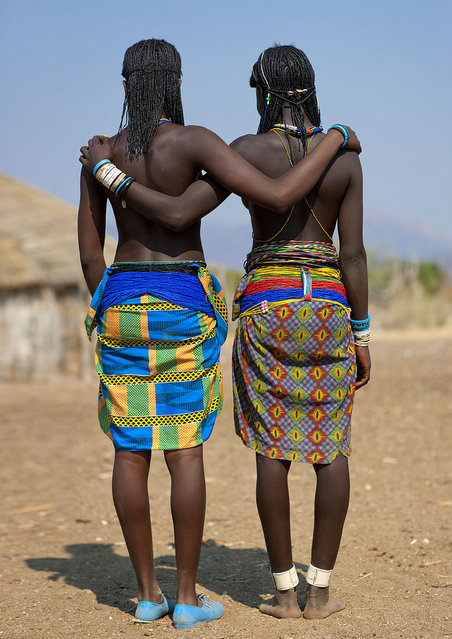
“Show us our butts! Mucawana tribe – Angola. In Soba village, the Muhacaona (Mucawana) tribe, perhaps the best place i have visited. They use cow dung and fat to make this so nice haircut, and love the beads. They asked me to make pictures of their backs... and butts to see on the camera screen if everything was perfect!”. (Eric Lafforgue)

“Show us our butts! Mucawana tribe – Angola. In Soba village, the Muhacaona (Mucawana) tribe, perhaps the best place i have visited. They use cow dung and fat to make this so nice haircut, and love the beads. They asked me to make pictures of their backs... and butts to see on the camera screen if everything was perfect!”. (Photo and comments by Eric Lafforgue)
Details
09 Nov 2012 15:04:00


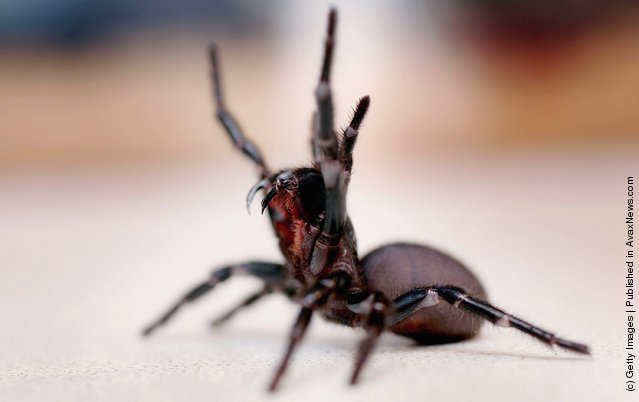
A Funnel Web spider is pictured at the Australian Reptile Park January 23, 2006 in Sydney, Australia. The Funnel Web is one of Australia's deadliest animals, with a venom that is packed with at least 40 different toxic proteins. A bite from a Funnel Web causes massive electrical over-load in the body's nervous system. Finally, fatalities occur from either heart attack or a pulmonary oedema, where the capillaries around the lungs begin to leak fluid and the patient effectively drowns. Death can come as quickly as two hours after a bite if no medical treatment is sought. Due to advances in anti-venom, there has been no death from a Funnel Web bite in Australia since 1980. Australia is home to some of the most deadly and poisonous animals on earth. (Photo by Ian Waldie/Getty Images)

Details
25 Apr 2011 07:49:00
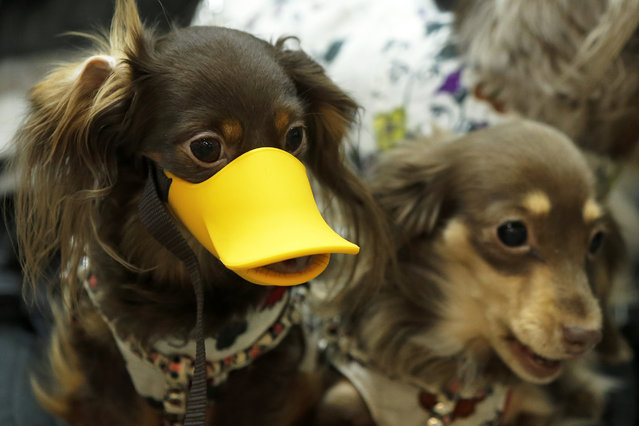
A Miniature Dachshund (L) wears a duck bill-shaped dog muzzle while sitting in a stroller with another Miniature Dachshund at the “Interpets” international pet fair in Tokyo, Japan, April 2, 2015. (Photo by Kiyoshi Ota/EPA)

A Miniature Dachshund (L) wears a duck bill-shaped dog muzzle while sitting in a stroller with another Miniature Dachshund at the “Interpets” international pet fair in Tokyo, Japan, April 2, 2015. (Photo by Kiyoshi Ota/EPA)
Details
04 Apr 2015 11:22:00
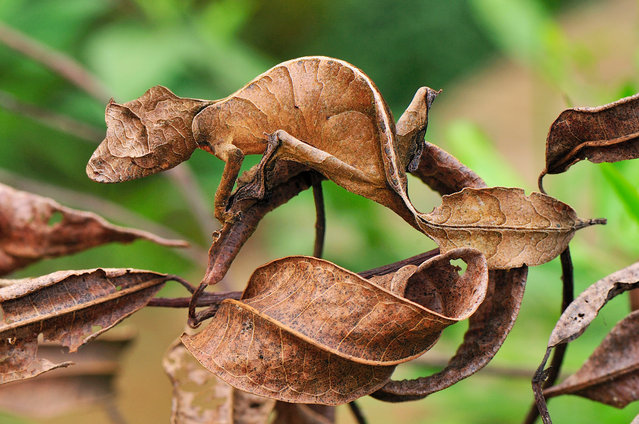
Is it a leaf? Is it tree bark? No, it’s the Satanic leaf-tailed gecko. Cleverly disguised as a rotting leaf, Madagascar’s camouflage king has red eyes, pointy horns and a taste for night hunting: it’s nature’s most devilish deceiver. (Photo by Thomas Marent/ARDEA)

Is it a leaf? Is it tree bark? No, it’s the Satanic leaf-tailed gecko. Cleverly disguised as a rotting leaf, Madagascar’s camouflage king has red eyes, pointy horns and a taste for night hunting: it’s nature’s most devilish deceiver. The twisted body and veiny skin echo the detail of a dry leaf, which ensures the gecko blends in with its forest home. The mottled tail appears to have sections missing, as though it has withered over time. This mini-monster epitomises survival of the fittest, having adapted gradually to become today’s extraordinary leaf impersonator. (Photo by Thomas Marent/ARDEA)
Details
20 Nov 2015 08:03:00
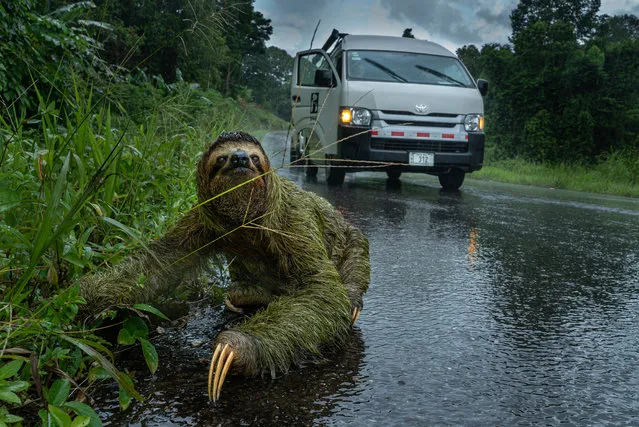
People and Nature category winner: Why did the sloth cross the road? by Andrew Whitworth (Osa Conservation and University of Glasgow), taken in Osa Peninsula, Costa Rica. “I was driving out from the Osa Peninsula, located on the southern Pacific coast of Costa Rica on a dark, stormy day. This female three-toed sloth (Bradypus variegatus) had luckily just about made it across the road, and the drivers of the Toyota on this occasion had spotted her in good time”. (Photo by Andrew Whitworth/2019 British Ecological Society Photography Competition)

People and Nature category winner: Why did the sloth cross the road? by Andrew Whitworth (Osa Conservation and University of Glasgow), taken in Osa Peninsula, Costa Rica. “I was driving out from the Osa Peninsula, located on the southern Pacific coast of Costa Rica on a dark, stormy day. This female three-toed sloth (Bradypus variegatus) had luckily just about made it across the road, and the drivers of the Toyota on this occasion had spotted her in good time”. (Photo by Andrew Whitworth/2019 British Ecological Society Photography Competition)
Details
30 Nov 2019 00:05:00