Loading...
Done
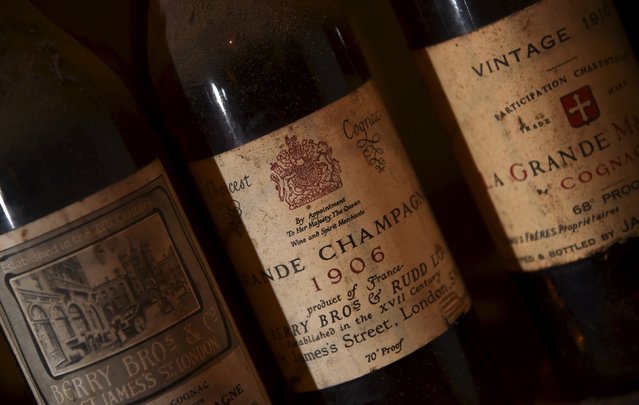
Bottles of vintage cognac, with a royal warrant stamp, are seen in storage inside Berry Bros and Rudd wine merchants in central London, Britain, August 21, 2015. Berry Bros. & Rudd, which started as grocers over 300 years ago in St. James's, central London, has two royal warrants. (Photo by Toby Melville/Reuters)

Bottles of vintage cognac, with a royal warrant stamp, are seen in storage inside Berry Bros and Rudd wine merchants in central London, Britain, August 21, 2015. Berry Bros. & Rudd, which started as grocers over 300 years ago in St. James's, central London, has two royal warrants. Every year Queen Elizabeth grants about 20 royal warrants, the gold emblem of the British monarchy, in a practice dating back to medieval times. The warrant holders can display the certificate and use the royal coat of arms in their marketing. The warrants lasting five years can help businesses break into new markets overseas, using their role as supplier to the royal family as a gauge of quality. On September 9, Queen Elizabeth will overtake Queen Victoria as Britain's longest-serving monarch. (Photo by Toby Melville/Reuters)
Details
03 Sep 2015 12:37:00
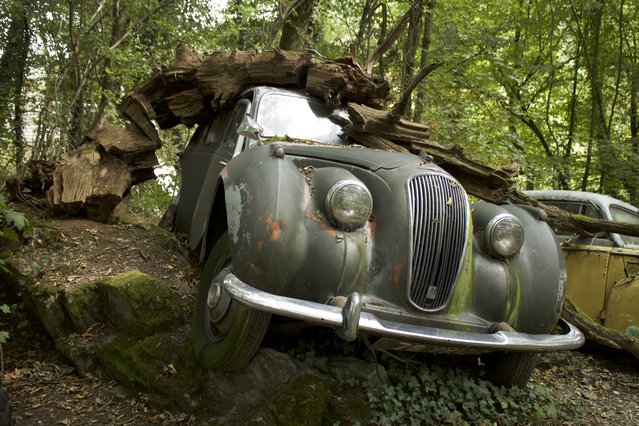
Michael Fröhlich's Jowett Javelin rotting car in his forest sculpture park in Neandertal Germany, September 11, 2016. An eccentric artist has collected fifty vintage cars and left them to rot in a forest – and now they're worth over $1 million. Former racing driver Michael Fröhlich, from Dusseldorf, Germany, has purposely crashed the cars into trees, buried them in mud and parked them on cliff faces in his estate's garden in the middle of the German Neanderthal. His collections includes a Jaguar XK120 worth $170,000, a Porsche 356 racer and a Buick worth $17,000. Perhaps his most interesting collectable is a Rolls Royce, with a purposefully misspelt “Buckingham Palace” – replacing the B with an F – emblazoned on the side with a replica of the Queen Elizabeth at the wheel. (Photo by Christoph Hagen/Barcroft Images)

Michael Fröhlich's Jowett Javelin rotting car in his forest sculpture park in Neandertal Germany, September 11, 2016. An eccentric artist has collected fifty vintage cars and left them to rot in a forest – and now they're worth over $1 million. Former racing driver Michael Fröhlich, from Dusseldorf, Germany, has purposely crashed the cars into trees, buried them in mud and parked them on cliff faces in his estate's garden in the middle of the German Neanderthal. His collections includes a Jaguar XK120 worth $170,000, a Porsche 356 racer and a Buick worth $17,000. (Photo by Christoph Hagen/Barcroft Images)
Details
24 Sep 2016 10:56:00
Long Exposure Turn Budapest Trams

Each winter, since 2009, the transport society of Budapest decorates its trams with more than 30 000 sparkling white and blue LED lights for Christmas. If the tram drives fast, it will turn into a wagon made of spurts of lights.
Details
20 Jun 2014 11:30:00
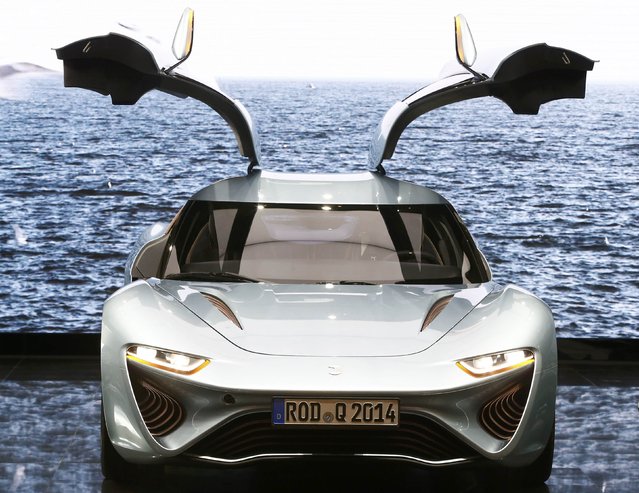
The QUANT e-Sportlimousine by nanoFlowcell AG is pictured at the 85th International Motor Show in Geneva, March 2, 2015.   REUTERS/Arnd Wiegmann (SWITZERLAND  - Tags: TRANSPORT BUSINESS)

The QUANT e-Sportlimousine by nanoFlowcell AG is pictured at the 85th International Motor Show in Geneva, March 2, 2015. REUTERS/Arnd Wiegmann
Details
03 Mar 2015 12:02:00
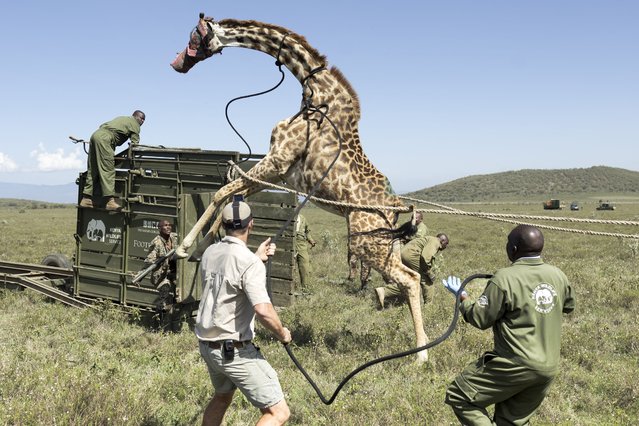
An adult female Masai giraffe rears on its hind legs as it resists efforts by Kenya Wildlife Services (KWS) rangers to guide it into a transportation crate using ropes during an exercise to translocate large herbivores from Kedong Ranch due to land subdivisions and corralling that have disrupted wildlife migratory routes in Naivasha, Nakuru County, on November 16, 2025. Driven by two long ropes held by about twenty rangers, the blindfolded giraffe enters a tall trailer that is to transport it out of its natural habitat in the Rift Valley, which is deteriorating after having been resold. This is the first step in a meticulous relocation operation in the vast Kedong ranch, part of an ancestral corridor between Mount Longonot and Hell's Gate Park, near the iconic Lake Naivasha. (Photo by Tony Karumba/AFP Photo)

An adult female Masai giraffe rears on its hind legs as it resists efforts by Kenya Wildlife Services (KWS) rangers to guide it into a transportation crate using ropes during an exercise to translocate large herbivores from Kedong Ranch due to land subdivisions and corralling that have disrupted wildlife migratory routes in Naivasha, Nakuru County, on November 16, 2025. Driven by two long ropes held by about twenty rangers, the blindfolded giraffe enters a tall trailer that is to transport it out of its natural habitat in the Rift Valley, which is deteriorating after having been resold. This is the first step in a meticulous relocation operation in the vast Kedong ranch, part of an ancestral corridor between Mount Longonot and Hell's Gate Park, near the iconic Lake Naivasha. (Photo by Tony Karumba/AFP Photo)
Details
23 Nov 2025 06:26:00
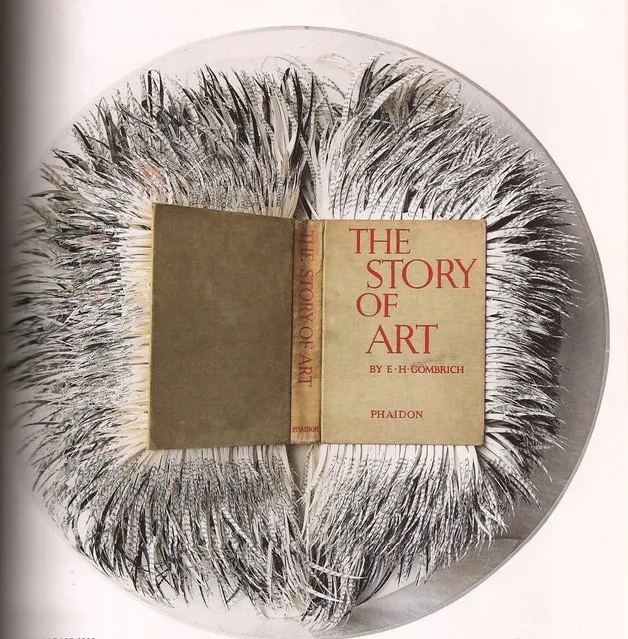
Georgia Russell

Georgia Russell is a Scottish artist who slashes, cuts and dissects printed matter, transforming books, music scores, maps, newspapers and photographs into patterned abstractions that leave a resemblance of the original but transport it to another time and place where everything is fragmented, and always in flux.
Details
05 Jun 2012 12:53:00
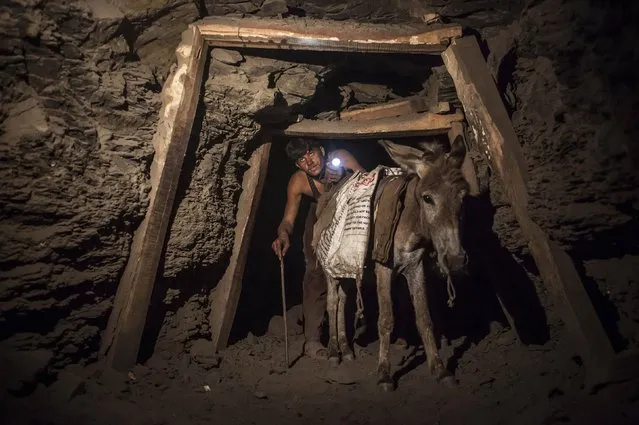
A miner with a donkey makes his way through the low and narrow tunnel leading out of a coal mine in Choa Saidan Shah in Punjab province, April 29, 2014. Workers at this mine in Choa Saidan Shah dig coal with pick axes, break it up and load it onto donkeys to be transported to the surface. (Photo by Sara Farid/Reuters)

A miner with a donkey makes his way through the low and narrow tunnel leading out of a coal mine in Choa Saidan Shah in Punjab province, April 29, 2014. Workers at this mine in Choa Saidan Shah dig coal with pick axes, break it up and load it onto donkeys to be transported to the surface. Employed by private contractors, a team of four workers can dig about a ton of coal a day, for which they earn around $10 to be split between them. The coalmine is in the heart of Punjab, Pakistan's most populous and richest province, but the labourers mostly come from the poorer neighbouring region of Khyber Pakhtunkhwa. (Photo by Sara Farid/Reuters)
Details
03 Aug 2014 07:35:00
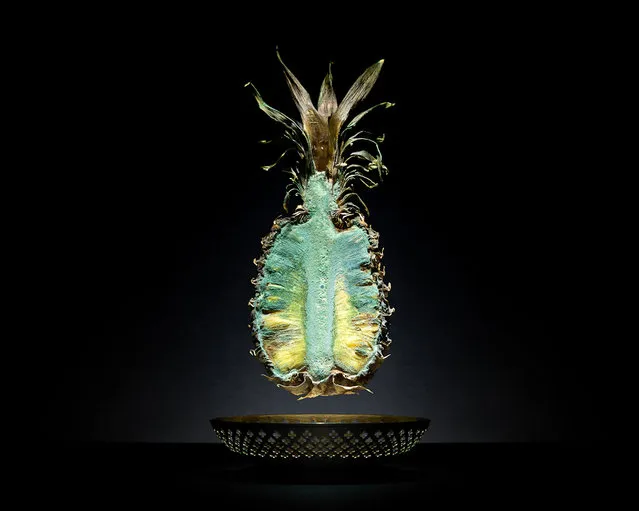
Pineapple

“One Third” – a project on food waste by an Austrian photography Klaus Pichler. According to a UN study one third of the world's food goes to waste – the largest part thereof in the industrialized nations of the global north. Equally, 925 million people around the world are threatened by starvation. The series “One Third” describes the connection between individual wastage of food and globalized food production.

Photo: Pineapple. Place of production: Guayaquil, Ecuador. Cultivation method: Outdoor plantation • Time of harvest: All- season. Transporting distance: 10.666 km (linear distance) • Means of transportation: Aircraft, truck. Carbon footprint (total) per kg: 11,94 kg • Water requirement (total) per kg: 360 l. Price: 2,10 € / kg. (Photo by Klaus Picher)
Details
02 May 2012 11:01:00