Loading...
Done
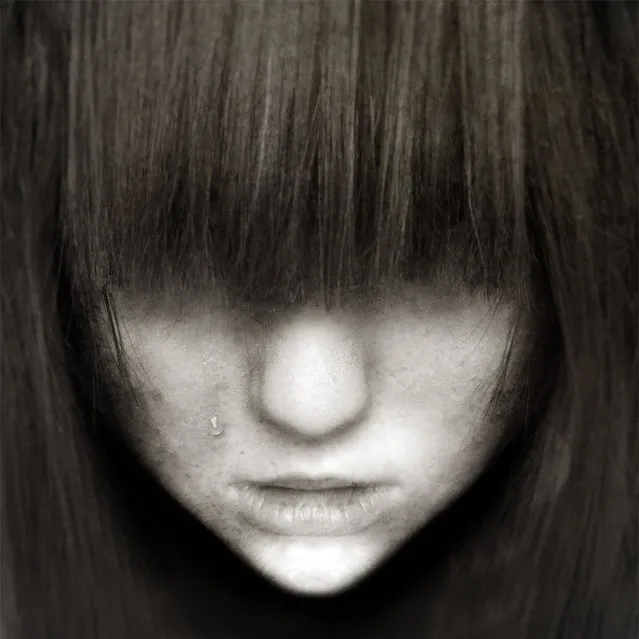
“Remember”. (Federico Bebber)

“Federico Bebber was born in 1974 in Udine, Italy. Since 1998 he deals with digital art. He uses digital tools based on photography. His creative process usually takes place slowly and at night”. Photo: “Remember”. (Photo by Federico Bebber)


Details
29 Jan 2013 12:24:00
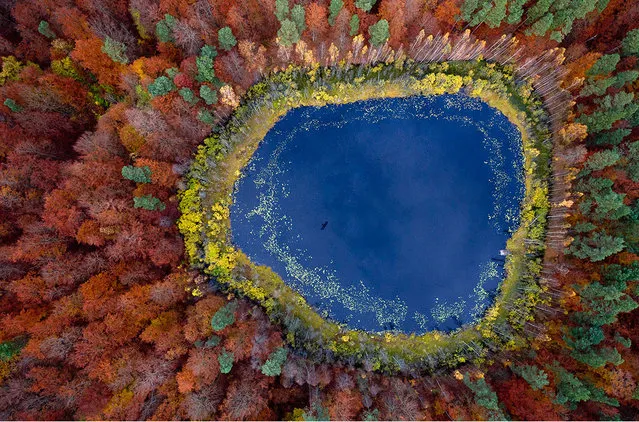
Photos By Kacper Kowalski

Kacper Kowalski was born in 1977. With a degree in architecture, he focuses on aerial photography. Both a pilot and a photographer, he has unique control over each shot. As a result he captures previously unseen natural environments and ordinarily inaccessible cityscapes. In this way unreal, almost graphic pictures come into being. They show patterns, symmetries and asymmetries created by humans and the nature.
Details
04 Jul 2013 11:31:00
Murad Osmann: Follow Me Part2

This photographer has promised to his girlfriend Belmar that he will follow her all over the world. The Russian photographer has realized this photo collection from various places all over the world. staying always behind his girlfriend. We don’t see the face of her, but he loved her so much dedicating this photography set.
Details
08 Aug 2013 11:14:00
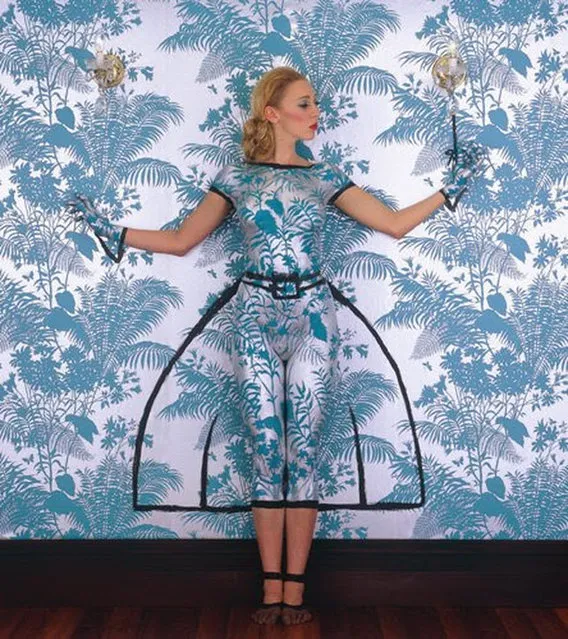
Emma Hack Takes Body Art

Adelaide-based artist, Emma Hack, has been exhibiting extensively throughout Australia since 1999. Through a combination of painting on canvas, body painting and studio-based photography, Emma's works evoke a rich array of visual narrative and magical realism.
Details
10 Oct 2012 08:19:00
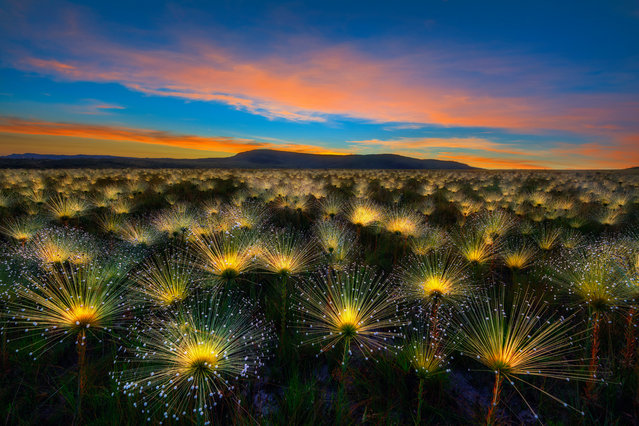
Winner, Wildflower Landscapes category. Alto Paraíso de Goiás, Goiás, Brazil. (Photo by Marcio Cabral/The Guardian)

The International Garden Photographer of the Year is one of the world’s premier competitions specialising in botanical photography. There are 11 main categories and numerous special awards including Young Garden Photographer of the Year, and the mobile-only category Gardens on the Go. Here: Winner, Wildflower Landscapes category. Alto Paraíso de Goiás, Goiás, Brazil. (Photo by Marcio Cabral/The Guardian)
Details
17 Feb 2018 00:02:00
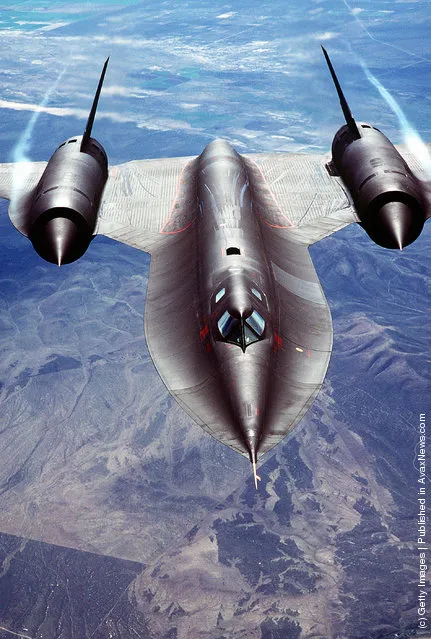
A U.S. Air Force SR-71A, also known as the Blackbird, is put through it's paces during a test flight

“The Lockheed SR-71 “Blackbird” was an advanced, long-range, Mach 3+ strategic reconnaissance aircraft. It was developed as a black project from the Lockheed A-12 reconnaissance aircraft in the 1960s by the Lockheed Skunk Works. Clarence “Kelly” Johnson was responsible for many of the design's innovative concepts. During reconnaissance missions the SR-71 operated at high speeds and altitudes to allow it to outrace threats. If a surface-to-air missile launch was detected, the standard evasive action was simply to accelerate and outrun the missile”. – Wikipedia

Photo: A U.S. Air Force SR-71A, also known as the “Blackbird”, is put through it's paces during a test flight over Beale Air Force Base in California. The aircraft is a strategic reconnaissance plane by Lockheed and is the world's fastest and highest flying operational aircraft. (Photo by Getty Images)
Details
07 Sep 2011 12:17:00
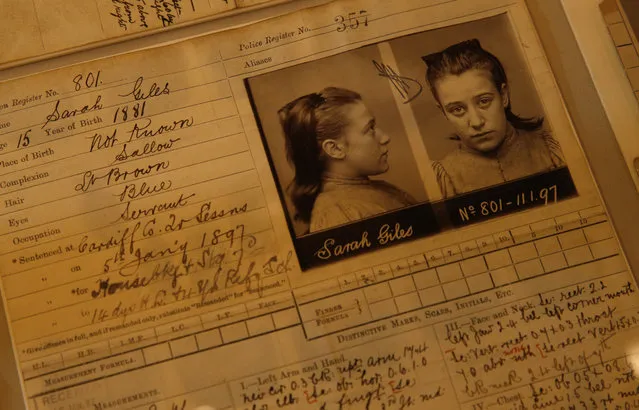
The anthropometric record card of Sarah Giles, a servant who was convicted of stealing in 1897, on display making up part of a mosaic of cards on a table top during a press preview for the Crime Museum Uncovered exhibition at the Museum of London in the City of London, Wednesday, October 7, 2015. (Photo by Alastair Grant/AP Photo)

The anthropometric record card of Sarah Giles, a servant who was convicted of stealing in 1897, on display making up part of a mosaic of cards on a table top during a press preview for the Crime Museum Uncovered exhibition at the Museum of London in the City of London, Wednesday, October 7, 2015. Drawn from Scotland Yard's private collection, the show charts more than a century of violence and suffering, from the murders of Jack the Ripper to IRA and al-Qaida bombings. But it also celebrates the brains, bravery and scientific advances that helped catch perpetrators and solve crimes. (Photo by Alastair Grant/AP Photo)

Details
11 Oct 2015 08:00:00


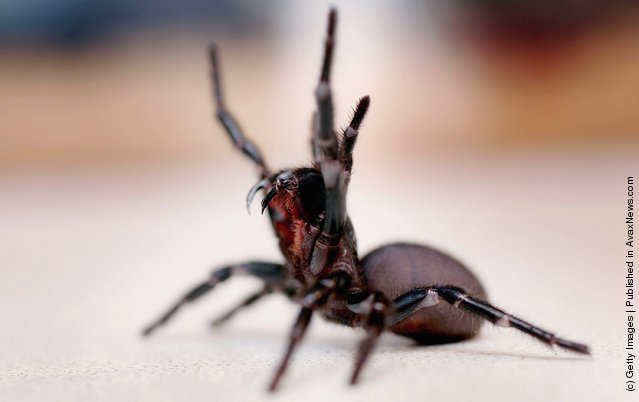
A Funnel Web spider is pictured at the Australian Reptile Park January 23, 2006 in Sydney, Australia. The Funnel Web is one of Australia's deadliest animals, with a venom that is packed with at least 40 different toxic proteins. A bite from a Funnel Web causes massive electrical over-load in the body's nervous system. Finally, fatalities occur from either heart attack or a pulmonary oedema, where the capillaries around the lungs begin to leak fluid and the patient effectively drowns. Death can come as quickly as two hours after a bite if no medical treatment is sought. Due to advances in anti-venom, there has been no death from a Funnel Web bite in Australia since 1980. Australia is home to some of the most deadly and poisonous animals on earth. (Photo by Ian Waldie/Getty Images)
Details
25 Apr 2011 07:49:00